
Nepal trekking guide: everything you need to plan your trek
Nepal is the best place in the world to walk among high mountains. Eight of the fourteen peaks above 8,000 metres stand on or near its borders, including Mount Everest, Kanchenjunga, Lhotse, Makalu, Cho Oyu, Dhaulagiri, Manaslu and Annapurna I. What makes Nepal special for trekkers is not only the scenery but the trail network that connects mountain villages. People have walked these paths for centuries to trade salt, grain and livestock, and today the same routes are lined with family-run lodges that make multi-day trekking possible without tents, stoves or heavy loads.
This guide explains how trekking in Nepal works, from choosing a region and a season to permits, altitude, accommodation, fitness and packing. It is written by our team in Kathmandu, who plan and guide these treks every season, and it is designed to help you choose the right Nepal trekking package for your experience, time and budget.
Why trek in Nepal?
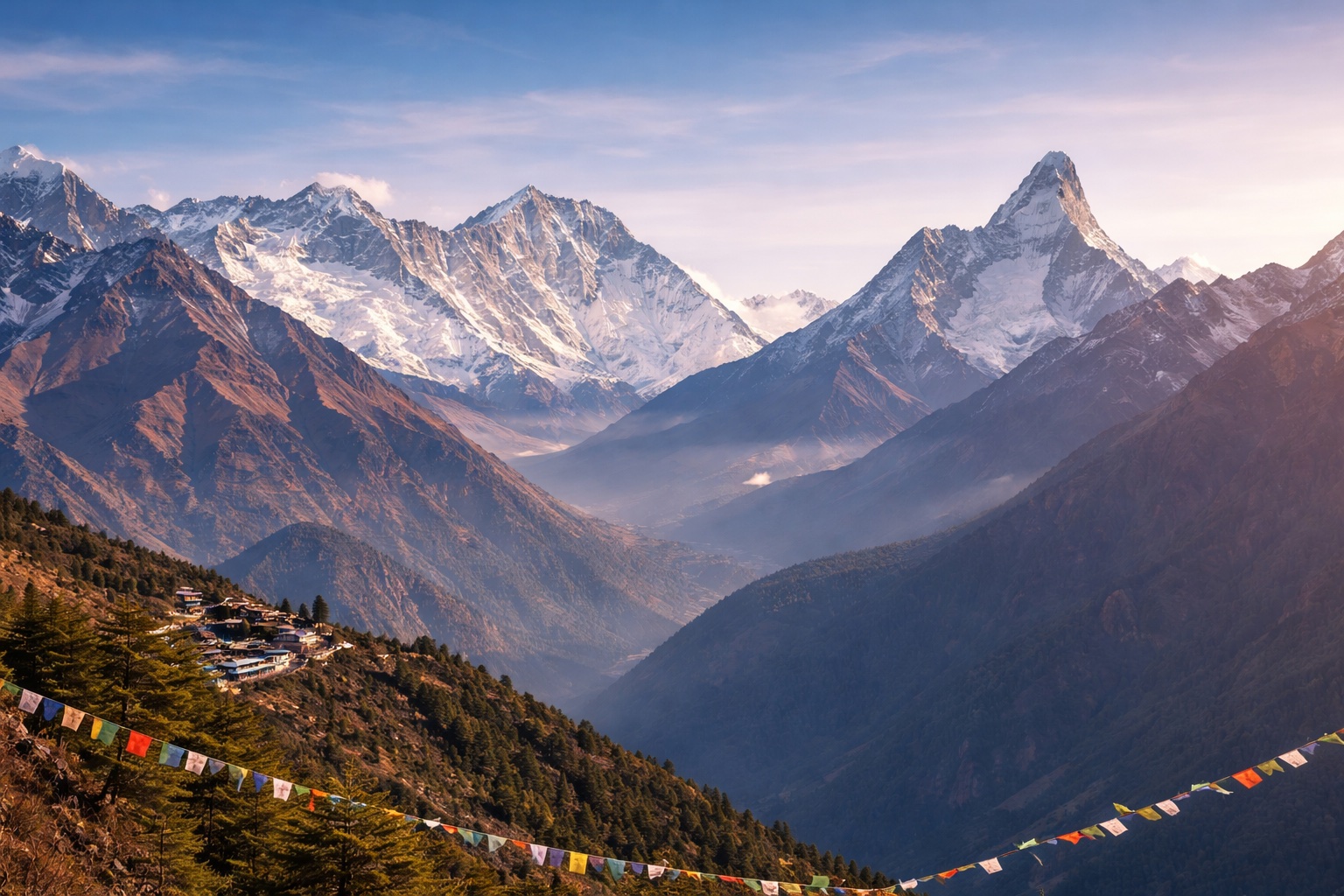
There are many mountain ranges in the world, but few offer what Nepal does in a single trip. On a typical two-week trek you can walk from subtropical farmland and rhododendron forest into alpine meadows, glacial moraines and viewpoints above 5,000 metres. The mountains are not a distant backdrop: on routes such as the Everest Base Camp trek or the Annapurna Base Camp trek you sleep directly beneath some of the highest faces on Earth.
The villages and people are as much a part of a Nepal trek as the mountains. Trails pass Buddhist monasteries, mani walls carved with prayers, chortens and prayer wheels, as well as Hindu shrines in the lower valleys. You meet Sherpa, Gurung, Magar, Tamang, Thakali and Tibetan-influenced communities whose lives are closely tied to the mountains. Many of the lodges you stay in are run by the same families for generations, and the warmth of Nepali hospitality is one of the reasons trekkers return year after year.
Finally, Nepal is accessible. You do not need mountaineering skills, specialist equipment or years of experience. With a sensible itinerary, a good guide and reasonable fitness, most healthy adults can complete a classic teahouse trek.
The main trekking regions of Nepal
Nepal's trekking areas stretch along the length of the Himalaya, from Kanchenjunga in the far east to Humla and Dolpo in the far west. Most visitors choose one of four main regions, each with its own character.
Everest region (Khumbu)
The Everest region is the most famous trekking area in Nepal. Treks begin with a flight to Lukla and follow the Dudh Koshi valley through Sagarmatha National Park to Sherpa villages such as Namche Bazaar, Tengboche and Dingboche. The classic route is the Everest Base Camp trek, reaching Everest Base Camp at 5,364 m and the viewpoint of Kala Patthar at 5,545 m. Alternatives include the Gokyo Lakes trek, the Everest Three Passes trek and shorter Everest View treks. The Khumbu is high and cold, with the biggest mountains, excellent lodges and a strong Sherpa Buddhist culture.
Annapurna region
The Annapurna region, reached from the lakeside city of Pokhara, is the most varied area for trekking in Nepal. It offers everything from the short Ghorepani Poon Hill trek to the Annapurna Base Camp trek into the Annapurna Sanctuary and the long Annapurna Circuit over the Thorong La pass at 5,416 m. The region has a wide range of altitudes, landscapes and cultures, and road access to many trailheads makes it easy to adapt an itinerary.
Langtang region
The Langtang region is the closest major trekking area to Kathmandu and requires no domestic flight. The Langtang Valley trek follows a glacial valley to Kyanjin Gompa at 3,870 m, beneath Langtang Lirung. It can be extended to the sacred Gosainkunda lakes or the Helambu region. Langtang is ideal if you have limited time or want a quieter trek with Tamang culture and fine mountain views.
Manaslu region
The Manaslu region circles Manaslu, the eighth-highest mountain in the world. It is a restricted area that requires a special permit and a licensed guide, which keeps visitor numbers low. The Manaslu Circuit trek crosses the Larkya La pass at 5,106 m and is often described as what the Annapurna Circuit was like before roads arrived. The remote Tsum Valley can be added for a longer journey.
Other trekking areas
Experienced trekkers looking for remote wilderness can also consider Upper Mustang, a high desert kingdom behind the Himalaya; the Kanchenjunga region in eastern Nepal; the Makalu Barun area; and Dolpo in the far west. These routes involve longer travel, simpler facilities and in some cases camping, and several require restricted area permits.
Comparing popular Nepal treks
| Trek | Region | Typical length | Highest point | Grade |
|---|---|---|---|---|
| Ghorepani Poon Hill | Annapurna | 4–5 days | 3,210 m | Easy to moderate |
| Langtang Valley | Langtang | 7–10 days | 3,870 m (4,773 m optional) | Moderate |
| Mardi Himal | Annapurna | 5–7 days | About 4,500 m | Moderate |
| Annapurna Base Camp | Annapurna | 7–12 days | 4,130 m | Moderate |
| Everest Base Camp | Everest | 12–14 days from Lukla | 5,545 m | Strenuous |
| Gokyo Lakes | Everest | 11–13 days from Lukla | 5,357 m (Gokyo Ri) | Strenuous |
| Annapurna Circuit | Annapurna | 12–18 days | 5,416 m | Strenuous |
| Manaslu Circuit | Manaslu | 14–16 days | 5,106 m | Strenuous |
| Everest Three Passes | Everest | 17–20 days | 5,535 m | Challenging |
Lengths are approximate and depend on your start and end points, the number of acclimatisation days and whether you drive or fly. Our trip pages list the exact day-by-day itinerary for each trek we run.
Best time to trek in Nepal
Nepal has four trekking seasons, shaped by the South Asian monsoon. Choosing the right season is one of the most important decisions when planning a trek.
Autumn (late September to November)
Autumn is the most popular season for trekking in Nepal. The monsoon rains have washed the air clean, skies are usually clear and daytime temperatures are pleasant. October is the busiest month, with major festivals such as Dashain and Tihar. November is slightly colder but often has the most stable weather and sharpest views. The main trails and lodges are busiest at this time, so booking early is wise.
Winter (December to February)
Winter brings cold nights and occasional snow at altitude, but many days are clear and the trails are quiet. Lower treks such as Ghorepani Poon Hill, Mardi Himal and the lower Everest View trek are excellent in winter. High passes such as Thorong La and Larkya La can be closed by snow, and some high lodges close during the coldest weeks.
Spring (March to May)
Spring is the second main season. Temperatures rise, rhododendron forests bloom in red, pink and white, and it is the season when climbing expeditions gather at Everest Base Camp. Views can be a little hazier than in autumn, especially in May, and afternoon clouds are more common, but spring is a beautiful time on almost every route.
Monsoon (June to early September)
The summer monsoon brings heavy rain to most of Nepal, with cloud hiding the mountains, leeches in the forests and a risk of landslides and flight delays. Trekking is still possible, and areas in the rain shadow of the Himalaya, such as Upper Mustang and the upper Annapurna Circuit around Manang, stay much drier. The monsoon is also the greenest time of year and the quietest on the trails.
How difficult is trekking in Nepal?
Trekking in Nepal is walking, not climbing. The standard teahouse routes follow clear paths and do not require ropes, crampons or technical skills. What makes a trek hard is a combination of daily distance, steep ascents and descents, and altitude.
We use four grades to describe our treks:
- Easy: short treks of up to a week, with walking days of 4–5 hours and altitudes below about 3,500 m. Suitable for active beginners and families with older children.
- Moderate: treks of one to two weeks with walking days of 5–6 hours and altitudes up to around 4,500 m. Suitable for regular walkers in good health.
- Strenuous: longer treks with some days of 7 hours or more and altitudes above 5,000 m. Previous hiking experience and good fitness are recommended.
- Challenging: long, remote or high treks with several days above 5,000 m, high pass crossings or glacier sections. Previous multi-day trekking at altitude is strongly recommended.
On a typical trekking day you start after breakfast at around 7 or 8 in the morning, walk for three to four hours, stop for lunch at a lodge, and then walk for another two to three hours to reach your overnight stop by mid-afternoon. Rest and acclimatisation days usually include a shorter hike to a higher viewpoint.
Altitude sickness and acclimatisation
Altitude is the single biggest factor in trekking safety in Nepal. Above about 2,500 m, the lower air pressure means less oxygen with each breath, and the body needs time to adapt. If you climb too fast you may develop acute mountain sickness (AMS), which causes headache, nausea, loss of appetite, poor sleep and fatigue. In rare cases it can develop into serious conditions affecting the lungs or brain.
The best protection is a well-designed itinerary. Our treks follow widely accepted guidelines: above 3,000 m we aim to increase sleeping altitude gradually, and we include acclimatisation days at key points, such as Namche Bazaar and Dingboche on the Everest trail or Manang on the Annapurna Circuit. On these days we walk higher and return to sleep lower, following the principle of "climb high, sleep low".
Other simple measures help: drink plenty of water, walk at a steady pace, avoid alcohol at altitude, eat well even if your appetite drops, and tell your guide about any symptoms. Our guides are trained to recognise the signs of altitude illness and will adjust the pace, add a rest day or arrange descent if needed. Descent is always the most effective treatment. Talk to your doctor before travelling about whether medication such as acetazolamide is right for you.
Trekking permits and rules in Nepal
Almost every trekking route in Nepal passes through a national park, conservation area or municipality that charges an entry fee. The main permits are:
- Sagarmatha National Park permit and the Khumbu Pasang Lhamu Rural Municipality permit for the Everest region.
- Annapurna Conservation Area Permit (ACAP) for Annapurna treks, including Poon Hill, Annapurna Base Camp, Mardi Himal and the Annapurna Circuit.
- Langtang National Park permit for the Langtang Valley and Gosainkunda.
- Restricted Area Permits for regions such as Manaslu, Tsum Valley, Upper Mustang, Nar Phu, Dolpo and Kanchenjunga, together with the relevant conservation area permits.
Nepal's rules require most foreign trekkers in national parks and conservation areas to trek with a licensed guide, and restricted areas require a minimum group of two trekkers with a licensed guide. Rules and fees change from time to time, so we check the current requirements for every booking. When you trek with Himalayan Hiking, we arrange all permits before you set off; you only need to bring your passport and passport-sized photos.
Teahouses: where you sleep and eat
Most popular routes in Nepal are teahouse treks. Teahouses are small, family-run lodges with simple twin rooms, a shared dining room heated by a stove in the evening, and a kitchen serving a surprisingly varied menu. At lower altitudes many rooms have private bathrooms and hot showers; higher up, bathrooms are usually shared and hot showers may cost extra or rely on solar or gas heating.
Food on the trail is filling and fresh. The national dish, dal bhat, is rice with lentil soup, vegetable curry and pickle, usually served with free refills, which makes it the trekker's favourite fuel. Menus also include noodles, fried rice, potatoes, pasta, soups, pancakes, porridge, eggs and the famous Tibetan dumplings known as momos. We recommend vegetarian meals at higher altitudes, as meat is carried up from lower valleys without refrigeration.
In the more remote regions, lodges are simpler but still comfortable enough for a good night's sleep. Camping treks, where a crew carries tents, food and cooking equipment, are only needed on a few very remote routes.
Guides and porters
A good guide makes the difference between a trek and a great trek. Our guides are licensed, first-aid trained and come from the mountain regions where they work. They handle route finding, lodge bookings, permits and check posts, and they monitor your health at altitude. Just as importantly, they explain the culture, religion and history of the places you walk through, and they make it easy to talk with local people.
Porters carry your main luggage from lodge to lodge, so you only need a daypack with water, snacks, a warm layer and a camera. We usually allocate one porter for every two trekkers, with a sensible weight limit per bag. We pay fair wages, provide insurance and make sure porters have proper clothing and equipment for the conditions.
Fitness and training for a Nepal trek
You do not need to be an athlete to trek in Nepal, but the fitter you are, the more you will enjoy it. Start preparing two to three months before your trip. The best training is walking, especially uphill and downhill on uneven ground with a light backpack. Aim for regular walks of three to five hours at weekends, building up to back-to-back days. Stair climbing, cycling, swimming and running improve your cardiovascular fitness, while squats, lunges and step-ups strengthen the legs for long descents.
Break in your boots well before you travel, and test the clothing and backpack you plan to use. If you have any medical conditions, talk to your doctor about trekking at altitude.
What to pack for trekking in Nepal
Pack light and in layers. Temperatures can range from warm sunshine in the valleys to well below freezing at night in high lodges. A good basic kit includes:
- Comfortable, waterproof trekking boots and camp shoes or sandals.
- Moisture-wicking base layers, a fleece or light insulated jacket and a warm down jacket for evenings.
- Waterproof and windproof jacket and trousers.
- Trekking trousers, a warm hat, sun hat, gloves and a buff or scarf.
- A sleeping bag suitable for the season and altitude (we can arrange one in Kathmandu).
- Trekking poles, which reduce strain on the knees on long descents.
- Sunglasses, high-factor sunscreen and lip balm.
- Water bottles and a purification method, such as tablets or a filter, to avoid buying plastic bottles.
- A basic first-aid kit, personal medication, a head torch and a power bank.
Your guide will check your kit when you arrive in Kathmandu, and any missing items can be bought or rented in the trekking shops of Thamel.
Getting to Nepal and your first days in Kathmandu
Almost all international visitors arrive at Tribhuvan International Airport in Kathmandu, which has direct flights from the Middle East, India, China and Southeast Asia and good connections to Europe, North America and Australia. Most nationalities can get a tourist visa on arrival or apply online in advance; check the latest rules for your passport before you travel.
We meet you at the airport and transfer you to your hotel in Kathmandu. Before most treks we plan at least one full day in the city. This gives you time to recover from your flight, meet your guide for a trek briefing, check your equipment and visit some of the Kathmandu Valley's UNESCO World Heritage Sites, such as Boudhanath Stupa, Swayambhunath and Pashupatinath. It also gives a buffer in case of flight delays.
From Kathmandu, Everest treks begin with a flight to Lukla; Annapurna treks start with a short flight or a scenic drive to Pokhara; and Langtang and Manaslu treks start with a road journey into the hills. After your trek, we recommend keeping at least one spare day in Kathmandu before your international flight, especially after Everest treks, where mountain weather can delay flights from Lukla.
Money, communication and practical tips
The currency of Nepal is the Nepali rupee. ATMs are widely available in Kathmandu and Pokhara and in a few larger trekking villages such as Namche Bazaar, but they can be unreliable, so carry enough cash for extras on the trail such as snacks, drinks, hot showers, battery charging and Wi-Fi. Prices rise with altitude because supplies are carried up by porters and pack animals.
Mobile coverage and Wi-Fi are available in many lodges on the main routes, although signals can be slow or intermittent higher up. A local SIM card, easily bought in Kathmandu, is useful for staying in touch. Your guide will also carry a phone and can contact our office in Kathmandu at any time.
Travel insurance and safety
Travel insurance is essential for trekking in Nepal. Your policy should cover trekking up to the maximum altitude of your route, medical treatment and emergency helicopter evacuation. Check the altitude limit carefully, as many standard policies do not cover activities above a certain height.
Safety on our treks comes from careful planning: realistic itineraries, experienced guides, reliable lodges, daily health checks at altitude and constant contact with our operations team. In the rare event of an emergency, we coordinate evacuation with your insurer and local rescue services.
Responsible trekking
The Himalaya is a fragile environment and home to communities who depend on tourism. You can help by carrying a refillable water bottle, taking non-biodegradable rubbish back out with you, staying on the trail, respecting local customs such as walking clockwise around stupas and mani walls, dressing modestly in villages and asking before taking photographs of people. Choosing a local company that treats its guides and porters fairly also keeps more of your money in Nepal's mountain communities.
Plan your Nepal trek with Himalayan Hiking
We're a trekking company based in Kathmandu. We design every itinerary ourselves, arrange permits, domestic flights, lodges and transfers, and support you from your first question to your flight home. You can join one of our small-group fixed departures in spring and autumn or book a private trek on your own dates, with the pace, route and length adjusted to suit you.
Browse the treks on this page, or contact us with your dates, experience and interests. We will suggest the best route for you and send a detailed itinerary and quote.