
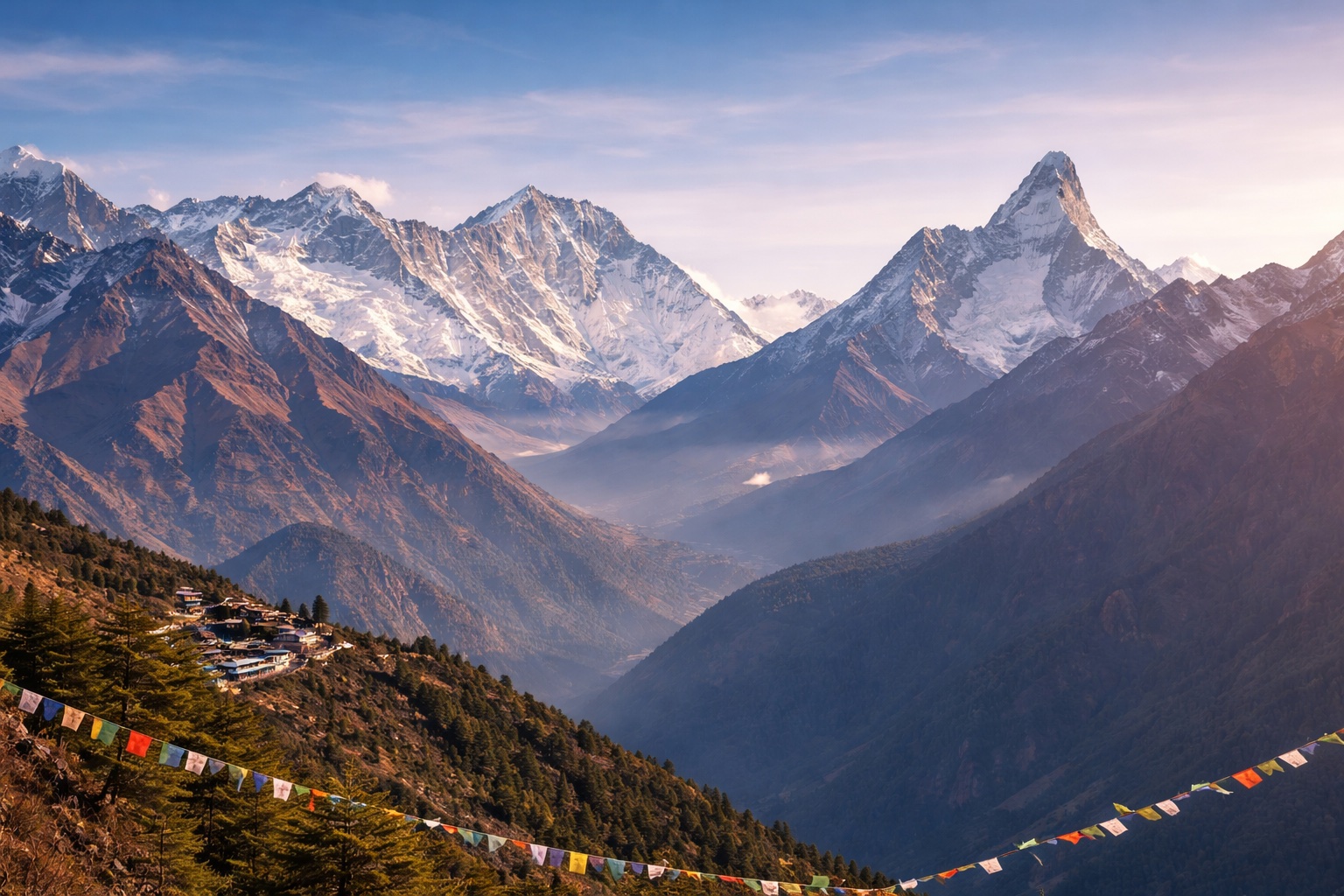
Langtang region trekking guide: valleys, lakes and Tamang culture
The Langtang region lies just north of Kathmandu, close to the border with Tibet, yet it feels a world away from the city. Glacial valleys lead to high yak pastures and Buddhist monasteries beneath snow peaks such as Langtang Lirung (7,227 m), Langtang Ri, Gangchenpo and Dorje Lakpa, and on clear days you can look across to Shishapangma (8,027 m) in Tibet. Because it is reached by road rather than by air, Langtang is one of the most accessible and affordable trekking areas in Nepal.
This guide explains everything you need to plan Langtang trekking: the main routes including the Langtang Valley trek, Gosainkunda and Helambu, a typical itinerary, the best seasons, difficulty and altitude, permits, lodges and food, and practical tips. It is written by the Himalayan Hiking team in Kathmandu, who guide Langtang treks throughout the year.
Why trek in the Langtang region?
Langtang is the ideal choice if you want a genuine Himalayan trek without the flights, crowds or long travel of the Everest and Annapurna regions. The trailhead at Syabrubesi is a single day's drive from Kathmandu, and within three days of walking you are among glaciers and 7,000-metre peaks. A complete trek can fit into a week to ten days, which suits travellers with limited holiday time.
You get a lot of variety in a short distance. The trail climbs from subtropical forest along the Langtang Khola, where langur monkeys swing through the trees, to rhododendron and bamboo forest, then opens into a wide U-shaped glacial valley dotted with yak herders' settlements. At the head of the valley, Kyanjin Gompa sits among moraines and glaciers, with day hikes to viewpoints above 4,700 m.
Langtang is as much about the people as the mountains. The valley is home to Tamang and Tibetan-origin communities with their own language, dress and Buddhist traditions. Staying in family-run lodges gives a real insight into mountain life, and the warm welcome is one of the highlights of any Langtang trek.
Langtang National Park
Treks in the region take place inside Langtang National Park, established in 1976 as the first Himalayan national park in Nepal. It covers a large area stretching from the hills north of Kathmandu to the Tibetan border and includes the Langtang valley, the Gosainkunda lakes and parts of the Helambu region.
The park protects a wide range of forest types and is one of the best places in Nepal to see wildlife. Look out for Himalayan tahr on the cliffs, musk deer, langur monkeys and many bird species, including the colourful Danphe. Langtang is also known as a habitat of the endangered red panda, which lives in the bamboo and rhododendron forests, though it is shy and rarely seen. Snow leopards and Himalayan black bears live in the more remote parts of the park.
The 2015 earthquake and Langtang today
The April 2015 Gorkha earthquake hit Langtang particularly hard. A massive landslide and avalanche destroyed the old village of Langtang and took many lives. In the years since, the people of the valley have rebuilt their homes and lodges, often with stronger construction, and a memorial now honours those who died. Trekking to Langtang today directly supports the recovery of these communities, and many trekkers find meeting the people who rebuilt their valley one of the most moving parts of the trip.
The best Langtang treks
Langtang Valley trek
The Langtang Valley trek is the classic route. From Syabrubesi (about 1,460 m) the trail follows the Langtang Khola upstream through forest to Lama Hotel, then climbs into the open valley past Ghoda Tabela to the rebuilt village of Langtang (about 3,430 m) and on to Kyanjin Gompa (3,870 m). A rest day at Kyanjin allows a climb to Kyanjin Ri (about 4,773 m) or the more demanding Tserko Ri (about 4,984 m), both with outstanding panoramas of Langtang Lirung and the surrounding glaciers. The trek takes about 7–10 days from Kathmandu.
Langtang and Gosainkunda trek
The Gosainkunda trek visits a group of sacred alpine lakes at about 4,380 m. The largest lake, Gosainkunda, is a major pilgrimage site for Hindus and Buddhists, especially during the Janai Purnima full-moon festival in July or August, when thousands of pilgrims walk up from the valleys. The trek usually joins the Langtang Valley route via Thulo Syabru and Sing Gompa, where there is a small cheese factory, and can continue over the Laurebina La pass (about 4,610 m) into Helambu. A combined Langtang and Gosainkunda trek takes around 11–14 days.
Helambu trek
The Helambu trek is a lower, gentler route through the hills north-east of Kathmandu, home to the Hyolmo (Helambu Sherpa) people. It passes terraced farms, forests and Buddhist monasteries, with views of the Langtang and Jugal ranges. It can be walked on its own in about 5–7 days, starting or ending at Sundarijal on the edge of the Kathmandu Valley, and is a good option in winter.
Tamang Heritage Trail
The Tamang Heritage Trail explores traditional Tamang villages west of Syabrubesi, such as Gatlang, Tatopani with its natural hot springs, and Briddim, where villagers run community homestays. It is a cultural trek with views of Langtang and Ganesh Himal, taking about 5–7 days, and it combines well with the Langtang Valley trek.
Comparing Langtang treks
| Trek | Typical length | Highest point | Grade | Best for |
|---|---|---|---|---|
| Langtang Valley | 7–10 days | 3,870 m (4,773 m optional) | Moderate | Short Himalayan trek, glaciers |
| Langtang and Gosainkunda | 11–14 days | About 4,610 m | Moderate to strenuous | Sacred lakes, a high pass |
| Helambu | 5–7 days | About 3,650 m | Easy to moderate | Winter, near Kathmandu |
| Tamang Heritage Trail | 5–7 days | About 3,200 m | Easy to moderate | Culture and homestays |
Langtang Valley trek: a typical itinerary
Every itinerary can be adjusted, but a well-paced Langtang Valley trek looks like this. Altitudes are approximate.
| Day | Route | Overnight altitude |
|---|---|---|
| 1 | Drive Kathmandu to Syabrubesi (about 7–8 hours) | 1,460 m |
| 2 | Syabrubesi to Lama Hotel, through forest along the Langtang Khola | 2,470 m |
| 3 | Lama Hotel to Langtang village via Ghoda Tabela | 3,430 m |
| 4 | Langtang to Kyanjin Gompa, visit the monastery and cheese factory | 3,870 m |
| 5 | Rest and exploration day: climb Kyanjin Ri or Tserko Ri | 3,870 m |
| 6 | Kyanjin Gompa to Lama Hotel | 2,470 m |
| 7 | Lama Hotel to Syabrubesi | 1,460 m |
| 8 | Drive back to Kathmandu | — |
With a free day in Kathmandu before the trek, most Langtang Valley trips last 9–10 days. You can also add a day to walk up the valley to the yak pastures of Langshisa Kharka for a closer view of the glaciers.
Getting to Langtang
The Langtang region is reached by road. The drive from Kathmandu to Syabrubesi follows a winding mountain road through Trishuli Bazaar and Dhunche, the headquarters of Langtang National Park, and takes around seven to eight hours depending on road conditions. Private jeeps are faster and more comfortable than the local bus, and we arrange private transport for all our Langtang treks.
During and just after the monsoon, landslides can block sections of the road, so we keep plans flexible and check conditions before departure. Helambu treks are reached by a short drive to Sundarijal or Melamchi, and Gosainkunda treks may start from Dhunche.
Best time to trek in Langtang
Autumn: late September to November
Autumn brings clear skies and the best mountain views, with comfortable daytime temperatures. It is the most popular time for Langtang and Gosainkunda treks, though the region is still much quieter than Everest or Annapurna.
Spring: March to May
Spring is a beautiful time in Langtang, when rhododendron forests bloom in the lower and middle valley. Temperatures are warm and days long, although views can be hazy by late May.
Winter: December to February
Winter days are often clear and sunny, but nights at Kyanjin Gompa are very cold and snow can fall. The Langtang Valley trek is possible in winter with warm gear, while the Gosainkunda crossing and Laurebina La can be blocked by snow. Helambu is an excellent winter option.
Monsoon: June to early September
The monsoon brings heavy rain, leeches in the forest and a higher risk of landslides on the road and trail. Treks are possible, especially in the upper valley, but views are limited and plans need to be flexible.
Difficulty and altitude
The Langtang Valley trek is graded moderate. Walking days are typically five to six hours on clear trails, with a steady climb over the first three days. The highest overnight stop, Kyanjin Gompa at 3,870 m, is lower than on Everest or Annapurna Base Camp treks, and the optional climbs to Kyanjin Ri or Tserko Ri can be adjusted to your fitness.
The trail gains height quickly from Syabrubesi, so it is important to walk slowly, drink plenty of water and watch for symptoms of altitude sickness when you reach Langtang village and Kyanjin. Gosainkunda and the Laurebina La involve a steep climb to around 4,600 m and are graded moderate to strenuous. Our guides monitor every trekker and can adjust the pace or add rest days if needed.
Permits for Langtang treks
All Langtang treks require a Langtang National Park entry permit, checked at the park entrance and at checkpoints along the trail. Helambu treks that start or finish at Sundarijal pass through Shivapuri Nagarjun National Park and need its entry permit too. Nepal's current rules require most foreign trekkers in national parks to trek with a licensed guide. Himalayan Hiking arranges every permit before your trek, and we confirm the latest regulations when you book.
Lodges and food on the Langtang trek
Langtang is a teahouse trek. Lodges along the valley are family-run and simple but comfortable, with twin rooms, blankets, and a dining room warmed by a stove. Many lodges were rebuilt after the 2015 earthquake and are clean and well kept. Hot showers are available in most villages, usually for a small fee, and some lodges have solar-powered hot water.
Menus include dal bhat, noodles, fried rice, potatoes, soups, pancakes, porridge and eggs. At Kyanjin Gompa, don't miss the yak cheese from the local cheese factory, first set up in the 1950s with Swiss support, and freshly baked bread and cakes from the bakeries. Tibetan butter tea and seabuckthorn juice are local specialities.
Mobile signal and Wi-Fi are available in most villages along the main valley, though coverage can be patchy. There are no ATMs on the trail, so bring enough Nepali rupees from Kathmandu for drinks, snacks, hot showers and battery charging.
What to pack for Langtang
Pack as for any teahouse trek, with layers for a range of temperatures. Days in the lower forest can be warm and humid, while evenings at Kyanjin Gompa are cold, especially from November to February. Essentials include:
- Comfortable, waterproof trekking boots and camp shoes.
- Base layers, a fleece and a warm down jacket for evenings and early mornings.
- A waterproof jacket and trousers, useful for sudden showers.
- A sleeping bag suitable for temperatures below freezing, especially outside the main seasons.
- Trekking poles for the steep sections and the climb to Kyanjin Ri.
- Sunglasses, sunscreen and lip balm.
- A refillable water bottle and purification tablets or a filter.
- Insect repellent and leech socks in spring and the monsoon.
Day hikes from Kyanjin Gompa
Kyanjin Gompa is the highlight of the Langtang Valley trek and the base for some of the best day hikes in the region, so we always include a full day here. The most popular option is Kyanjin Ri (about 4,773 m), a steep climb of about 900 m above the village that takes three to four hours up. From the summit you look straight across to the glaciers of Langtang Lirung and along the valley towards Tibet.
Fit, well-acclimatised trekkers can take on Tserko Ri (about 4,984 m), a longer and more demanding hike of six to eight hours in total, with an even wider panorama that includes Langtang Lirung, Gangchenpo, Dorje Lakpa and a long line of peaks along the border. A gentler alternative is to walk up the valley floor towards Langshisa Kharka, a yak pasture beneath the Langshisa glacier, or to visit the monastery and the old cheese factory in the village. Whichever you choose, be outside at Kyanjin early in the morning, when the sun hits Langtang Lirung.
Langtang and Gosainkunda: a typical itinerary
For a longer trek, the Langtang Valley combines well with the Gosainkunda lakes and a crossing into Helambu. A typical route looks like this; altitudes are approximate.
| Day | Route | Overnight altitude |
|---|---|---|
| 1–5 | Kathmandu to Syabrubesi, then up the Langtang Valley to Kyanjin Gompa with a rest day | Up to 3,870 m |
| 6 | Kyanjin Gompa back down to Lama Hotel | 2,470 m |
| 7 | Lama Hotel to Thulo Syabru, a Tamang village on a ridge | 2,210 m |
| 8 | Thulo Syabru to Sing Gompa (Chandanbari) | 3,330 m |
| 9 | Sing Gompa to Gosainkunda via Laurebina | 4,380 m |
| 10 | Cross the Laurebina La, descend to Ghopte or Tharepati | 3,430–3,690 m |
| 11 | Tharepati to Kutumsang or Melamchi Ghyang in Helambu | 2,470–2,530 m |
| 12–13 | Through Helambu villages to Chisapani and Sundarijal, drive to Kathmandu | — |
The trek can also be walked in reverse, or finished at Dhunche after Gosainkunda for a shorter route.
Langtang, Everest or Annapurna?
Many trekkers compare Langtang with the better-known regions. Choose Langtang if you have a week to ten days, want to avoid domestic flights, prefer quieter trails and are interested in Tamang culture. Choose the Everest region if you want to see Mount Everest and are happy to fly to Lukla and spend two weeks or more at higher altitude. Choose the Annapurna region for the greatest variety of routes and a relaxing stay in Pokhara. Langtang offers glaciers and 7,000-metre peaks at a lower overall cost and with a shorter journey, making it one of the best-value treks in Nepal.
Fitness and training for Langtang treks
The Langtang Valley trek suits anyone in good health who walks regularly. Prepare with long walks of four to six hours on hilly ground, ideally carrying a daypack, and add cardiovascular exercise such as cycling, swimming or stair climbing a few times a week for a month or two before your trip. If you plan to climb Tserko Ri or cross the Laurebina La to Gosainkunda, train for longer days with more ascent, and include leg-strength exercises for the steep descents.
What does a Langtang trek cost?
Langtang is one of the most affordable treks in Nepal because there is no domestic flight. The cost of a guided trek depends on the number of days, group size, whether you use private or shared transport and whether meals are included. Most packages include transport to and from Syabrubesi, the national park permit, teahouse accommodation, a licensed guide and porters. Budget separately for your visa, insurance, equipment, drinks and snacks, hot showers and charging, and tips for your trekking crew. Our trip pages list the exact price and inclusions.
Safety and travel insurance
The Langtang valley lies close to steep mountain slopes, so our guides keep a close eye on weather and trail conditions, especially after heavy rain or snow. Road travel to Syabrubesi can be affected by landslides, and we always use experienced drivers. Travel insurance covering trekking to at least 5,000 m, which covers optional climbs such as Tserko Ri, and emergency helicopter evacuation is essential. As on all treks, ascend gradually and report any symptoms of altitude sickness to your guide.
Whichever route you choose, the Langtang region rewards trekkers who take their time. An extra day at Kyanjin Gompa, a night in a Tamang homestay or a slower pace through the forest gives more time to enjoy the views, meet local people and acclimatise comfortably before the higher sections of the trek.
Tamang culture in Langtang
The Tamang are one of the largest indigenous groups in Nepal, and the Langtang region is part of their homeland. Their culture blends Tibetan Buddhism with older local traditions. In villages such as Briddim, Gatlang, Thulo Syabru and Langtang, you will see houses with carved wooden windows, prayer flags flying from bamboo poles and small monasteries at the heart of the community. Women often wear traditional dress with colourful woven aprons and jewellery, and elders may still speak mainly the Tamang language.
Music and dance play an important part in Tamang life, especially the rhythmic Tamang Selo songs accompanied by the damphu drum. In some villages on the Tamang Heritage Trail, communities run homestays and put on an evening of songs and dances with a home-cooked meal. Staying with a family is the best way to learn about daily life, farming, festivals and the history of the region. Your guide will help with introductions and translation, and explain local customs so that you can take part respectfully.
Combining Langtang with other experiences
Because Langtang is so close to Kathmandu, it combines easily with other activities. Many trekkers add a day or two of sightseeing in the Kathmandu Valley, visiting Boudhanath Stupa, Swayambhunath, Pashupatinath and the Durbar Squares of Patan and Bhaktapur. Others continue to Pokhara, Chitwan National Park or a second trek in the Annapurna region. We can build a complete Nepal holiday around your Langtang trek.
Responsible trekking in Langtang
Langtang's communities depend on tourism, especially since the 2015 earthquake. Staying in local lodges, buying local products such as yak cheese and handicrafts, and hiring local guides and porters all help. Carry out non-biodegradable waste, use refill stations and purification rather than plastic bottles, and respect monasteries, mani walls and chortens by walking clockwise around them. In the national park, stay on the trail and never feed or disturb wildlife.
Book your Langtang trek with Himalayan Hiking
Our office is in Kathmandu. We organise Langtang Valley, Gosainkunda, Helambu and Tamang Heritage treks with private transport, national park permits, lodges, licensed guides and porters. You can join a small-group departure or book a private Langtang trek on your own dates, and we will tailor the route to your time, fitness and interests.
Browse our Langtang treks above, or contact us with your dates and we will send a detailed itinerary and quote.