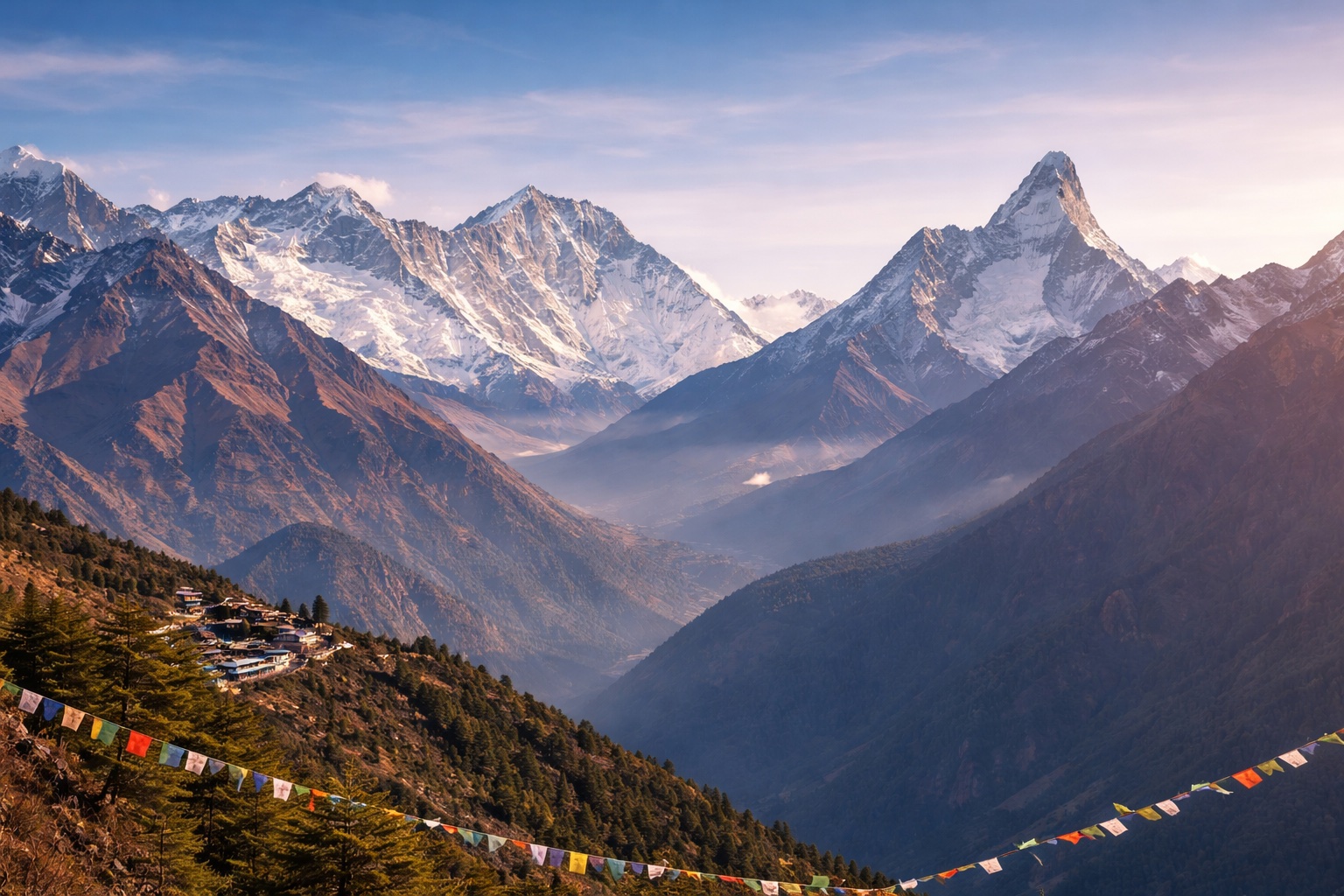
The Helambu trek is a 7-day short trek that starts right from Kathmandu, with no flight and no long bus ride. Walk out of the valley at Sundarijal through Shivapuri Nagarjun National Park to Chisapani, follow forested ridges to Tharepati (3,640 m) with views of Langtang, Jugal Himal and Dorje Lakpa, and descend through the Hyolmo (Helambu Sherpa) villages of Melamchi Gaon and Tarkeghyang with their old monasteries and apple orchards.
Graded easy to moderate, with a low maximum altitude, Helambu suits first-time trekkers, families and anyone with a week in Nepal. It is a rare year-round trek, especially good in winter when higher routes are cold. Guide, porters, permits, lodges and meals are included.
Quick answer: the Helambu trek takes about 7 days, starts on foot from the edge of Kathmandu, reaches 3,640 m at Tharepati, costs from US$520 per person and can be done almost all year. It is one of the easiest and most accessible treks in Nepal, with Himalayan views, forest and Hyolmo Buddhist culture.
Helambu (Hyolmo) lies just north-east of Kathmandu, between the capital and the Langtang range. The Hyolmo people, related to the Sherpas, have their own language and traditions, and their villages are full of monasteries and prayer flags. Because the trek is close to Kathmandu, it is quiet but well supplied with lodges.
| Trip fact | Details |
|---|---|
| Duration | 7 days (5 days of trekking) |
| Maximum altitude | Tharepati, 3,640 m |
| Grade | Easy to moderate |
| Start and finish | Sundarijal (30 minutes from Kathmandu); drive back from Tarkeghyang or Melamchi |
| Permits | Shivapuri Nagarjun National Park and Langtang National Park |
| Best time | October–May; possible year-round |
| Cost | From US$520 per person |
Walking days are 5–6 hours on forest trails and stone steps, with some steep climbs. The altitude stays below 3,700 m, so altitude sickness is unlikely. Reasonably fit walkers of most ages can do it.
Helambu links naturally with the Gosainkunda lakes via the Laurebina Pass, and with the Langtang Valley. It can also be combined with the Chisapani–Nagarkot hike for a shorter trip.
You should be comfortable walking 5–6 hours a day on hilly trails. Some training with hill walks before the trip will make it more enjoyable.
Mild most of the year. Tharepati can be frosty and snowy from December to February; the monsoon (June–August) brings rain and leeches.
The Shivapuri Nagarjun National Park and Langtang National Park permits are included.
Take out cash in Kathmandu or Pokhara before you set off: there are very few ATMs on the trail, and the ones that exist often don't work. Lodges charge a little for hot showers, charging and Wi-Fi, so a power bank saves money.
Bring a refillable bottle and either purification tablets or a filter. Lodges also sell boiled water, which is cheaper and better for the trail than bottled water.
Travel insurance is compulsory. It must cover trekking to 3,700 m, medical treatment and emergency helicopter evacuation. Please send us your policy details before departure.
Most visitors get a tourist visa on arrival at Kathmandu airport, or apply online before they fly. Your passport needs six months' validity, and bring a few passport photos for trekking permits.
Choose add-ons and quantities on the booking form.
More trip options, quoted on request:
Helambu (Hyolmo) lies north-east of Kathmandu, south of the Langtang range, in Sindhupalchok district.
7 days including arrival and departure, with 5 days of trekking.
Easy to moderate, with a maximum altitude of 3,640 m.
From US$520 per person, including permits, guide, porters, lodges and meals.
Yes. Helambu is one of the best winter treks in Nepal, though Tharepati can have snow.
No. The trek starts at Sundarijal, 30 minutes from Kathmandu.
Langtang Lirung, Dorje Lakpa, Jugal Himal, Gauri Shankar and on clear days Ganesh Himal.
Yes, for active families; the altitude is low and days are manageable.
A Buddhist community related to the Sherpas, with their own language and customs.
Shivapuri Nagarjun National Park and Langtang National Park permits, both included.
Yes, via the Laurebina Pass (4,610 m), adding 3–4 days.
No. It is quieter than the Everest and Annapurna trails.