
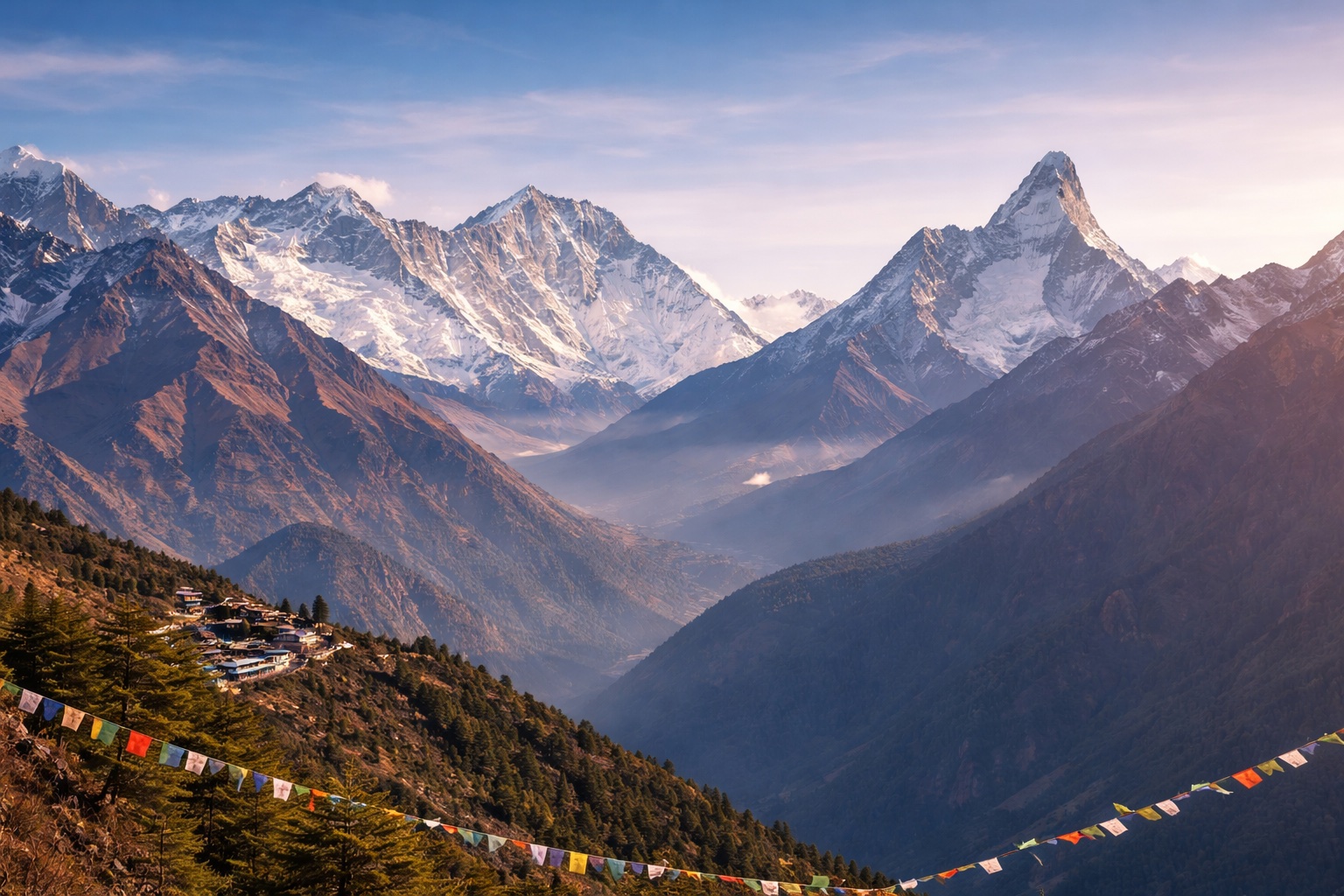
Langtang Gosainkunda Trek
The Langtang Gosainkunda trek combines the glacier-carved Langtang Valley with the sacred alpine lakes of Gosainkunda (4,380 m) in a 12-day loop from Kathmandu. Walk up to Kyanjin Gompa beneath Langtang Lirung (7,227 m), climb Tserko Ri for a panorama of glaciers, then cross the high ridge via Thulo Syabru and Sing Gompa to the holy lakes, pilgrimage site of Lord Shiva, before descending to Dhunche.
No domestic flights are needed: the trailheads are a day's drive from Kathmandu. The trek is graded moderate to challenging, best from March–May and September–December, and passes Tamang villages, red panda forest and yak pastures. Transport, the Langtang National Park permit, guide, porters and lodges with meals are included.
Trip highlights
- Langtang Valley and Kyanjin Gompa below Langtang Lirung
- Tserko Ri (4,984 m) glacier panorama
- Sacred Gosainkunda Lake (4,380 m)
- Tamang villages, Thulo Syabru and Sing Gompa
- No flights needed: a day's drive from Kathmandu
Short itinerary
View detailed itinerary- Day 1 Arrival in Kathmandu (1,400 m) 1,400 m
- Day 2 Drive to Syabrubesi (1,460 m) 1,460 m
- Day 3 Trek to Lama Hotel (2,470 m) 2,470 m
- Day 4 Trek to Langtang village (3,430 m) 3,430 m
- Day 5 Trek to Kyanjin Gompa (3,870 m) 3,870 m
- Day 6 Tserko Ri (4,984 m) and acclimatisation 4,984 m
- Day 7 Trek to Lama Hotel (2,470 m) 2,470 m
- Day 8 Trek to Thulo Syabru (2,210 m) 2,210 m
- Day 9 Trek to Sing Gompa (3,330 m) 3,330 m
- Day 10 Trek to Gosainkunda (4,380 m) 4,380 m
- Day 11 Laurebina Pass viewpoint (4,610 m), descend to Dhunche and drive to Kathmandu 4,610 m
- Day 12 Departure from Kathmandu 1,400 m
Langtang Gosainkunda Trek overview
The Langtang region is the closest major trekking area to Kathmandu, and this route shows its two finest sides. The Langtang Valley is a deep, U-shaped valley rising to the glaciers of Langtang Lirung, home to Tamang and Tibetan-influenced villages rebuilt after the 2015 earthquake. Gosainkunda is a cluster of high lakes on the other side of the ridge, one of Nepal's holiest sites, where thousands of pilgrims gather at the Janai Purnima festival in August.
The trek links the two via Thulo Syabru, a beautiful ridge-top village, and Sing Gompa (Chandanbari), with its old monastery and cheese factory. From Gosainkunda you can continue over the Laurebina Pass (4,610 m) to Helambu, or descend to Dhunche as in this itinerary.
Langtang Gosainkunda trek at a glance
| Trip fact | Details |
|---|---|
| Duration | 12 days from Kathmandu (10 days of trekking) |
| Highest point | Laurebina Pass viewpoint, 4,610 m (Tserko Ri 4,984 m optional) |
| Gosainkunda Lake | 4,380 m |
| Grade | Moderate to challenging |
| Start and finish | Syabrubesi and Dhunche, a day's drive from Kathmandu |
| Permit | Langtang National Park permit |
| Best time | March–May and September–December |
Highlights
- Kyanjin Gompa and the Langtang glaciers.
- Tserko Ri sunrise over Langtang Lirung.
- Gosainkunda, Bhairabkunda and Saraswatikunda sacred lakes.
- Tamang heritage in Thulo Syabru and Langtang village.
- Red panda habitat and rhododendron forest.
How difficult is it?
It is moderate to challenging. The Langtang Valley is gradual, but the climb from Thulo Syabru to Gosainkunda gains over 2,000 m in two days, with a night at Sing Gompa or Lauribina. Your acclimatisation in Kyanjin Gompa helps greatly.
Best time
October–November gives clear views; April brings rhododendrons. Gosainkunda is often frozen and snowbound in winter; check conditions before a December–February trek.
Day-by-day itinerary
What’s included
Included
- Airport pick-up and drop-off in private vehicles
- 2 nights in a hotel in Kathmandu with breakfast
- Road transport Kathmandu – Syabrubesi and Dhunche – Kathmandu
- Langtang National Park permit
- Teahouse lodge accommodation during the trek (9 nights)
- Breakfast, lunch and dinner during the trek
- Licensed, English-speaking trekking guide trained in first aid
- Porters (1 porter for 2 trekkers) with their wages, food, lodging and insurance
- All government and local taxes
Not included
- International flights to and from Kathmandu
- Nepal visa fee
- Travel insurance covering trekking to 5,000 m and helicopter evacuation (compulsory)
- Lunch and dinner in Kathmandu and Pokhara
- Drinks, snacks, hot showers, battery charging and Wi-Fi on the trek
- Extra nights caused by early return, flight delays, landslides or cancellations
- Helicopter evacuation or charter
- Personal equipment and expenses
- Tips for your guide and porters
Useful info
Fitness and preparation
You should be comfortable walking 5–7 hours a day for several days in a row on hilly, uneven trails. Start training two to three months before the trek with long hill walks, stair climbing and cardiovascular exercise, and break in your boots before you travel.
Altitude sickness
The highest point is 4,984 m on Tserko Ri (optional) and 4,610 m near the Laurebina Pass, with a night at Gosainkunda (4,380 m). Most people feel the altitude a little: a mild headache, poor sleep, less appetite. Go slowly, drink 3–4 litres a day, skip the beer until you are back down, and tell your guide straight away if you feel worse. Going down is the cure that always works. Ask your doctor before you travel whether altitude medication makes sense for you.
Weather and temperatures
The valleys are mild, but Kyanjin Gompa and Gosainkunda are cold at night, often below −10°C in late autumn. Gosainkunda can have snow from December to March.
Permits
The Langtang National Park permit is included.
Money, charging and Wi-Fi
Carry Nepali rupees for drinks, snacks, showers and charging, and get them in the city; mountain ATMs are rare and unreliable. Wi-Fi is available in many lodges for a small fee. A power bank is worth packing.
Drinking water
Buy boiled or filtered water at lodges or use purification tablets or a filter with a refillable bottle, instead of buying plastic bottles.
Travel insurance
You need travel insurance that covers trekking to 5,000 m, medical care and helicopter rescue. We ask for your policy details before you arrive.
Visa
You can usually get a Nepal visa on arrival at the airport or apply online in advance. Check that your passport is valid for at least six months, and pack a few passport photos for permits.
Packing list
Clothing
- Moisture-wicking base layers
- Fleece jacket or mid-layer
- Warm down jacket (can be borrowed from us)
- Waterproof and windproof jacket and trousers
- Trekking trousers and shirts
- Warm hat, sun hat and buff
- Liner gloves and insulated gloves
- Trekking socks
Footwear
- Broken-in waterproof trekking boots
- Camp shoes or sandals for the lodges
Equipment
- Sleeping bag rated to about −15°C (can be borrowed from us)
- Daypack of 25–35 litres with rain cover
- Trekking poles
- Head torch with spare batteries
- Water bottles and purification tablets
- Sunglasses with UV protection
- Power bank and charging cables
- Microspikes in winter and early spring
Personal items
- High-factor sunscreen and lip balm
- Personal first-aid kit and medication
- Toiletries, quick-dry towel and wet wipes
- Snacks such as energy bars and nuts
- Passport, insurance details and copies
Add-ons & trip options
Choose add-ons and quantities on the booking form.
More trip options, quoted on request:
- Continue over the Laurebina Pass to Helambu and walk out to Sundarijal (3 extra days).
- Tamang Heritage Trail villages before Langtang.
- Janai Purnima festival at Gosainkunda in August.
Frequently asked questions
In Langtang National Park, north of Kathmandu, at about 4,380 m.
Hindu legend says Lord Shiva created the lake with his trident to cool his throat after drinking poison. Buddhists also revere it.
12 days from Kathmandu in this itinerary.
Moderate to challenging, with a steep climb from Thulo Syabru to Gosainkunda.
No. The trek starts and ends a day's drive from Kathmandu.
March–May and September–December.
It is possible with the right gear, but snow can block the trail and some lodges close.
At the full moon in July or August, when thousands of pilgrims visit the lake.
Yes, the Langtang National Park permit, included.
Red pandas live in the forest between Lama Hotel and Sing Gompa, but sightings are rare.
No. Kyanjin Ri is an easier alternative with great views.
The trek is priced per person with group discounts; see the price box.