
Photography tours in Nepal: the complete guide
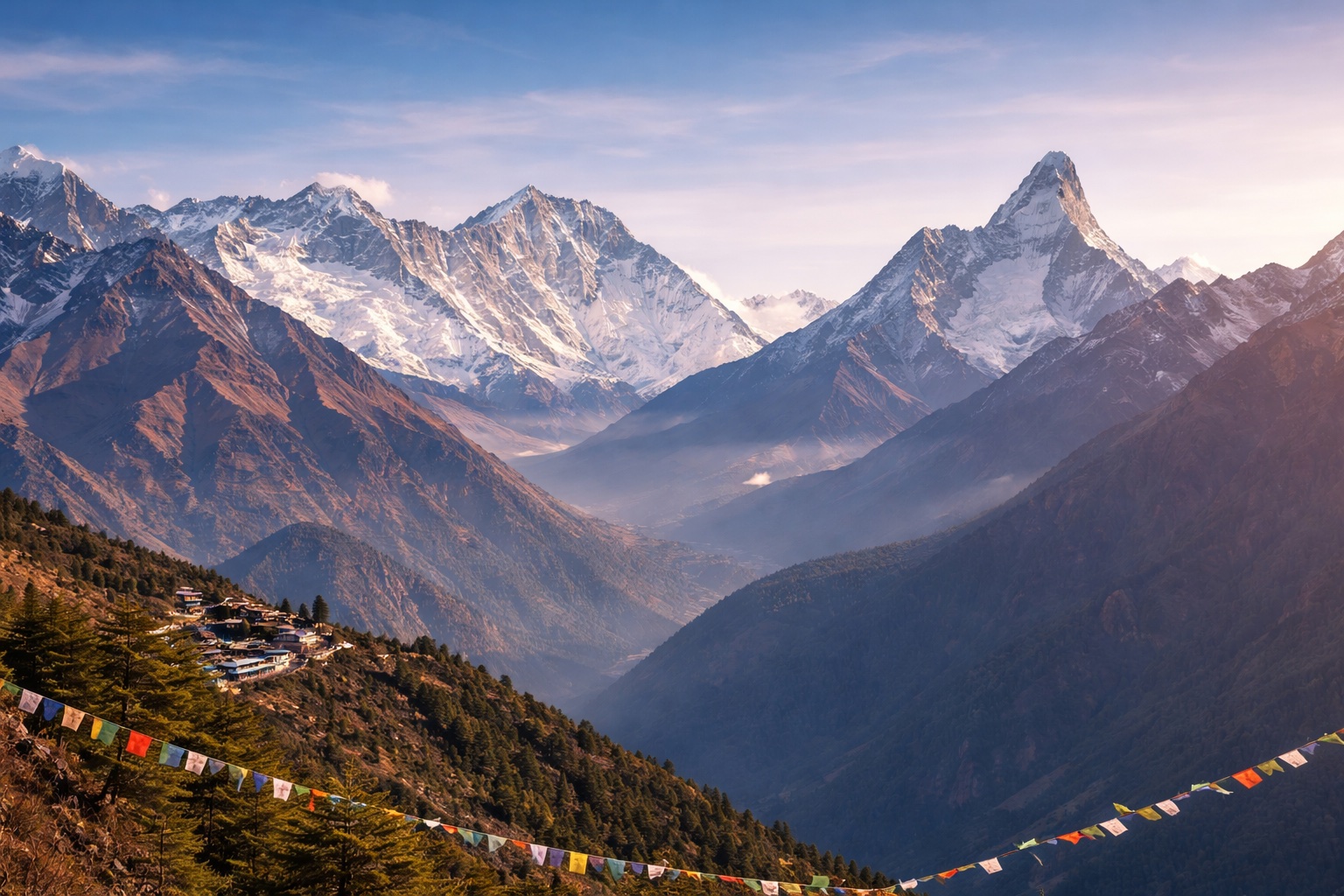
Few countries offer photographers as much variety as Nepal: the highest mountains on Earth, medieval cities, colourful festivals, prayer flags, rice terraces, jungle wildlife and faces full of character. A photography tour is planned around light and timing, so you are in the right place at sunrise and sunset, with time to wait for the shot.
This guide covers Nepal's best photography locations, seasons, etiquette and practical tips.
Mountain photography
The Himalaya are at their most dramatic in the first and last light of the day.
- Sarangkot: sunrise on Machhapuchhre and the Annapurnas above Phewa Lake; see our Sarangkot sunrise tour.
- Nagarkot: a long panorama of peaks east of Kathmandu; see our Nagarkot overnight tour.
- Poon Hill: Dhaulagiri and Annapurna South at dawn.
- Kala Patthar: the classic close-up of Everest.
- From the air: the Everest mountain flight and helicopter tours.
See our guide to the best viewpoints in Nepal.
Temples, stupas and old cities
Early morning is the best time to photograph the Kathmandu Valley, when pilgrims circle the stupas and the light is soft. Try Boudhanath at dawn and dusk, Swayambhunath at sunrise (see our sunrise walk), the squares and lanes of Bhaktapur and Patan, and the evening aarati at Pashupatinath.
Upper Mustang
The red cliffs, eroded canyons, whitewashed villages and walled city of Lo Manthang are a photographer's dream, especially in the soft light of early morning and late afternoon. See our Upper Mustang jeep tour.
Festivals
Festivals offer extraordinary colour and atmosphere: Holi in spring, Bisket Jatra in Bhaktapur, Indra Jatra in Kathmandu, Dashain and Tihar in autumn, and the Tiji masked dances in Lo Manthang. See our festivals guide.
Wildlife photography
In Chitwan and Bardia, jeep safaris and canoe trips bring you close to rhinos, deer, crocodiles and many birds. A long lens (300 mm or more) is essential. See our wildlife tours.
Best time for photography
- October–November: the clearest skies and sharpest mountain views.
- December–February: crisp, clear air and snow on the peaks.
- March–April: rhododendrons in bloom, with some haze.
- June–September: green landscapes and dramatic clouds, but few clear mountain views.
Photographing people respectfully
- Always ask before photographing someone; a smile and a gesture are usually enough.
- Do not photograph cremations at close range, or people at prayer without permission.
- Some monasteries do not allow photography inside; look for signs.
- Avoid paying for photos, which encourages begging; share your pictures instead.
Drones
Flying a drone in Nepal requires permission from the authorities, and drones are banned in and around many heritage sites, national parks and airports. Ask us before bringing one.
Practical tips
Bring spare batteries (they drain quickly in the cold), a lens cloth for dust, a polariser for skies and a light tripod for low light. Charging can be limited on treks. Read our Himalaya photography tips.
Book a photography tour with Himalayan Hiking
Our private photography trips are planned around the light, with guides who know the best spots. Contact us to plan yours.