
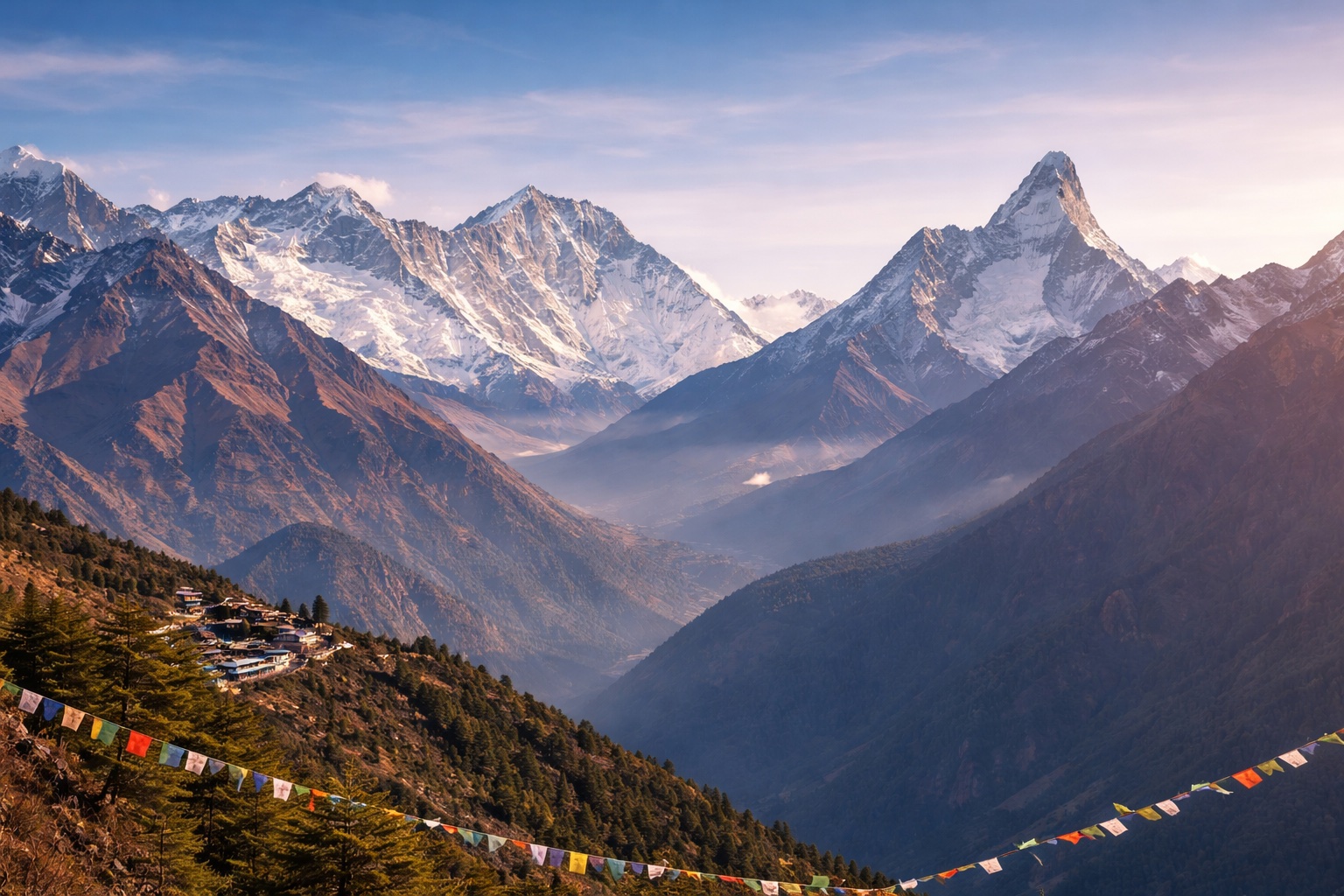
Winter treks in Nepal: the complete guide
Winter (December to February) is the quietest season on Nepal's trails, and one of the most beautiful. Skies are often crystal clear, the mountains are dusted with fresh snow, and the lodges are peaceful. Days are sunny and pleasant at lower altitudes, but nights are cold, and the highest passes can be closed by snow. Choose the right route and a winter trek in Nepal can be the best trip of your life.
This guide explains which treks are best in winter, what the weather is like, and how to stay warm and safe.
What is winter trekking in Nepal like?
In winter, the weather is generally dry and stable, with the clearest skies of the year after the autumn season. Below about 3,000 m, daytime temperatures are often comfortable for walking in a light layer. Higher up, mornings and nights are freezing, and above 4,000 m temperatures can drop well below –10°C at night. Days are shorter, so walking days start a little later and finish before dark.
Best winter treks
- Ghorepani Poon Hill: a short trek with outstanding winter sunrises over Dhaulagiri and the Annapurnas.
- Mardi Himal: a ridge trek close to Machhapuchhre; the upper sections can have snow.
- Everest View trek: see Everest from Namche and Tengboche without going too high.
- Helambu: a low-altitude trek near Kathmandu through Sherpa and Tamang villages.
- Chisapani to Nagarkot: easy walking on the valley rim.
- Pikey Peak: a lesser-known viewpoint with a famous panorama including Everest.
- Australian Camp, Ghandruk and Panchase: short, easy treks near Pokhara.
Can I trek to Everest Base Camp in winter?
Yes, with good equipment and a flexible plan. The trail is quiet and views are often superb, but nights at Lobuche and Gorak Shep are very cold, some lodges close, and snowfall can cause delays. Lukla flights can also be disrupted. See our winter trekking guide.
High passes in winter
Passes such as the Thorong La on the Annapurna Circuit and the Larkya La on the Manaslu Circuit can be blocked by heavy snow in winter, sometimes for days. If you plan a circuit in December, allow spare days and be prepared to turn back. January and February are often the most difficult months for high passes.
What to pack
- A four-season sleeping bag rated to about –15°C or lower for high treks
- A warm down jacket
- Thermal base layers, fleece and warm hat and gloves
- Waterproof boots and gaiters
- Microspikes for icy sections
- Sunglasses and sunscreen: snow reflects strong sunlight
You can rent much of this in Kathmandu; see our gear guide.
Lodges in winter
On popular low and mid-altitude routes, most lodges stay open. Dining rooms are heated by a stove in the evening, but bedrooms are not, so a good sleeping bag is essential. Higher up, some lodges close for the season; your guide will plan accordingly.
Advantages of winter trekking
- The clearest mountain views of the year
- Quiet trails and easy lodge availability
- Comfortable walking temperatures at lower altitudes
- Better availability of flights and guides
Book a winter trek with Himalayan Hiking
We will recommend a route that suits winter conditions and your experience. Contact us, or read our month-by-month guides for December, January and February.