
Mountaineering expeditions in Nepal: the complete guide
Nepal is the heart of Himalayan mountaineering. Eight of the world's fourteen mountains above 8,000 m stand in Nepal or on its borders: Everest (8,848.86 m), Kangchenjunga (8,586 m), Lhotse (8,516 m), Makalu (8,485 m), Cho Oyu (8,188 m), Dhaulagiri I (8,167 m), Manaslu (8,163 m) and Annapurna I (8,091 m). Every spring and autumn, climbers from around the world come to attempt them, supported by Sherpa and other Nepali climbers who are among the strongest mountaineers on Earth.
This guide explains how a Himalayan expedition works, which peak to choose, the experience you need, permits and royalties, costs, seasons and how to prepare.
Choosing your mountain
A first 8,000 m peak
Manaslu is the most popular 8,000 m peak in Nepal in autumn and a common first objective. Cho Oyu, usually climbed from Tibet, is often considered the most accessible of all. Neither is easy: both involve weeks at high altitude, avalanche risk and extreme cold.
Everest
Our Everest expedition follows the South Col route, first climbed by Edmund Hillary and Tenzing Norgay on 29 May 1953, through the Khumbu Icefall, the Western Cwm and the Lhotse Face to the South Col and the summit ridge. Most climbers attempt Everest after at least one other 8,000 m peak.
Lhotse
Lhotse shares the Everest route as far as Camp 3, then climbs the steep, narrow Lhotse couloir to the fourth-highest summit in the world.
The harder giants
Makalu, Kangchenjunga, Dhaulagiri and Annapurna are more technical, more remote or more exposed to objective dangers. Annapurna, the first 8,000 m peak ever climbed (1950), is known for its avalanche risk. These are for climbers with previous 8,000 m experience.
Preparation peaks
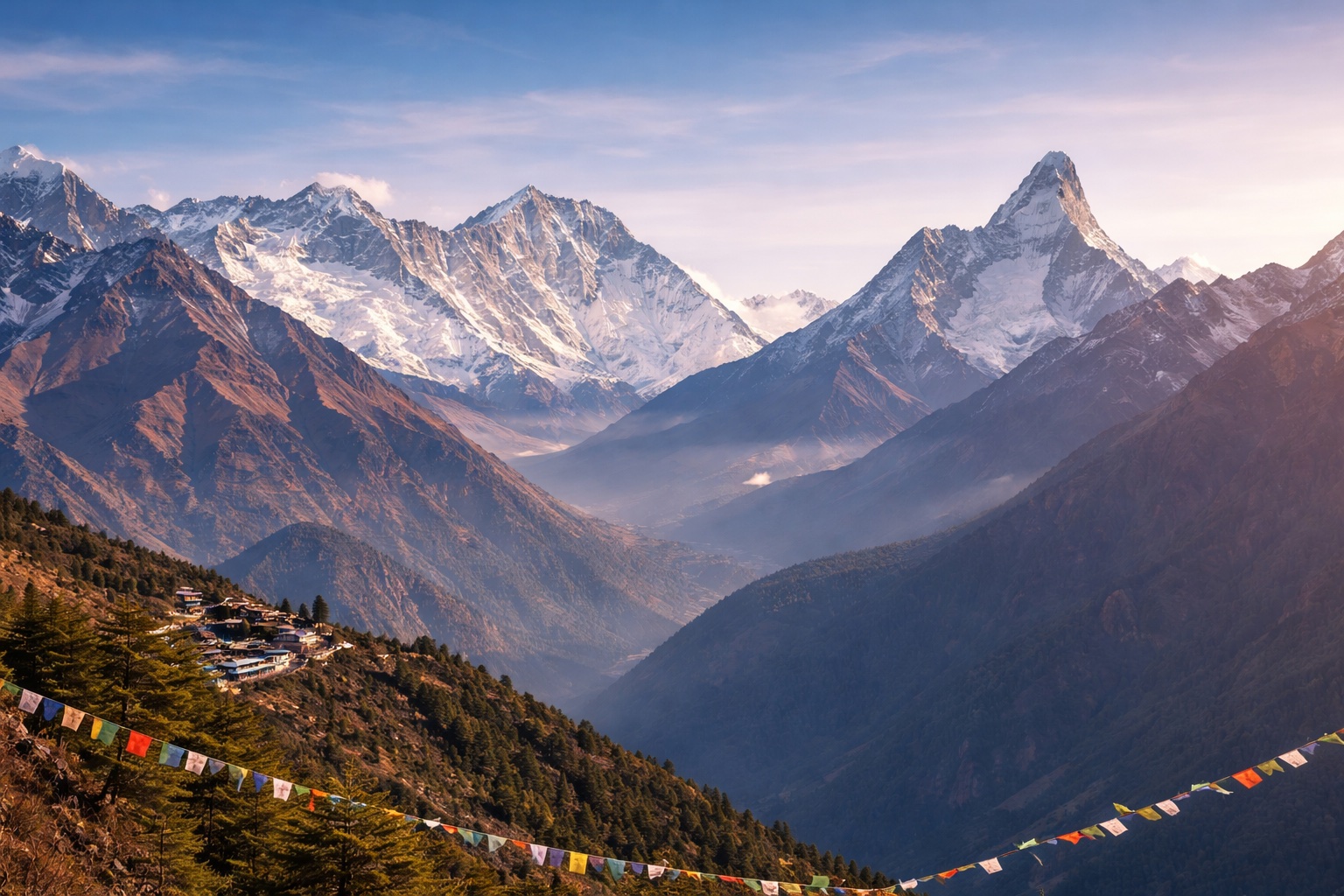
Before an 8,000 m peak, most climbers build experience on a 6,000–7,000 m mountain. Ama Dablam (6,812 m) is a beautiful, technical rock and ice climb in the Everest region; Himlung Himal (7,126 m) is a popular first 7,000 m peak; and Baruntse (7,129 m) is a remote, high climb between Everest and Makalu. For an introduction to Himalayan climbing, start with a trekking peak such as Island Peak or Mera Peak; see our peak climbing page.
How an expedition works
An 8,000 m expedition usually takes six to nine weeks. After preparation in Kathmandu, you travel to the mountain by flight, road or helicopter and trek to base camp, acclimatising on the way. At base camp, a puja ceremony asks the mountain's blessing. Then the climbing period begins: a series of rotations, climbing to progressively higher camps and returning to base camp to rest, so your body adapts to the altitude. When you are acclimatised and the forecast shows a weather window of calm winds, the team makes its summit push, moving up through the high camps to the summit and back down.
Expeditions build in spare days because weather, route conditions and health can all cause delays.
Climbing Sherpas and the team
Experienced climbing Sherpas fix ropes, carry loads, set up high camps and climb with you on summit day. On our 8,000 m expeditions, each climber has a personal climbing Sherpa for the summit push. At base camp, a cook and kitchen team provide hot meals, and an expedition leader coordinates the weather forecasts, logistics and safety decisions.
Experience and skills required
- For an 8,000 m peak: at least one 7,000 m peak, or several high 6,000 m peaks.
- For Everest: previous 8,000 m experience is strongly recommended.
- Confident use of crampons and ice axe, fixed ropes, jumar (ascender) and abseiling.
- Experience of cold, multi-day climbs and life in high camps.
Send us your climbing CV and we will advise on the right objective.
Permits, royalty and rules
Every expedition needs a climbing permit from Nepal's Department of Tourism, issued through a registered expedition agency, and the climbers pay a royalty. Since September 2025, the royalty for Everest by the normal route is US$15,000 per foreign climber in spring and US$7,500 in autumn. For the other 8,000 m peaks, it is US$3,000 in spring and US$1,500 in autumn. Expeditions also pay a refundable garbage deposit, national park or conservation area fees and the costs of a government liaison officer. Since September 2025, solo expeditions on peaks above 8,000 m are not allowed; every climber must be accompanied by a licensed guide. Our prices include the permit and royalty.
Supplemental oxygen
Most climbers on 8,000 m peaks use supplemental oxygen above the higher camps, which reduces the risk of frostbite, altitude illness and poor decisions. Our 8,000 m expeditions include an oxygen allowance with mask and regulator; extra bottles can be added. On 6,000–7,000 m peaks, oxygen is carried for emergencies.
Cost of an expedition
The cost depends on the mountain, the level of service and the size of the team. Our expeditions start from about US$7,900 for Ama Dablam and US$15,900 for Manaslu, to US$44,900 for Everest. Prices include the permit and royalty, Sherpa support, base camp and high camp services, oxygen on 8,000 m peaks, and transport and accommodation from Kathmandu. Personal equipment, insurance and the summit bonus for climbing Sherpas are extra.
Seasons
- Spring (April–May): the main season for Everest, Lhotse, Makalu, Kangchenjunga, Dhaulagiri and Annapurna, before the monsoon.
- Autumn (September–October): the main season for Manaslu, Cho Oyu, Ama Dablam, Himlung and Baruntse, after the monsoon.
- Winter: only for highly experienced teams.
Training
Start training six to twelve months before an 8,000 m expedition. Focus on long days carrying a heavy pack uphill, endurance cardio, strength training for legs and core, and practice on technical terrain. Climbing a high peak in the year before your expedition is the best preparation of all.
Equipment
You will need specialist high-altitude equipment, including a down climbing suit, double boots rated for 8,000 m, expedition mitts, an expedition sleeping bag rated to about –35°C, crampons, ice axe, harness, jumar and descender. We send a full kit list when you book, and much can be bought or rented in Kathmandu.
Insurance and safety
Climbing insurance covering the summit altitude and helicopter evacuation is mandatory. Our team carries satellite phones and radios, receives professional weather forecasts and follows clear turnaround times. The mountain will always be there: the most important decision on any expedition is when to turn back.
Book an expedition with Himalayan Hiking
Our expedition team in Kathmandu handles permits, logistics and Sherpa support for climbers from around the world. Contact us with your climbing experience and goals, and we will help you choose the right mountain and season. Read more in our Everest facts and trekking peaks guides.