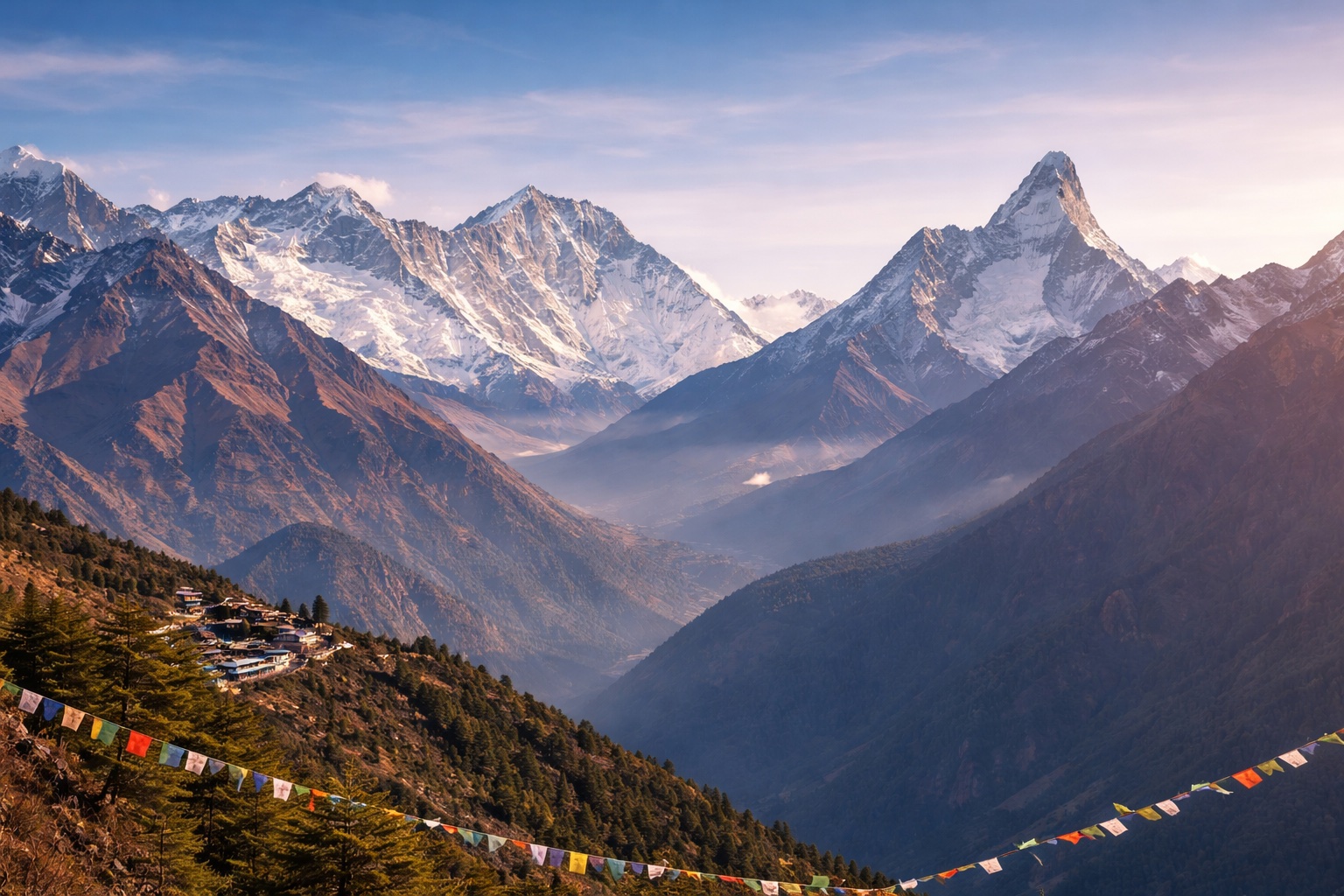
Island Peak climbing with Everest Base Camp is an 18-day guided expedition that combines the classic Everest Base Camp trek with an ascent of Island Peak (Imja Tse, 6,165 m), the most popular trekking peak in Nepal. You acclimatise on the way to Everest Base Camp (5,364 m) and Kala Patthar (5,545 m), then move to the Imja valley for a day of climbing training and a summit push up a glacier, a fixed-rope headwall and a narrow ridge to a summit facing the south face of Lhotse.
The climb is graded challenging (Alpine PD) and suits fit trekkers who are comfortable at altitude; previous climbing experience is helpful but not essential. The best seasons are April–May and October–November. The climbing permit, an experienced climbing guide, group climbing equipment, Lukla flights, permits, lodges and base camp tents are all arranged by our team in Kathmandu.
Island Peak, known locally as Imja Tse, rises from the Imja valley above Chhukung like an island in a sea of ice, which is how the British climbers of the 1953 Everest expedition named it. Today it is the most climbed of Nepal's so-called trekking peaks and the classic first Himalayan summit. From the top you look across to the vast south face of Lhotse, with Makalu, Baruntse, Ama Dablam and the Imja glacier all around.
This itinerary combines the climb with the Everest Base Camp trek, which provides the best possible acclimatisation. By the time you reach Island Peak Base Camp, you have already spent several nights above 4,900 m and stood at 5,545 m on Kala Patthar, giving you the strongest chance of a safe and successful summit.
| Trip fact | Details |
|---|---|
| Duration | 18 days from Kathmandu |
| Summit | Island Peak (Imja Tse), 6,165 m (20,226 ft) |
| Also visits | Everest Base Camp (5,364 m) and Kala Patthar (5,545 m) |
| Grade | Challenging; Alpine PD with a fixed-rope headwall |
| Summit day | 10–12 hours from base camp and back |
| Accommodation | Hotel in Kathmandu, teahouse lodges, tents at base camp |
| Permits | Island Peak climbing permit, Sagarmatha National Park and Khumbu Pasang Lhamu permits |
| Best time | April–May and October–November |
The trip follows the Everest Base Camp trek from Lukla through Namche Bazaar, Tengboche and Dingboche, with acclimatisation days, to Lobuche, Gorak Shep, Everest Base Camp and Kala Patthar. You then descend to Dingboche and walk up the Imja valley to Chhukung and Island Peak Base Camp (about 5,087 m).
On summit day you leave base camp in the early hours, climb a rocky gully to the crampon point, rope up and cross the glacier, weaving between crevasses, to the foot of the headwall. A steep snow and ice slope of about 100 metres is climbed on fixed ropes with an ascender, leading to the narrow summit ridge and the top at 6,165 m. You descend the same way, abseiling down the headwall, and return to base camp or Chhukung.
Previous mountaineering experience is helpful but not essential. You should be a fit, experienced trekker who is comfortable at altitude. On the training day at base camp, your climbing guide teaches or refreshes the essential skills: fitting and walking in crampons, using an ice axe, clipping into fixed ropes, climbing with an ascender (jumar) and abseiling. A winter skills course or a guided climb at home before the trip will add confidence.
Start training at least three to four months before the trip. Focus on long hill walks of six to eight hours with a loaded pack, ideally on consecutive days; cardiovascular training four or five times a week; and strength training for the legs and core. The summit day is long and cold, so mental stamina matters as much as fitness.
Group climbing equipment, such as fixed ropes, snow bars and ice screws, is provided. You need personal gear: mountaineering boots compatible with crampons, crampons, harness, helmet, ice axe, ascender, descender and carabiners, plus warm down clothing. Most technical gear can be rented in Kathmandu or at Chhukung; we provide a full list when you book.
Your climbing guide is experienced on Island Peak and follows strict turnaround times. The itinerary includes a reserve day in case weather or conditions delay the summit attempt. Your insurance must cover mountaineering to at least 6,500 m and helicopter evacuation.
April–May is the most popular season, with warmer temperatures and stable weather. October–November brings clear skies and excellent views, but colder summit days. Winter and the monsoon are not recommended.
You need excellent fitness for long trekking days and a 10–12 hour summit day at altitude. Train for three to four months with long hill walks carrying a pack, cardio and leg-strength work. Previous experience above 5,000 m is recommended.
You will reach 6,165 m on the summit of Island Peak, after acclimatising at Everest Base Camp and Kala Patthar on this trek. Watch for headache, nausea, dizziness and trouble sleeping, and tell your guide about any of them early. The basics work: walk slowly, drink plenty of water, avoid alcohol, and if things get worse, descend. It is worth asking your doctor about altitude medication before the trip.
Summit mornings are very cold, often well below −15°C with wind, even in spring. Days in the lower valley are mild. Weather can delay the climb, which is why a reserve day is included.
Lukla flights depend on weather; keep flexible plans for your international flight. The baggage limit is around 15 kg on the flight, so we recommend renting heavy climbing gear in Kathmandu or at Chhukung.
The Island Peak climbing permit, Sagarmatha National Park permit and Khumbu Pasang Lhamu Rural Municipality permit are included.
Bring enough Nepali rupees from Kathmandu or Pokhara for extras on the trek; ATMs are rare and unreliable in the mountains. Battery charging, hot showers and Wi-Fi are usually paid extras in lodges, and a power bank is useful.
Skip the plastic bottles. Lodges sell boiled or filtered water, or you can treat tap water with tablets or a filter and refill your own bottle.
We can't take you on the trek without insurance. Check that your policy covers trekking to 6,500 m, including mountaineering and emergency helicopter evacuation, and send us the details before you travel.
Most nationalities can get a Nepal tourist visa on arrival at Kathmandu airport or apply online in advance. Bring a passport valid for at least six months and passport photos for permits.
Choose add-ons and quantities on the booking form.
More trip options, quoted on request:
Island Peak (Imja Tse) is 6,165 m (20,226 ft).
It is helpful but not essential. You should be a fit trekker comfortable at altitude. A training day at base camp covers crampons, ice axe, fixed ropes, ascending and abseiling.
It is graded Alpine PD (slightly difficult). The hardest section is a steep snow and ice headwall of about 100 m on fixed ropes, followed by an exposed summit ridge. Altitude and cold are the main challenges.
The Everest Base Camp trek and Kala Patthar provide excellent acclimatisation, greatly improving your chances of a safe summit.
Usually 10–12 hours from base camp to the summit and back, starting in the early hours of the morning.
An Island Peak climbing permit plus the Sagarmatha National Park and Khumbu Pasang Lhamu permits. All are included.
Mountaineering boots, crampons, harness, helmet, ice axe, ascender, descender and warm down clothing. Group equipment such as fixed ropes is provided; personal gear can be rented.
April–May and October–November. Spring is warmer; autumn has clearer skies but colder summit days.
The itinerary includes a reserve day. If conditions are unsafe, the guide will postpone or turn back; safety always comes first.
Yes. Successful climbers receive a summit certificate for this Nepal Mountaineering Association peak, subject to its rules.
Insurance must specifically cover mountaineering up to at least 6,500 m, medical treatment and helicopter evacuation. Many standard policies exclude climbing.
It's priced per person, and groups get a discount; the price box has the details. It includes the climbing permit, climbing guide, group gear, Lukla flights, permits, lodges, tents and meals.