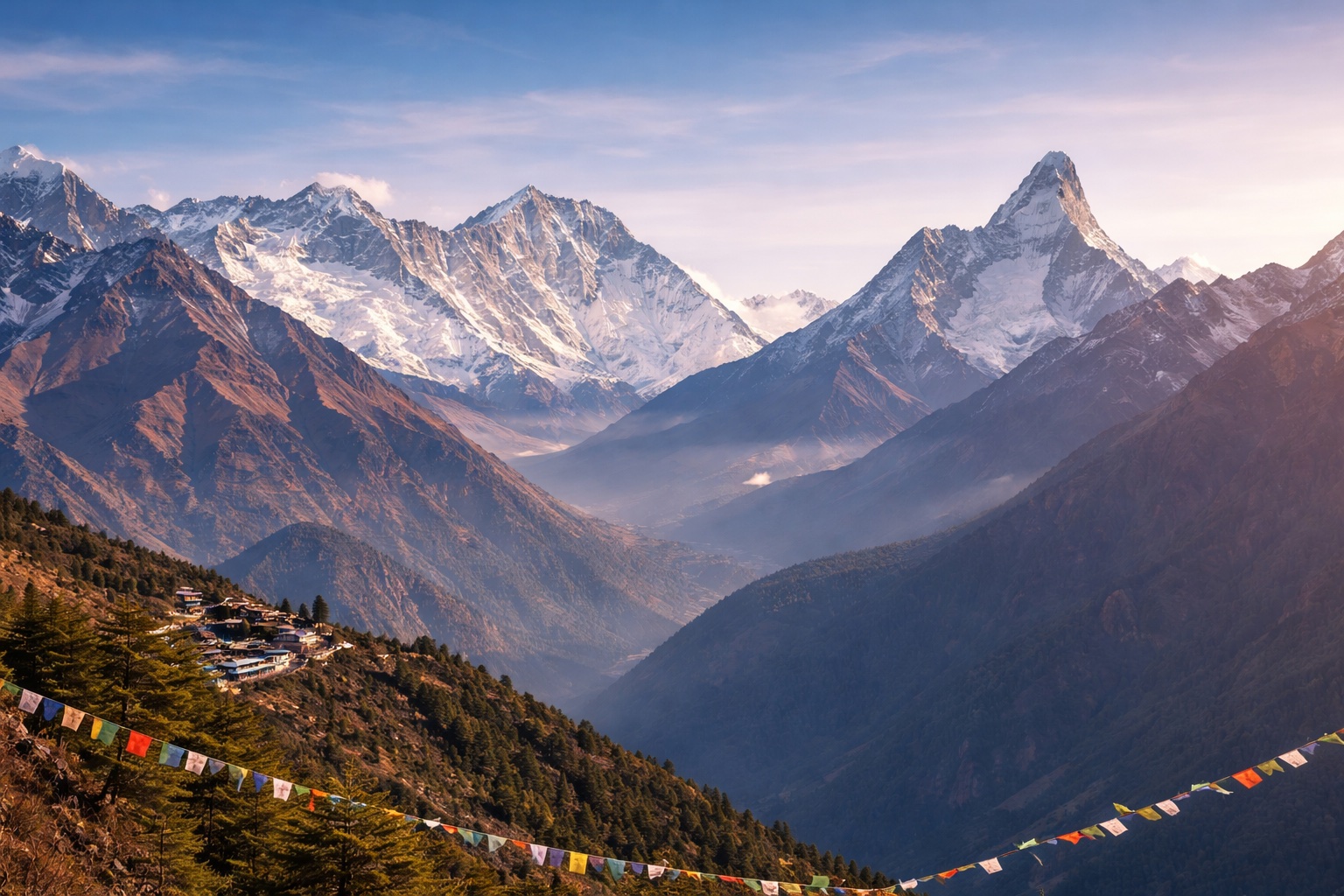
Mera Peak climbing is a 17-day guided expedition to Mera Peak (6,476 m), the highest trekking peak in Nepal. From Lukla, you cross the Zatrwa La (4,610 m) into the remote Hinku valley, acclimatise at Khare, and climb a broad glacier to a summit with one of the greatest views in the Himalaya: five of the world's six highest mountains, Everest, Kanchenjunga, Lhotse, Makalu and Cho Oyu.
Mera Peak is technically straightforward (Alpine F/PD), mostly a long glacier walk on moderate snow slopes, but its altitude makes it a serious challenge. It suits fit trekkers with experience at altitude and is best from April–May and October–November. The climbing permit, an experienced climbing guide, group equipment, Lukla flights, lodges and high camp are all arranged by our team in Kathmandu.
Rising above the remote Hinku and Hongu valleys south of Everest, Mera Peak is the highest of Nepal's trekking peaks and one of the best first 6,000-metre summits in the world. The climb itself is not steep or technical for most of the route, but it takes you higher than almost any other trekking peak, to a summit that feels like the roof of the Himalaya.
The walk in is half the point. After the flight to Lukla, the route crosses the Zatrwa La into the forested Hinku valley, a remote valley between the Everest and Makalu regions, where the trails are quiet and the lodges simple. Above Khare, the Mera Glacier leads to high camp and the summit ridge.
| Trip fact | Details |
|---|---|
| Duration | 17 days from Kathmandu |
| Summit | Mera Peak (central summit), 6,476 m (21,247 ft) |
| Grade | Challenging; technically Alpine F/PD, with a short steep section below the summit |
| Summit day | 8–10 hours from high camp to the summit and down to Khare |
| Route | Lukla, Zatrwa La, Hinku valley, Khare, Mera high camp |
| Accommodation | Hotel in Kathmandu, teahouse lodges, tents at high camp |
| Permits | Mera Peak climbing permit and regional permits |
| Best time | April–May and October–November |
After flying to Lukla, you walk to Chutanga and cross the Zatrwa La to Thuli Kharka, then descend into the Hinku valley through rhododendron and fir forest to Kothe. The valley opens as you climb past Thaknak to Khare (about 5,045 m), beneath the Mera Glacier, where you spend a day acclimatising and training.
From Khare, the route climbs the Mera La and the glacier to high camp at about 5,780 m, on a rocky outcrop that looks straight across to Everest, Makalu and Kanchenjunga. On summit day you rope up and climb the gently angled glacier in the dark, reaching the steeper final slope below the central summit at sunrise, with fixed rope used where needed. After the summit you descend to Khare, and retrace the route to Lukla.
Mera Peak is suitable for fit trekkers without extensive mountaineering experience, but you should be comfortable at high altitude and ideally have trekked above 5,000 m before. Your climbing guide will teach or refresh crampon technique, rope travel on the glacier and the use of an ascender for the final section during the training day at Khare.
Altitude is the main challenge on Mera Peak. The route crosses the Zatrwa La early, so this itinerary climbs gradually through the Hinku valley and includes an acclimatisation and training day at Khare before moving to high camp. A reserve day allows for weather or extra acclimatisation. Your insurance must cover mountaineering to at least 6,500 m.
April–May offers warmer temperatures and stable weather; October–November has clear skies and outstanding views, but colder summit mornings. Winter and the monsoon are not recommended.
Mera Peak is higher but technically easier, mostly glacier walking, with a remote approach. Island Peak is lower but more technical, with a steep fixed-rope headwall and a narrow ridge, and is usually combined with the Everest Base Camp trek. Choose Mera if altitude suits you and you prefer a less technical climb; choose Island Peak for a steeper climbing experience.
You need excellent fitness for long trekking days and a summit day of 8–10 hours above 5,700 m. Train for three to four months with long hill walks carrying a pack, cardio and leg-strength work. Previous experience above 5,000 m is strongly recommended.
This trek reaches 6,476 m on the summit, with high camp at about 5,780 m. Symptoms of acute mountain sickness include headache, nausea, dizziness, loss of appetite and poor sleep. Walk slowly, drink 3–4 litres of water a day, avoid alcohol and tell your guide about any symptoms. If symptoms get worse, descending is the most effective treatment. Talk to your doctor before the trip about whether altitude medication is right for you.
Summit mornings are very cold, often below −20°C with wind chill. The Hinku valley is mild by day. Weather can delay the summit, which is why a reserve day is included.
Lukla flights depend on weather; a reserve day is included in Kathmandu. The baggage limit is around 15 kg, so rent heavy climbing gear in Kathmandu.
The Mera Peak climbing permit and regional entry permits are included.
Take out cash in Kathmandu or Pokhara before you set off: there are very few ATMs on the trail, and the ones that exist often don't work. Lodges charge a little for hot showers, charging and Wi-Fi, so a power bank saves money.
Bring a refillable bottle and either purification tablets or a filter. Lodges also sell boiled water, which is cheaper and better for the trail than bottled water.
Travel insurance is compulsory. It must cover trekking to 6,500 m, including mountaineering, medical treatment and emergency helicopter evacuation. Please send us your policy details before departure.
Most visitors get a tourist visa on arrival at Kathmandu airport, or apply online before they fly. Your passport needs six months' validity, and bring a few passport photos for trekking permits.
Choose add-ons and quantities on the booking form.
More trip options, quoted on request:
Mera Peak's central summit is 6,476 m (21,247 ft), making it the highest trekking peak in Nepal.
Not very. It is graded Alpine F/PD: mostly a long glacier walk on moderate snow, with a short steeper section below the summit where a fixed rope may be used. Altitude is the main challenge.
Extensive experience is not needed, but you should be fit and comfortable at high altitude, ideally having trekked above 5,000 m. Training is provided at Khare.
Five of the six highest mountains in the world: Everest, Kanchenjunga, Lhotse, Makalu and Cho Oyu, plus Baruntse, Chamlang and Ama Dablam.
Mera is higher but less technical; Island Peak is lower but has a steep fixed-rope headwall. Choose based on your comfort with altitude and technical climbing.
This itinerary takes 17 days from Kathmandu, including acclimatisation, training and reserve days.
A Mera Peak climbing permit and regional entry permits, all included.
Mountaineering boots, crampons, harness, helmet, ice axe, ascender, descender and warm down clothing. Group equipment is provided and personal gear can be rented.
April–May and October–November.
A reserve day is built in. If conditions are unsafe, the guide will postpone or turn back.
Insurance covering mountaineering up to at least 6,500 m, medical treatment and helicopter evacuation.
The trip is priced per person, with group discounts; see the price box. It includes the climbing permit, climbing guide, group gear, flights, lodges, high camp and meals.