
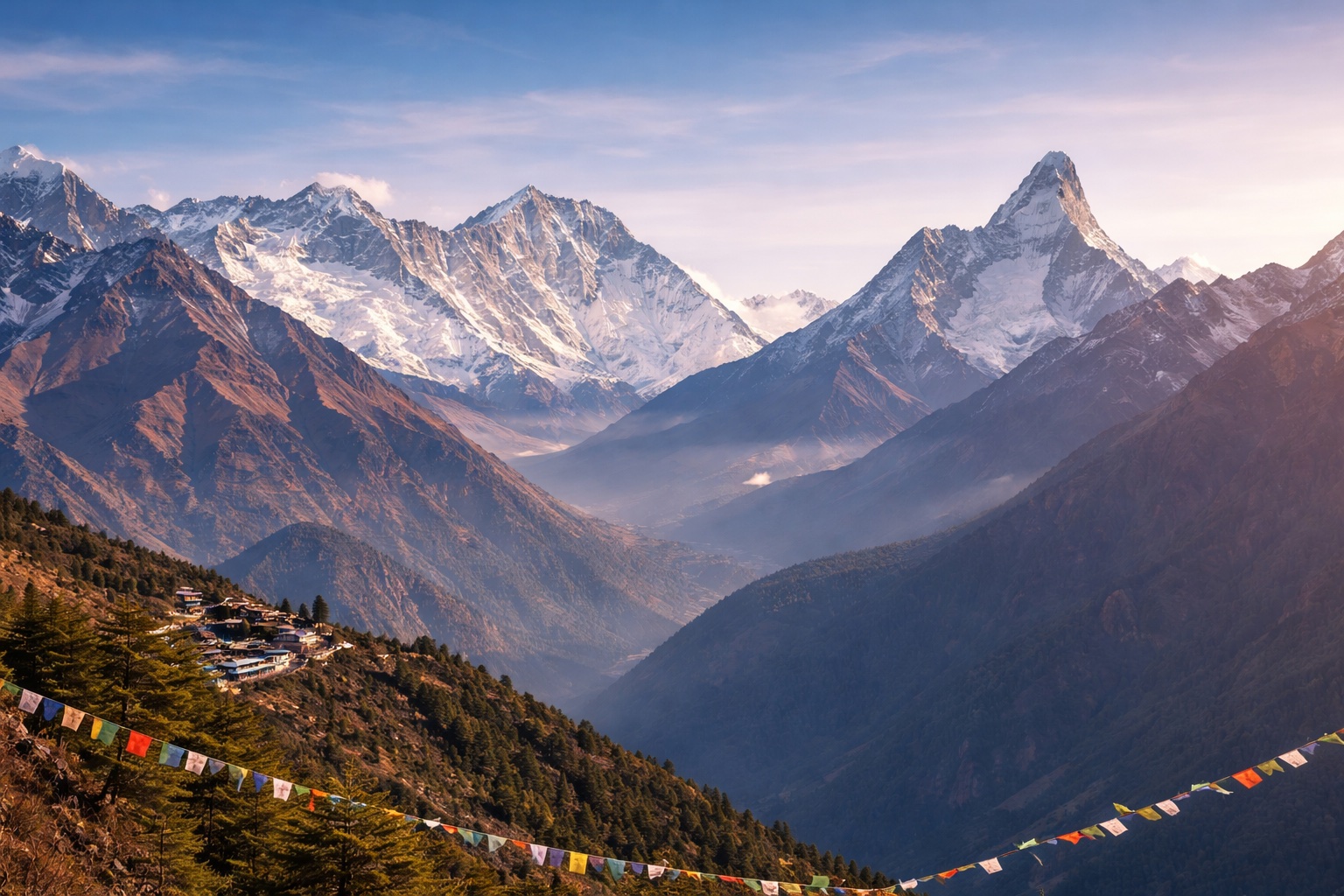
Makalu Expedition
The Makalu expedition is a full-service climb of the 8,485 m peak by the Makalu La (north-west ridge). The fifth-highest mountain in the world is a striking four-sided pyramid near Everest, and one of the most technical of the 8,000 m peaks. A French team made the first ascent in 1955.
Our 55-day expedition includes the climbing permit and royalty, an experienced climbing Sherpa for every climber on summit day, base camp and high camp services, supplemental oxygen, mask and regulator, and all logistics from Kathmandu.
Trip highlights
- Summit of Makalu, 8,485 m
- The Makalu La (north-west ridge)
- Experienced climbing Sherpas
- Full base camp and high camp services
- Permits, royalty and logistics handled
Short itinerary
View detailed itinerary- Day 1 Arrival in Kathmandu (1,400 m) 1,400 m
- Day 2–3 Preparation, gear check and permits 1,400 m
- Day 4 Fly to Tumlingtar, drive to Num 1,560 m
- Day 5–12 Trek to base camp 5,700 m
- Day 13–48 Climbing period 8,485 m
- Day 49–53 Trek out to Num 1,560 m
- Day 54 Drive to Tumlingtar, fly to Kathmandu 1,400 m
- Day 55 Departure 1,400 m
Makalu Expedition overview
Quick answer: a 55-day Makalu expedition by the Makalu La (north-west ridge), from US$26,900 per climber, including the permit and royalty, climbing Sherpa support, base camp and high camp services and supplemental oxygen, mask and regulator.
This expedition is for experienced mountaineers. See our guide to expeditions in Nepal for requirements, permits and how to prepare.
At a glance
| Fact | Details |
|---|---|
| Summit | 8,485 m |
| Route | Makalu La (north-west ridge) |
| Duration | 55 days from Kathmandu |
| Base camp | Advanced base camp, about 5,700 m |
| High camps | Camps on the glacier and at the Makalu La (about 7,400 m), with a high camp above |
| Royalty | Included |
| Cost | From US$26,900 per climber |
Day-by-day itinerary
What’s included
Included
- Airport transfers and hotel in Kathmandu with breakfast
- Expedition permit and government royalty
- Liaison officer, garbage deposit and national park or conservation fees
- Domestic flights or road transport to and from the mountain
- Lodges and meals on the approach trek
- Base camp: individual tent, dining and kitchen tents, cook and kitchen team, all meals
- Experienced climbing Sherpa (1:1 on summit day)
- High-altitude tents, food and fuel at high camps
- Supplemental oxygen, mask and regulator
- Contribution to fixed ropes on the route
- Satellite phone and radios for communication
- Insurance for Nepali staff
- All government and local taxes
Not included
- International flights and Nepal visa
- Personal climbing equipment
- Climbing and travel insurance including helicopter evacuation (mandatory)
- Summit bonus for climbing Sherpas
- Extra oxygen beyond the allowance
- Helicopter flights unless stated
- Lunch and dinner in Kathmandu
- Personal expenses and tips
Dates & prices
Useful info
Experience
You should have climbed at least one 7,000 m peak, or several high 6,000 m peaks, and be confident with crampons, ice axe, fixed ropes, jumar and abseiling. Send us your climbing CV when you enquire.
Fitness
Train for 6–12 months with long days carrying a pack, uphill endurance work and strength training.
Insurance
Insurance covering climbing to the summit altitude and helicopter evacuation is mandatory.
Rules
Since September 2025, Nepal does not allow solo expeditions on peaks over 8,000 m; every climber is accompanied by a licensed guide or climbing Sherpa.
Packing list
- Down climbing suit and expedition down jacket
- High-altitude double boots
- Crampons, ice axe, harness, jumar and descender
- Expedition sleeping bag rated to about –35°C
- Expedition mitts and gloves
- Glacier glasses and goggles
- Helmet
Add-ons & trip options
Choose add-ons and quantities on the booking form.
More options, quoted on request:
- Private expedition with your own Sherpa team.
- Extra oxygen and a personal oxygen plan.
- Helicopter return from base camp.
Frequently asked questions
8,485 m.
55 days from Kathmandu.
From US$26,900 per climber, including the permit and royalty.
At least one 7,000 m peak or several high 6,000 m peaks, and solid technical skills.
It is generally considered more technical, with steep sections high on the mountain and less fixed infrastructure.