
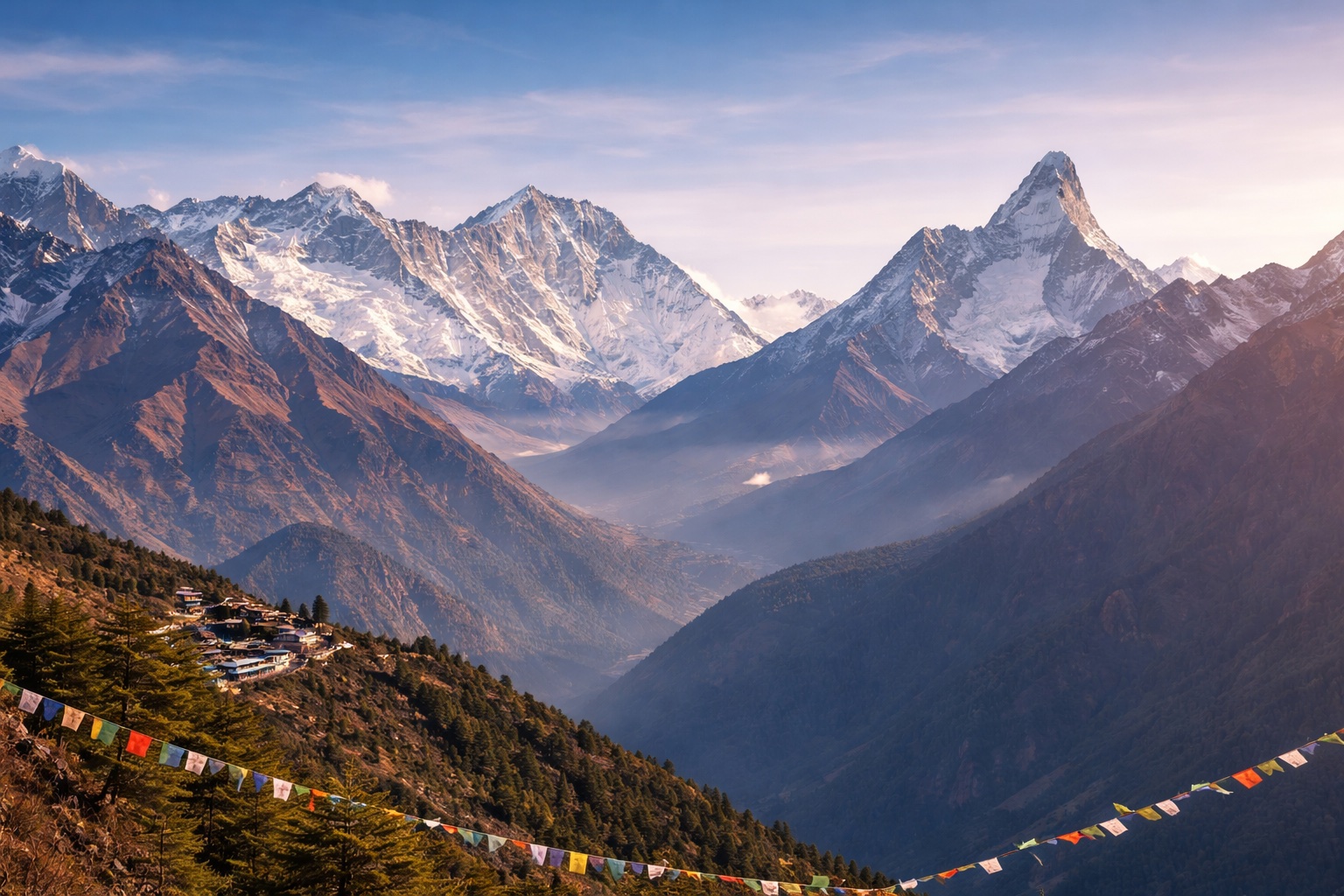
Pikey Peak Trek
The Pikey Peak trek is a short 8-day trek in the lower Solukhumbu to one of the best Everest viewpoints in Nepal, without the Lukla flight. From the summit of Pikey Peak (4,065 m), sunrise lights up a 180° panorama of Everest, Makalu, Kanchenjunga, Lhotse, Numbur and Gauri Shankar, a view Sir Edmund Hillary is said to have called his favourite of Everest.
The route follows quiet trails through rhododendron forest, yak pastures and Sherpa villages such as Junbesi, home to the Thupten Chholing monastery. Graded moderate, it suits first-time trekkers and anyone short of time, and is best from March–May and October–December. Jeep transfers, permits, guide, porters and lodges with meals are included.
Trip highlights
- Sunrise from Pikey Peak (4,065 m) over Everest and eight 8,000 m peaks
- No Lukla flight: jeep access from Kathmandu
- Sherpa villages and homestays in the Solu region
- Junbesi and the Thupten Chholing monastery
- Quiet rhododendron forest trails
Short itinerary
View detailed itinerary- Day 1 Arrival in Kathmandu (1,400 m) 1,400 m
- Day 2 Drive to Dhap (2,900 m) 2,900 m
- Day 3 Trek to Jhapre (3,450 m) 3,450 m
- Day 4 Trek to Pikey Base Camp (3,640 m) 3,640 m
- Day 5 Pikey Peak (4,065 m) sunrise, trek to Jase Bhanjyang (3,500 m) 4,065 m
- Day 6 Trek to Junbesi (2,675 m) 2,675 m
- Day 7 Trek to Phaplu, drive to Kathmandu 1,400 m
- Day 8 Departure from Kathmandu 1,400 m
Pikey Peak Trek overview
Quick answer: the Pikey Peak trek takes about 8 days from Kathmandu, reaches 4,065 m, costs from US$790 per person, and is reached by road, so it avoids Lukla flight delays. On a clear morning you can see Everest and several other 8,000 m peaks from the top, and it's one of the best short treks in the Everest region.
Pikey Peak lies in the Solu region, south of the main Khumbu trail. Sherpa people consider the hill sacred, and prayer flags and a small shrine crown the summit. Because very few trekkers come here, lodges are quiet, many are family homestays, and you experience Sherpa life as it was before tourism reached the upper Khumbu.
Pikey Peak trek at a glance
| Trip fact | Details |
|---|---|
| Duration | 8 days from Kathmandu (5 days of trekking) |
| Maximum altitude | Pikey Peak, 4,065 m / 13,337 ft |
| Grade | Moderate |
| Access | By jeep, no Lukla flight |
| Views | Everest, Makalu, Kanchenjunga, Lhotse, Numbur, Gauri Shankar |
| Accommodation | Teahouses and homestays |
| Permit | Local rural municipality fee |
| Best time | March–May and October–December |
| Cost | From US$790 per person |
Why do the Pikey Peak trek?
- Everest sunrise view from 4,065 m, with eight 8,000 m peaks in sight.
- No Lukla flight and no flight delays.
- Short and affordable: 8 days and lower cost than EBC.
- Authentic Sherpa villages and the Thupten Chholing monastery.
- Few trekkers, and rhododendron forest in full flower in spring.
How difficult is the Pikey Peak trek?
It is moderate. Days are 5–6 hours with some steep sections, and the highest point is just over 4,000 m. Altitude sickness is possible but uncommon. It is a good first trek in Nepal or a warm-up before a longer route.
Pikey Peak trek or Everest View Trek?
The Everest View Trek flies to Lukla and visits Namche Bazaar; Pikey Peak is reached by road, is quieter and has a wider panorama including Kanchenjunga and Makalu, but a more distant view of Everest.
Best time
October–December brings the clearest skies; March–April brings rhododendrons in bloom. Winter is possible but cold at the top.
Day-by-day itinerary
What’s included
Included
- Airport pick-up and drop-off in private vehicles
- 2 nights in a hotel in Kathmandu with breakfast
- Jeep transport Kathmandu – Dhap and Phaplu – Kathmandu
- Local rural municipality fees
- Teahouse and homestay accommodation during the trek (5 nights)
- Breakfast, lunch and dinner during the trek
- Licensed, English-speaking trekking guide trained in first aid
- Porters (1 porter for 2 trekkers) with their wages, food, lodging and insurance
- All government and local taxes
Not included
- International flights to and from Kathmandu
- Nepal visa fee
- Travel insurance covering trekking to 4,100 m and helicopter evacuation (compulsory)
- Lunch and dinner in Kathmandu and Pokhara
- Drinks, snacks, hot showers, battery charging and Wi-Fi on the trek
- Extra nights caused by early return, flight delays, landslides or cancellations
- Helicopter evacuation or charter
- Personal equipment and expenses
- Tips for your guide and porters
Useful info
Fitness and preparation
If you can walk 15 km with a few hundred metres of climbing and do it again the next day, you are in good shape for this trek. Start training two to three months ahead, and break in your boots before you fly.
Altitude sickness
This trek reaches 4,065 m on Pikey Peak, with the highest night at about 3,640 m. Symptoms of acute mountain sickness include headache, nausea, dizziness, loss of appetite and poor sleep. Walk slowly, drink 3–4 litres of water a day, avoid alcohol and tell your guide about any symptoms. If symptoms get worse, descending is the most effective treatment. Talk to your doctor before the trip about whether altitude medication is right for you.
Weather and temperatures
The ridges are cold and windy at dawn, below freezing from November to February. Mornings are clearest; cloud often builds in the afternoon.
Permits
Local rural municipality fees are included.
Money, charging and Wi-Fi
Take out cash in Kathmandu or Pokhara before you set off: there are very few ATMs on the trail, and the ones that exist often don't work. Lodges charge a little for hot showers, charging and Wi-Fi, so a power bank saves money.
Drinking water
Bring a refillable bottle and either purification tablets or a filter. Lodges also sell boiled water, which is cheaper and better for the trail than bottled water.
Travel insurance
Travel insurance is compulsory. It must cover trekking to 4,100 m, medical treatment and emergency helicopter evacuation. Please send us your policy details before departure.
Visa
Most visitors get a tourist visa on arrival at Kathmandu airport, or apply online before they fly. Your passport needs six months' validity, and bring a few passport photos for trekking permits.
Packing list
Clothing
- Moisture-wicking base layers
- Fleece jacket or mid-layer
- Warm down jacket (can be borrowed from us)
- Waterproof and windproof jacket and trousers
- Trekking trousers and shirts
- Warm hat, sun hat and buff
- Liner gloves and insulated gloves
- Trekking socks
Footwear
- Broken-in waterproof trekking boots
- Camp shoes or sandals for the lodges
Equipment
- Sleeping bag rated to about −10°C (can be borrowed from us)
- Daypack of 25–35 litres with rain cover
- Trekking poles
- Head torch with spare batteries
- Water bottles and purification tablets
- Sunglasses with UV protection
- Power bank and charging cables
Personal items
- High-factor sunscreen and lip balm
- Personal first-aid kit and medication
- Toiletries, quick-dry towel and wet wipes
- Snacks such as energy bars and nuts
- Passport, insurance details and copies
Add-ons & trip options
Choose add-ons and quantities on the booking form.
More trip options, quoted on request:
- Dudh Kunda sacred lake extension (3 extra days).
- Continue to Lukla via Ringmo and Kharikhola to join the Everest trail.
- Flight from Phaplu to Kathmandu when operating.
Frequently asked questions
In the lower Solukhumbu district, south-west of the Everest region, about a day's drive east of Kathmandu.
Pikey Peak is about 4,065 m (13,337 ft).
Yes. On a clear morning you see Everest, Makalu, Kanchenjunga, Lhotse and many more peaks.
8 days from Kathmandu, with 5 days of trekking.
Moderate, with 5–6 hours of walking a day and a maximum of just over 4,000 m.
Our package costs from US$790 per person, including transport, guide, porters, lodges and meals on the trek.
No. The trek is reached by jeep, so there are no flight delays.
October–December for views and March–April for rhododendrons.
Yes. It is one of the best short Everest-view treks for first-timers.
Only local fees, as the route is outside Sagarmatha National Park. They are included.
No. It is a hike on a trail; no climbing equipment is needed.
Pikey Peak is quieter and reached by road with a wider panorama; the Everest View Trek visits Namche Bazaar and needs the Lukla flight.