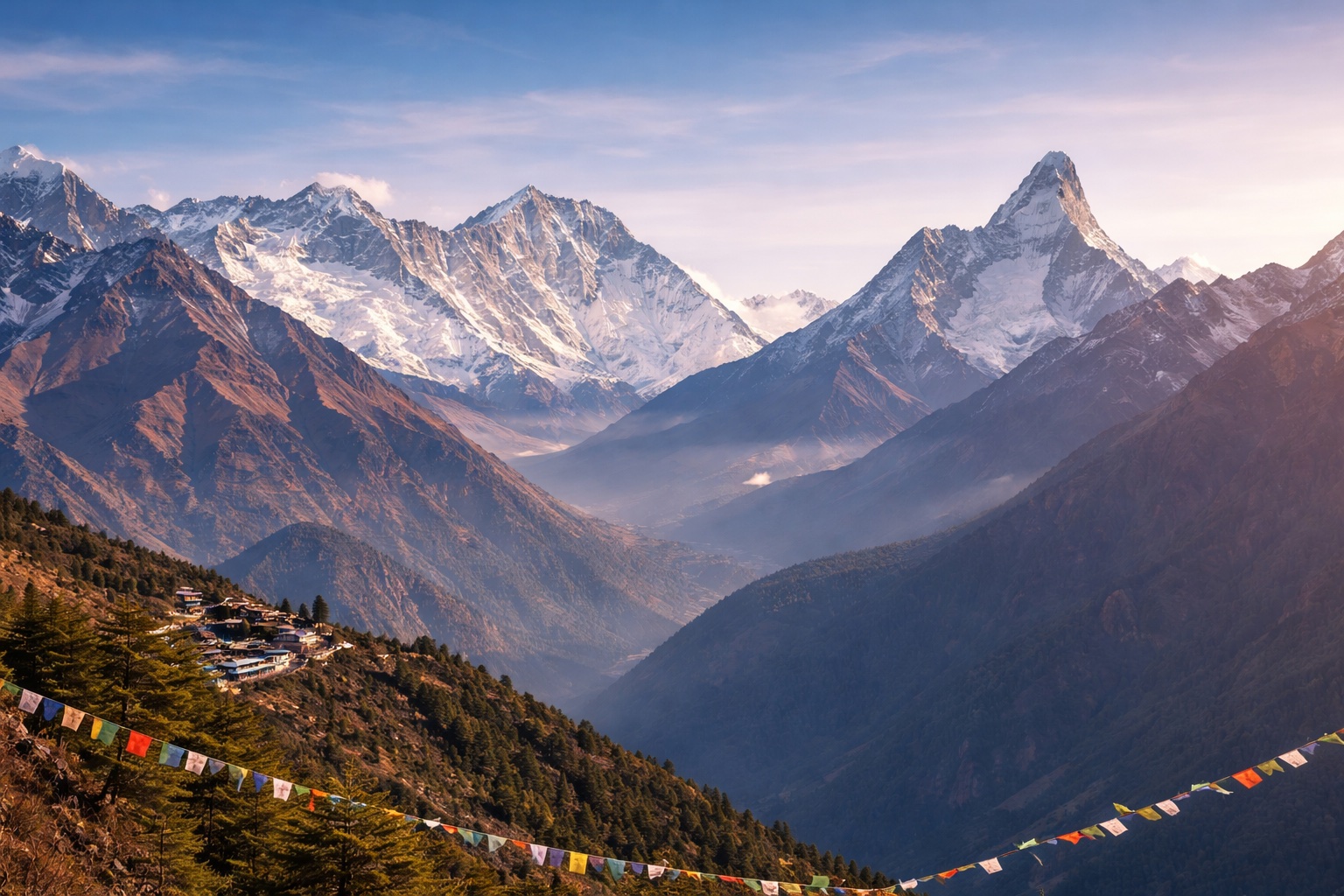
The Kanchenjunga Base Camp trek is a 22-day guided expedition in far-eastern Nepal to both base camps of Kanchenjunga (8,586 m), the third-highest mountain in the world. Trek through Limbu and Sherpa villages, cardamom fields and rhododendron forest to North Base Camp at Pangpema (5,143 m), cross the Sele La and Sinelapche La passes, and reach South Base Camp at Oktang above the Yalung Glacier.
This is one of the wildest and least crowded treks in the Himalaya, in the restricted Kanchenjunga Conservation Area. It is graded challenging and best from April–May and October–November. We arrange the Kanchenjunga Restricted Area Permit, conservation permit, domestic flights, overland transport, a licensed guide, porters and teahouse lodges with meals.
Far from the busy trails of Everest and Annapurna, the Kanchenjunga Base Camp trek is a true wilderness journey. For three weeks you walk through remote valleys where trekkers are still a rarity, from terraced hills and cardamom plantations to Tibetan-style villages, glaciers and the vast north and south faces of Kanchenjunga, the "Five Treasures of the Great Snow".
The Kanchenjunga Circuit visits both base camps: Pangpema on the north side, beneath the immense north face and surrounded by peaks such as Jannu (Kumbhakarna) and Wedge Peak, and Oktang on the south side, overlooking the Yalung Glacier. Between them, the route crosses high passes with views towards Makalu and even Everest on clear days.
| Trip fact | Details |
|---|---|
| Duration | 22 days from Kathmandu (about 17 days of trekking) |
| Highest point | Pangpema (North Base Camp), 5,143 m (16,873 ft) |
| Also visits | Oktang (South Base Camp viewpoint), Sele La and Sinelapche La passes |
| Grade | Challenging |
| Daily walking | 5–8 hours |
| Access | Flight to Bhadrapur and drive via Ilam to Taplejung |
| Accommodation | Hotels in Kathmandu and Ilam, basic teahouse lodges on the trek |
| Permits | Kanchenjunga Restricted Area Permit and Conservation Area Permit |
| Rules | Minimum 2 trekkers with a licensed guide |
| Best time | April–May and October–November |
After flying from Kathmandu to Bhadrapur in the eastern plains, you drive through the tea gardens of Ilam to Taplejung and on to the trailhead. The trek follows the Tamor river north through Chirwa, Sekathum and Amjilosa to the Tibetan-style village of Ghunsa, then climbs via Kambachen and Lhonak to Pangpema, North Base Camp.
Returning to Ghunsa, you cross the Sele La and Sinelapche La to Tseram and climb to Ramche and the Oktang viewpoint above the Yalung Glacier for South Base Camp. The descent leads through forest and villages such as Tortong and Yamphudin back to the road.
Kanchenjunga is a restricted area. You need the Kanchenjunga Restricted Area Permit and the Kanchenjunga Conservation Area Permit, issued through a registered agency for groups of at least two trekkers with a licensed guide. Both are included.
The trek is challenging: long, remote, with many steep ascents and descents, several days above 4,500 m and high passes between the base camps. Lodges are basic and rescue takes longer than in busier regions. We recommend it for trekkers with previous multi-day experience at altitude.
The itinerary includes acclimatisation days at Ghunsa (3,595 m) and Kambachen (4,050 m) before sleeping at Lhonak and visiting Pangpema. Your guide carries a first-aid kit and pulse oximeter and stays in contact with our office, using satellite communication where there is no signal.
October–November is the best season, with stable weather and clear views. April–May is also good, with rhododendrons in bloom. Winter snow can block the passes and upper valleys, and the monsoon brings heavy rain and leeches to eastern Nepal.
Simple teahouses now operate along the whole circuit, so camping is no longer essential, but lodges are basic, with shared rooms and facilities. Menus are short but filling: dal bhat, noodles, potatoes, Tibetan bread and soups. Try tongba, the warm millet drink of the Limbu people. There are no ATMs beyond Taplejung.
You need excellent fitness and previous multi-day trekking experience at altitude. Expect three weeks of walking with many steep climbs and descents. Train for at least three to four months.
The highest point is 5,143 m at Pangpema and around 4,500–4,700 m on the passes. Most people feel the altitude a little: a mild headache, poor sleep, less appetite. Go slowly, drink 3–4 litres a day, skip the beer until you are back down, and tell your guide straight away if you feel worse. Going down is the cure that always works. Ask your doctor before you travel whether altitude medication makes sense for you.
The lower valleys are warm and humid; nights above Ghunsa are cold, and Lhonak and Pangpema are well below freezing. Eastern Nepal receives more rain than the west, so showers are possible outside the monsoon.
Flights to and from Bhadrapur operate most days; road journeys in the east are long and can be affected by landslides, which is why a reserve day is included.
The Kanchenjunga Restricted Area Permit and Conservation Area Permit are included. Restricted area permits require at least two trekkers and a licensed guide.
Carry Nepali rupees for drinks, snacks, showers and charging, and get them in the city; mountain ATMs are rare and unreliable. Wi-Fi is available in many lodges for a small fee. A power bank is worth packing.
Buy boiled or filtered water at lodges or use purification tablets or a filter with a refillable bottle, instead of buying plastic bottles.
You need travel insurance that covers trekking to 5,500 m, medical care and helicopter rescue. We ask for your policy details before you arrive.
You can usually get a Nepal visa on arrival at the airport or apply online in advance. Check that your passport is valid for at least six months, and pack a few passport photos for permits.
Choose add-ons and quantities on the booking form.
More trip options, quoted on request:
This circuit to both base camps takes 22 days from Kathmandu. North or South Base Camp alone takes about 14–20 days.
Kanchenjunga is 8,586 m, the third-highest mountain in the world. North Base Camp at Pangpema is about 5,143 m.
Yes, the Kanchenjunga Restricted Area Permit and Conservation Area Permit, both included. At least two trekkers and a licensed guide are required.
It is challenging: long, remote and steep, with basic lodges and several days above 4,500 m. Previous trekking experience is recommended.
Yes, simple teahouses operate along the circuit, so camping is not essential.
October–November and April–May.
Fly from Kathmandu to Bhadrapur, then drive via Ilam to Taplejung and the trailhead, usually over two days.
Only in some villages. Your guide carries satellite communication for emergencies.
Red pandas live in the forests of the Kanchenjunga Conservation Area, but sightings are rare.
No, restricted area permits require at least two trekkers. Contact us about joining other trekkers.
No, not beyond Taplejung. Bring enough Nepali rupees for three weeks.
Prices are per person and drop for larger groups; the price box shows the rates. It includes permits, flights, transport, hotels, lodges, meals on the trek, a guide and porters.