
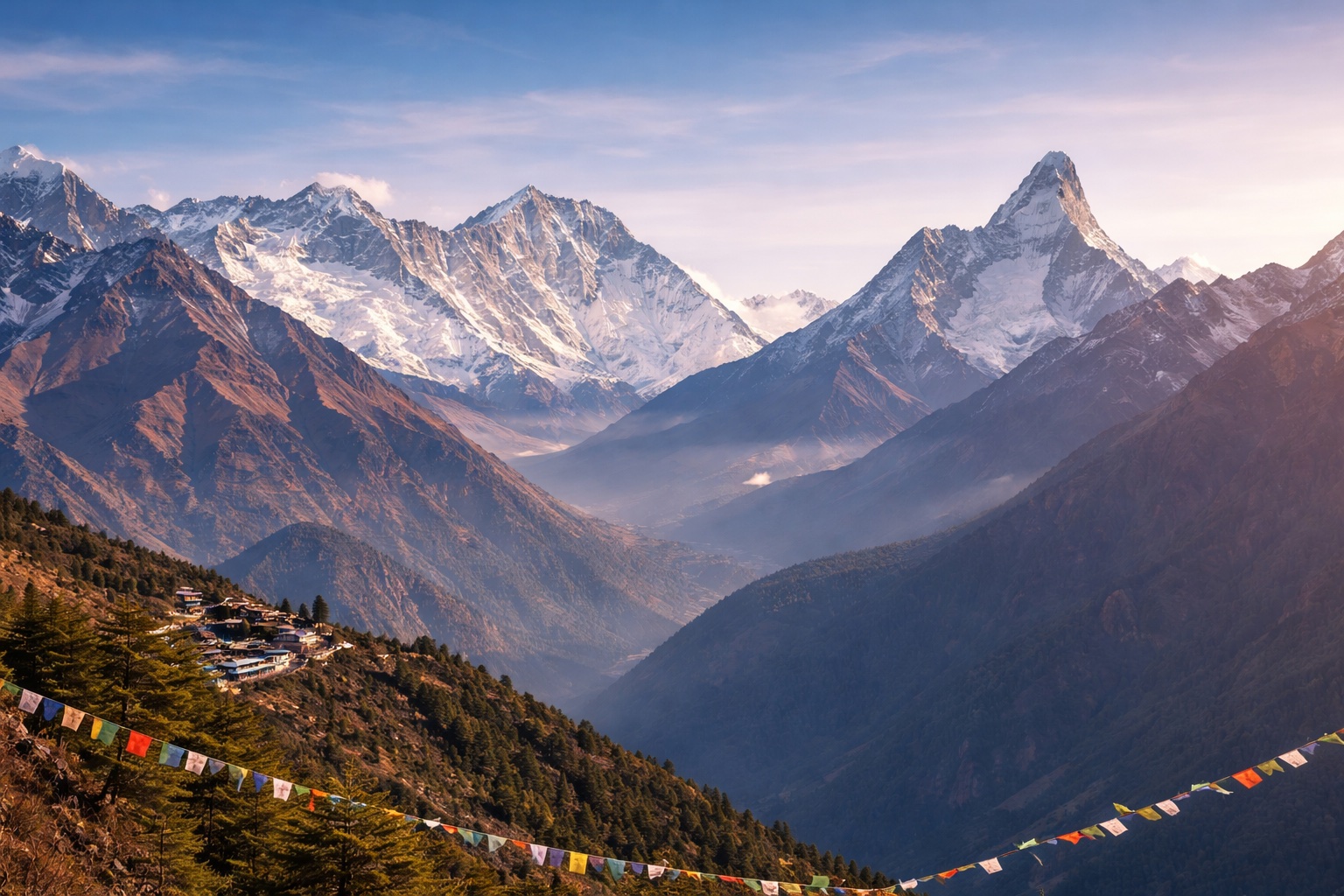
Lobuche East Peak Climbing with Everest Base Camp
Lobuche East peak climbing combines the classic Everest Base Camp trek with the ascent of Lobuche East (6,119 m), a trekking peak with one of the best summit views in the Khumbu. After acclimatising in Namche Bazaar and Dingboche and visiting Everest Base Camp (5,364 m) and Kala Patthar (5,545 m), you climb from Lobuche High Camp up a snow ridge to a summit with views of Everest, Lhotse, Nuptse, Ama Dablam and Pumori.
The 18-day Lobuche climbing package is ideal as a first 6,000 m peak or as preparation for bigger expeditions. It is graded strenuous, with fixed ropes on the upper ridge, and is best in April–May and October–November. We provide an experienced climbing Sherpa, the NMA peak permit, climbing training, high-camp tents, group climbing gear, Lukla flights and all meals.
Trip highlights
- Summit Lobuche East (6,119 m) with ropes and a climbing Sherpa
- Everest Base Camp and Kala Patthar sunrise included
- Close views of Everest, Lhotse, Nuptse and Ama Dablam
- Pre-climb training in crampons, ice axe and fixed ropes
- Namche Bazaar, Tengboche Monastery and Sherpa culture
Short itinerary
View detailed itinerary- Day 1 Arrival in Kathmandu (1,400 m) 1,400 m
- Day 2 Preparation and gear check in Kathmandu 1,400 m
- Day 3 Fly to Lukla (2,840 m), trek to Phakding (2,610 m) 2,840 m
- Day 4 Trek to Namche Bazaar (3,440 m) 3,440 m
- Day 5 Acclimatisation day in Namche 3,880 m
- Day 6 Trek to Tengboche (3,860 m) 3,860 m
- Day 7 Trek to Dingboche (4,410 m) 4,410 m
- Day 8 Acclimatisation day in Dingboche 5,080 m
- Day 9 Trek to Lobuche (4,940 m) 4,940 m
- Day 10 Everest Base Camp (5,364 m), night in Gorak Shep 5,364 m
- Day 11 Kala Patthar (5,545 m), return to Lobuche 5,545 m
- Day 12 Trek to Lobuche Base Camp (4,950 m), training 4,950 m
- Day 13 Climb to Lobuche High Camp (5,400 m) 5,400 m
- Day 14 Summit Lobuche East (6,119 m), descend to Lobuche 6,119 m
- Day 15 Reserve day for bad weather 4,940 m
- Day 16 Trek to Namche Bazaar (3,440 m) 3,440 m
- Day 17 Trek to Lukla (2,840 m) 2,840 m
- Day 18 Fly to Kathmandu and departure 1,400 m
Lobuche East Peak Climbing with Everest Base Camp overview
Quick answer: Lobuche East is a 6,119 m trekking peak near Everest Base Camp. Climbing it with the EBC trek takes about 18 days, costs from US$2,490 per person with a climbing guide, and needs good fitness plus basic crampon, ice axe and fixed-rope skills, which we teach before the climb. The best seasons are April–May and October–November.
Lobuche East rises directly above the Khumbu Glacier, between Lobuche village and Dzongla. Although classed as a trekking peak by the Nepal Mountaineering Association, it is more technical than Island Peak: the route crosses rock slabs to high camp, then follows a steep snow and ice slope and an exposed ridge to the summit. Many climbers stop at the false summit, which still offers one of the best Everest views anywhere.
Lobuche East climbing at a glance
| Trip fact | Details |
|---|---|
| Duration | 18 days from Kathmandu |
| Summit | Lobuche East, 6,119 m / 20,075 ft |
| Also includes | Everest Base Camp (5,364 m) and Kala Patthar (5,545 m) |
| Grade | Strenuous, alpine grade PD+ |
| Technical sections | Snow slopes up to 45–50°, fixed ropes, exposed ridge |
| Permits | NMA peak permit, Sagarmatha National Park, Khumbu local fee |
| Summit day | 9–12 hours from high camp |
| Best time | April–May and October–November |
| Cost | From US$2,490 per person |
Why climb Lobuche East?
- A true 6,000 m summit in the heart of the Everest region.
- One of the finest views of Everest, plus Lhotse, Nuptse, Makalu, Cho Oyu and Ama Dablam.
- Everest Base Camp and Kala Patthar included for perfect acclimatisation.
- A stepping stone to Mera Peak, Ama Dablam or 8,000 m expeditions.
How difficult is Lobuche East?
Lobuche East is harder than Island Peak and Mera Peak. You need to be very fit and comfortable walking in crampons, using an ice axe, clipping into fixed lines and descending by abseil or arm-wrap. Previous climbing experience is helpful but not essential: our guides run a training session at base camp. The altitude and a long summit day are the main challenges.
Lobuche East climbing cost breakdown
| Cost item | Guide price |
|---|---|
| Full climbing package (this trip) | From US$2,490 per person |
| NMA peak permit | Varies by season, highest in spring (included) |
| Climbing Sherpa and equipment | Included |
| Personal climbing gear rental | About US$80–120 in Kathmandu |
| Summit bonus for climbing Sherpa | Customary, about US$100–150 |
Lobuche East vs Island Peak
Island Peak (6,189 m) is slightly higher but less technical, with a glacier crossing and a ladder or two. Lobuche East is steeper and more exposed and has better views of Everest. Choose Island Peak for a first climb, Lobuche East if you want more challenge.
Day-by-day itinerary
What’s included
Included
- Airport pick-up and drop-off in private vehicles
- 2 nights in a hotel in Kathmandu with breakfast
- Return flights Kathmandu (or Ramechhap) – Lukla
- Lobuche East NMA peak permit, Sagarmatha National Park permit and Khumbu local fee
- Garbage deposit and liaison fees
- Teahouse lodges on the trek and tents at base camp and high camp
- All meals during the trek and climb
- Licensed trekking guide and experienced climbing Sherpa (1 climbing Sherpa for 2 climbers)
- Porters with their wages, food, lodging and insurance
- Group climbing equipment: fixed ropes, snow bars, ice screws
- Climbing training at base camp
- All government and local taxes
Not included
- International flights to and from Kathmandu
- Nepal visa fee
- Travel insurance covering trekking to 6,200 m, including climbing and helicopter evacuation (compulsory)
- Lunch and dinner in Kathmandu and Pokhara
- Drinks, snacks, hot showers, battery charging and Wi-Fi on the trek
- Extra nights caused by early return, flight delays, landslides or cancellations
- Helicopter evacuation or charter
- Personal equipment and expenses
- Tips for your guide and porters
- Personal climbing gear (boots, crampons, harness, helmet, ice axe), available to rent in Kathmandu
- Summit bonus for the climbing Sherpa
Useful info
Fitness and preparation
You need excellent fitness for a 10–12 hour summit day at over 6,000 m. Train for three to four months with long hill walks carrying a pack, stair climbing and cardio. Some experience with crampons and ice axe is useful; we teach fixed-rope techniques at base camp.
Altitude sickness
This trek reaches 6,119 m on the summit, after acclimatising at Everest Base Camp and Kala Patthar. Symptoms of acute mountain sickness include headache, nausea, dizziness, loss of appetite and poor sleep. Walk slowly, drink 3–4 litres of water a day, avoid alcohol and tell your guide about any symptoms. If symptoms get worse, descending is the most effective treatment. Talk to your doctor before the trip about whether altitude medication is right for you.
Weather and temperatures
Summit days start well below freezing (−15°C to −25°C with wind chill). Spring has longer, warmer days; autumn brings clearer skies and colder nights.
Domestic flights and baggage
The Lukla flight has a baggage limit of about 15 kg including hand luggage; climbing gear is carried by porters. Keep a spare day at the end of your trip for weather delays.
Permits
The NMA peak permit, Sagarmatha National Park permit and Khumbu local fee are included.
Money, charging and Wi-Fi
Take out cash in Kathmandu or Pokhara before you set off: there are very few ATMs on the trail, and the ones that exist often don't work. Lodges charge a little for hot showers, charging and Wi-Fi, so a power bank saves money.
Drinking water
Bring a refillable bottle and either purification tablets or a filter. Lodges also sell boiled water, which is cheaper and better for the trail than bottled water.
Travel insurance
Travel insurance is compulsory. It must cover trekking to 6,200 m, including climbing and helicopter rescue, medical treatment and emergency helicopter evacuation. Please send us your policy details before departure.
Visa
Most visitors get a tourist visa on arrival at Kathmandu airport, or apply online before they fly. Your passport needs six months' validity, and bring a few passport photos for trekking permits.
Packing list
Clothing
- Moisture-wicking base layers
- Fleece jacket or mid-layer
- Warm down jacket (can be borrowed from us)
- Waterproof and windproof jacket and trousers
- Trekking trousers and shirts
- Warm hat, sun hat and buff
- Liner gloves and insulated gloves
- Trekking socks
Footwear
- Broken-in waterproof trekking boots
- Camp shoes or sandals for the lodges
Equipment
- Sleeping bag rated to about −20°C (can be borrowed from us)
- Daypack of 25–35 litres with rain cover
- Trekking poles
- Head torch with spare batteries
- Water bottles and purification tablets
- Sunglasses with UV protection
- Power bank and charging cables
- Mountaineering boots (double or insulated)
- Crampons, harness, helmet and ice axe
- Ascender (jumar), descender and carabiners
- Expedition down jacket and mitts
- Glacier glasses
Personal items
- High-factor sunscreen and lip balm
- Personal first-aid kit and medication
- Toiletries, quick-dry towel and wet wipes
- Snacks such as energy bars and nuts
- Passport, insurance details and copies
Add-ons & trip options
Choose add-ons and quantities on the booking form.
More trip options, quoted on request:
- Island Peak added after Lobuche East for two 6,000 m summits.
- Helicopter return from Lobuche or Pheriche.
- Gokyo and Cho La route to Lobuche.
Frequently asked questions
Lobuche East is 6,119 m (20,075 ft). Many parties stop at the false summit, slightly lower, depending on conditions.
It is strenuous and moderately technical (alpine PD+), with steep snow slopes, fixed ropes and an exposed ridge. It is harder than Island Peak.
Fit beginners with good trekking experience can climb it with our training and a climbing Sherpa, but Island Peak or Mera Peak is a gentler first climb.
Our Lobuche East with Everest Base Camp package costs from US$2,490 per person, including the peak permit, climbing Sherpa, flights and all meals on the trek.
The full trip takes 18 days including EBC. Summit day is 10–12 hours from high camp.
An NMA peak permit, plus the Sagarmatha National Park permit and Khumbu local fee. All are included.
April–May and October–November, when the weather is most stable.
Island Peak is higher and easier; Lobuche East is more technical with better views of Everest.
Mountaineering boots, crampons, harness, helmet, ice axe, ascender and descender, plus warm expedition clothing. Most can be rented in Kathmandu.
Success depends on weather, conditions and fitness; with good acclimatisation via EBC, most fit climbers reach the summit or false summit.
Yes. Visiting EBC and Kala Patthar first gives excellent acclimatisation before the climb.
No. Lobuche West (6,145 m) is a more technical expedition peak; Lobuche East is the popular trekking peak.
One climbing Sherpa for every two climbers on summit day, plus a trekking guide.
Yes, from reliable shops in Thamel; we help you choose it on day two.