The Gokyo Lakes trek is a 13-day guided trek in the Everest region to a chain of turquoise glacial lakes beside the Ngozumpa Glacier, the longest glacier in Nepal. After the flight to Lukla and an acclimatisation day in Namche Bazaar, you leave the busy Everest Base Camp trail for the quieter Dudh Koshi valley and climb Gokyo Ri (5,357 m) for a sunrise panorama of four 8,000-metre peaks: Everest, Lhotse, Makalu and Cho Oyu.
Many trekkers consider the view from Gokyo Ri even finer than from Kala Patthar. The trek is strenuous but non-technical, best from March–May and September–November, and includes Lukla flights, national park and municipality permits, a licensed guide, porters and teahouse lodges with meals, all arranged by our team in Kathmandu.
The Gokyo Lakes trek is the great alternative to the Everest Base Camp trek. It shares the first days of the classic route, through Lukla and Namche Bazaar, but then turns up the quieter western valley of the Dudh Koshi, past yak pastures and summer settlements, to Gokyo, a small village of lodges on the shore of the third Gokyo lake at about 4,790 m.
The six main Gokyo lakes are part of a high-altitude wetland system protected under the Ramsar Convention, and their colours, from turquoise to deep blue, change with the light and the season. Above the village, Gokyo Ri offers one of the greatest mountain panoramas in the Himalaya, and the vast grey Ngozumpa Glacier stretches beside the lakes towards Cho Oyu.
| Trip fact | Details |
|---|---|
| Duration | 13 days from Kathmandu (10 days of trekking) |
| Highest point | Gokyo Ri, 5,357 m (17,575 ft) |
| Highest overnight stop | Gokyo, about 4,790 m |
| Grade | Strenuous, non-technical |
| Daily walking | 5–7 hours |
| Start and finish | Kathmandu, with return flights to Lukla |
| Accommodation | Hotel in Kathmandu, teahouse lodges on the trek |
| Permits | Sagarmatha National Park and Khumbu Pasang Lhamu Rural Municipality |
| Best time | March–May and September–November |
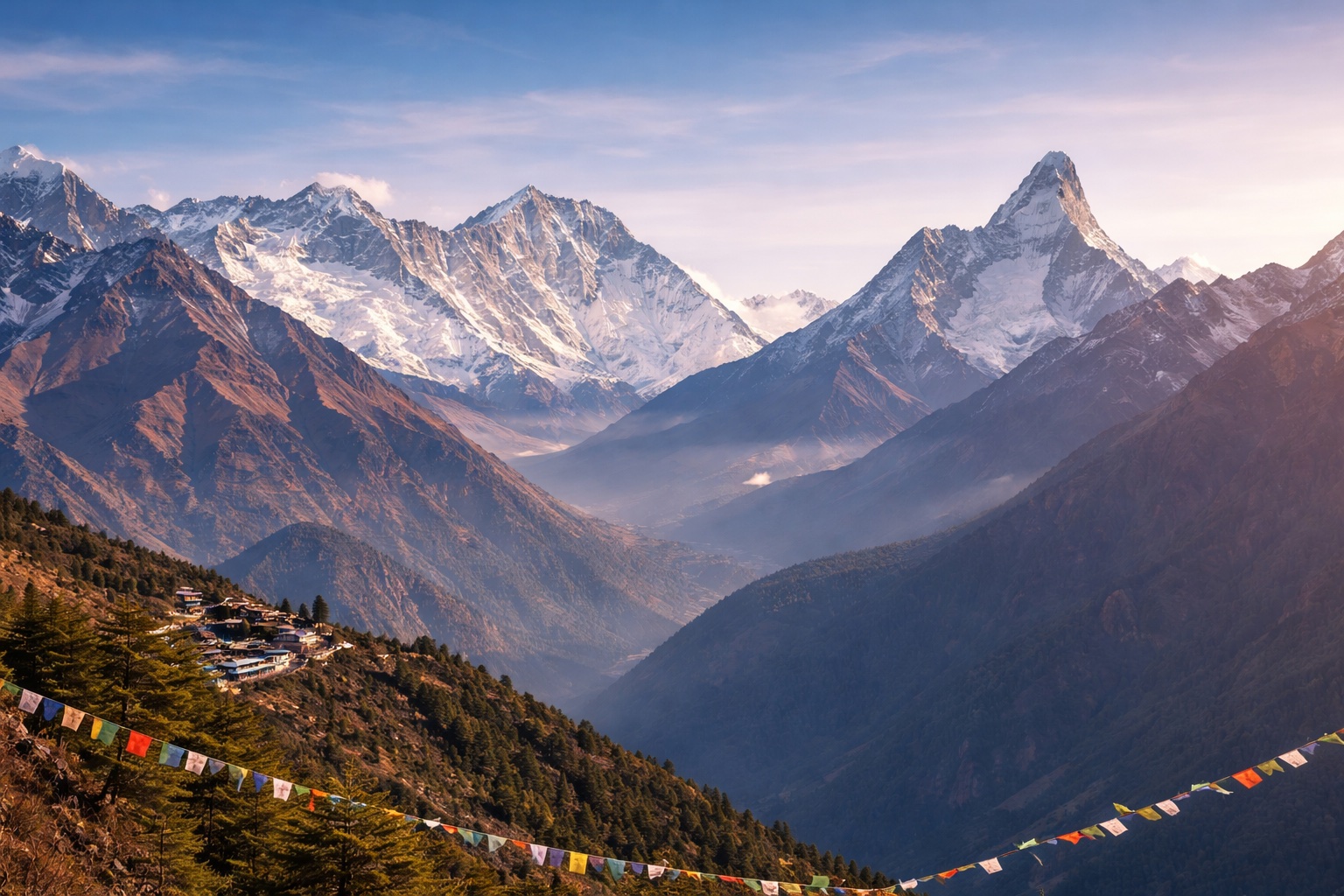
After flying to Lukla, you walk to Phakding and climb to Namche Bazaar, where you spend an acclimatisation day. From Namche, the trail climbs to the ridge at Mong La, with superb views of Ama Dablam, then descends to the river and climbs through rhododendron forest to Dole. Beyond Dole, the valley opens into yak pastures at Machhermo, and the next day you pass the first and second lakes to reach Gokyo beside the third lake.
Early the next morning you climb Gokyo Ri for sunrise, and fit trekkers can walk further up the valley to the Fourth and Fifth Lakes. The return follows the same valley to Dole, Namche and Lukla.
The trek is strenuous but non-technical. Walking days are 5–7 hours, and the altitude above 4,000 m is the main challenge. The climb to Gokyo Ri is steep, gaining about 550 metres from the village in two to three hours. Fit walkers who prepare well and acclimatise sensibly can complete the trek.
The itinerary includes an acclimatisation day in Namche Bazaar and gains height gradually through Dole and Machhermo, keeping daily altitude gains modest above 4,000 m. Many trekkers find the Gokyo route easier to acclimatise on than the base camp route because the ascent is more gradual. Your guide monitors everyone daily, and Machhermo has a Himalayan Rescue Association health post in the main seasons.
Autumn (September–November) offers the clearest views and calm, clear lakes. Spring (March–May) is warmer, with rhododendrons in the lower forest. In winter, the lakes may freeze and nights are very cold, but skies are often clear. The monsoon brings cloud and frequent Lukla flight delays.
Choose Gokyo for quieter trails, glacial lakes and what many consider the best viewpoint in the Khumbu. Choose Everest Base Camp to stand at the foot of Everest and walk beside the Khumbu Icefall. With extra days, you can do both by crossing the Cho La pass (5,420 m) between Gokyo and the base camp trail.
Lodges in Namche are comfortable, and those at Gokyo are surprisingly cosy, with dining rooms overlooking the lake. Rooms higher up are simple twin rooms with shared bathrooms. Menus include dal bhat, noodles, potatoes, pasta, pizza and pancakes.
You should be comfortable walking 5–7 hours a day for several days in a row on hilly, uneven trails. Start training two to three months before the trek with long hill walks, stair climbing and cardiovascular exercise, and break in your boots before you travel.
The highest point is 4,790 m at Gokyo and 5,357 m on Gokyo Ri. Most people feel the altitude a little: a mild headache, poor sleep, less appetite. Go slowly, drink 3–4 litres a day, skip the beer until you are back down, and tell your guide straight away if you feel worse. Going down is the cure that always works. Ask your doctor before you travel whether altitude medication makes sense for you.
Days in the lower valley can be mild, but nights at Machhermo and Gokyo are well below freezing, and the lakes can freeze in winter. Mornings are usually the clearest time of day.
Flights to Lukla depend on mountain weather and are often delayed; the last day in Kathmandu is a buffer. The baggage limit is around 15 kg per person including hand luggage.
The Sagarmatha National Park and Khumbu Pasang Lhamu Rural Municipality permits are included.
Carry Nepali rupees for drinks, snacks, showers and charging, and get them in the city; mountain ATMs are rare and unreliable. Wi-Fi is available in many lodges for a small fee. A power bank is worth packing.
Buy boiled or filtered water at lodges or use purification tablets or a filter with a refillable bottle, instead of buying plastic bottles.
You need travel insurance that covers trekking to 5,500 m, medical care and helicopter rescue. We ask for your policy details before you arrive.
You can usually get a Nepal visa on arrival at the airport or apply online in advance. Check that your passport is valid for at least six months, and pack a few passport photos for permits.
Choose add-ons and quantities on the booking form.
More trip options, quoted on request:
This itinerary takes 13 days from Kathmandu, including 10 days of trekking from Lukla and an acclimatisation day in Namche.
It is strenuous but non-technical, with 5–7 hours of walking a day and altitudes above 4,000 m. The climb to Gokyo Ri is steep but short.
Gokyo Ri is 5,357 m (17,575 ft). Gokyo village is at about 4,790 m.
Four of the world's 8,000-metre peaks: Everest, Lhotse, Makalu and Cho Oyu, plus the Gokyo lakes and the Ngozumpa Glacier below.
Gokyo is quieter, with lakes and arguably the best viewpoint; Everest Base Camp lets you stand at the foot of Everest. You can combine them via the Cho La.
March–May and September–November. Winter is cold with frozen lakes but clear skies; the monsoon is cloudy.
The Sagarmatha National Park permit and the Khumbu Pasang Lhamu Rural Municipality permit, both included.
Yes. Since 2023, most foreign trekkers in Nepal's national parks have to walk with a licensed guide. The price covers a licensed guide and porters.
Fit beginners can complete it with good preparation. The gradual ascent makes acclimatisation easier than on some other high treks.
We rebook you on the next available flight and use the buffer day in Kathmandu. A helicopter can be arranged at extra cost if needed.
Yes. Crossing the Cho La pass (5,420 m) links Gokyo with the Everest Base Camp trail for a loop of about 16–18 days.
You pay per person, and it gets cheaper from two people up (see the price box). It includes Lukla flights, permits, hotel, lodges, meals on the trek, a guide and porters.