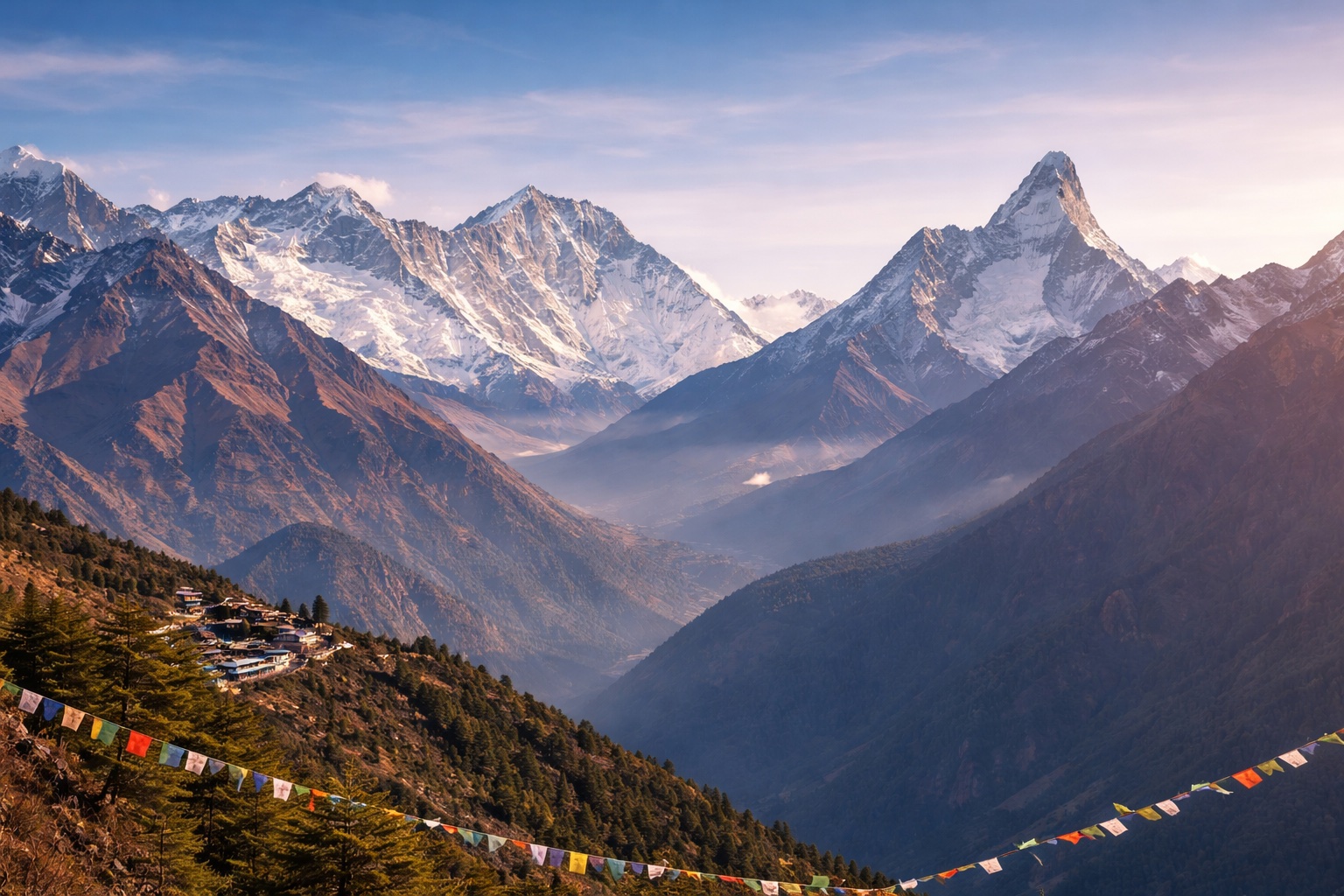
The Everest Base Camp trek with helicopter return gives you the full walk up the Khumbu valley to Everest Base Camp (5,364 m) and Kala Patthar (5,545 m), then saves three days of downhill walking with a helicopter flight from Gorak Shep back to Kathmandu. You still acclimatise properly in Namche Bazaar and Dingboche, visit Tengboche Monastery, and see Everest, Lhotse, Nuptse and Ama Dablam up close.
At 11 days it suits travellers short on time, or anyone who likes the idea of finishing with the Himalaya from the air. It is graded challenging and best from March–May and September–December. Our package includes the Lukla flight, the helicopter return, permits, a licensed guide, porters, lodges and all meals on the trek.
The classic Everest Base Camp trek takes about 12–14 days, and the last three are spent walking back down the same trail to Lukla and waiting for a flight. On this itinerary you walk up the whole route, with the same careful acclimatisation, then board a helicopter at Gorak Shep the morning after Kala Patthar. The flight follows the Khumbu Glacier past Pumori and Ama Dablam before dropping down to Kathmandu, turning the end of the trek into one of its highlights.
The helicopter return also avoids the risk of Lukla flight delays at the end of the trek, which are common in cloudy weather. Most helicopters stop in Lukla to refuel or re-balance passengers, and flights from Gorak Shep may be shared with other trekkers to keep the cost down.
| Trip fact | Details |
|---|---|
| Duration | 11 days from Kathmandu (8 days of trekking) |
| Highest point | Kala Patthar, 5,545 m |
| Everest Base Camp | 5,364 m |
| Grade | Challenging |
| Flights | Kathmandu (or Ramechhap) – Lukla; helicopter Gorak Shep – Kathmandu |
| Acclimatisation | Namche Bazaar and Dingboche |
| Permits | Sagarmatha National Park and Khumbu Pasang Lhamu Rural Municipality |
| Best time | March–May and September–December |
The walking is the same as the classic EBC trek: 5–7 hours a day on rocky trails, with two acclimatisation days and nights above 4,000 m. The days from Lobuche to Gorak Shep, Everest Base Camp and Kala Patthar are the hardest. Good fitness and a slow pace are essential; no climbing experience is needed.
The price includes a shared seat on the helicopter from Gorak Shep. A private helicopter can be arranged for your group, with the option of landing at Kala Patthar or flying over Everest Base Camp for photographs, weather permitting.
October–November and April–May offer the most reliable weather for both trekking and flying. December is colder but clear; the monsoon (June–August) brings cloud that can delay flights.
If you can walk 15 km with a few hundred metres of climbing and do it again the next day, you are in good shape for this trek. Start training two to three months ahead, and break in your boots before you fly.
This trek reaches 5,545 m at Kala Patthar, with nights at 4,940 m in Lobuche and 5,164 m in Gorak Shep. Symptoms of acute mountain sickness include headache, nausea, dizziness, loss of appetite and poor sleep. Walk slowly, drink 3–4 litres of water a day, avoid alcohol and tell your guide about any symptoms. If symptoms get worse, descending is the most effective treatment. Talk to your doctor before the trip about whether altitude medication is right for you.
Days are often clear and sunny, but nights at Lobuche and Gorak Shep drop to −10°C to −15°C in autumn and colder in winter. Wind picks up in the afternoon.
The Lukla flight and the helicopter have a baggage limit of about 15 kg per person in total, including hand luggage. Leave extra luggage at our office or your hotel. Weather can delay both flights, so keep a spare day at the end of your trip if possible.
The Sagarmatha National Park permit and the Khumbu Pasang Lhamu Rural Municipality fee are included.
Take out cash in Kathmandu or Pokhara before you set off: there are very few ATMs on the trail, and the ones that exist often don't work. Lodges charge a little for hot showers, charging and Wi-Fi, so a power bank saves money.
Bring a refillable bottle and either purification tablets or a filter. Lodges also sell boiled water, which is cheaper and better for the trail than bottled water.
Travel insurance is compulsory. It must cover trekking to 5,600 m, including helicopter flights, medical treatment and emergency helicopter evacuation. Please send us your policy details before departure.
Most visitors get a tourist visa on arrival at Kathmandu airport, or apply online before they fly. Your passport needs six months' validity, and bring a few passport photos for trekking permits.
Choose add-ons and quantities on the booking form.
More trip options, quoted on request:
11 days from Kathmandu, compared with 12–14 days for the classic trek.
From Gorak Shep, the morning after Everest Base Camp and Kala Patthar.
The price includes a shared seat. A private helicopter can be arranged at extra cost.
No. The ascent and acclimatisation days are the same as the classic trek; only the descent is replaced by the flight.
It usually stops in Lukla to refuel or change passengers, then continues to Kathmandu.
You wait at Gorak Shep, Lobuche or Pheriche until it is safe to fly; walking down is the fallback in long spells of bad weather.
About 15 kg per person, including hand luggage.
It is challenging because of the altitude and daily walking of 5–7 hours. No climbing experience is needed.
March–May and September–December.
Foreign trekkers in the Everest region must walk with a licensed guide, which is included.
Trekking to 5,600 m, helicopter flights and emergency evacuation.
The price box shows the per-person cost, which goes down as your group gets bigger. It includes the Lukla flight, the shared helicopter, permits, guide, porters, lodges and meals on the trek.