
Cultural tours in Nepal: the complete guide
Nepal is one of the most culturally rich countries in Asia. Hinduism and Buddhism have lived side by side here for more than two thousand years, and dozens of ethnic communities, from the Newars of the Kathmandu Valley to the Sherpas of the Khumbu and the Tharus of the plains, keep their own languages, festivals, food and crafts. A cultural tour of Nepal takes you into this living heritage: medieval royal cities, great stupas, pilgrimage sites, hill towns and villages.
This guide covers the main cultural destinations, festivals, etiquette and how to plan a cultural trip.
The Kathmandu Valley
The valley's three old royal cities, Kathmandu, Patan and Bhaktapur, were once rival kingdoms ruled by the Malla kings, whose Newar craftsmen built palaces, pagoda temples and courtyards of extraordinary beauty. Together with Swayambhunath, Boudhanath, Pashupatinath and Changunarayan, they form seven monument zones on the UNESCO World Heritage List.
Our Kathmandu Valley heritage tour covers all of them in three days. If you prefer to explore on foot, see our heritage walks.
Buddhist Nepal
Nepal is the birthplace of the Buddha. In Lumbini, a pillar erected by the emperor Ashoka marks the spot where Siddhartha Gautama was born, surrounded by a garden of monasteries built by Buddhist countries from around the world. In the Kathmandu Valley, the stupas of Boudhanath and Swayambhunath are among the holiest Buddhist sites outside Tibet, and the monasteries of Kopan and Namo Buddha welcome visitors. See our Buddhist heritage tour.
Hill towns and old trading posts
Between Kathmandu and Pokhara, old Newar trading towns perch on ridges with Himalayan views. Bandipur is car-free and beautifully preserved; Gorkha was the home of King Prithvi Narayan Shah, who unified Nepal in the 18th century; Tansen is famous for dhaka cloth; and Panauti has some of the oldest temples in the country. See our Gorkha and Bandipur cultural tour.
Living cultures of the hills and mountains
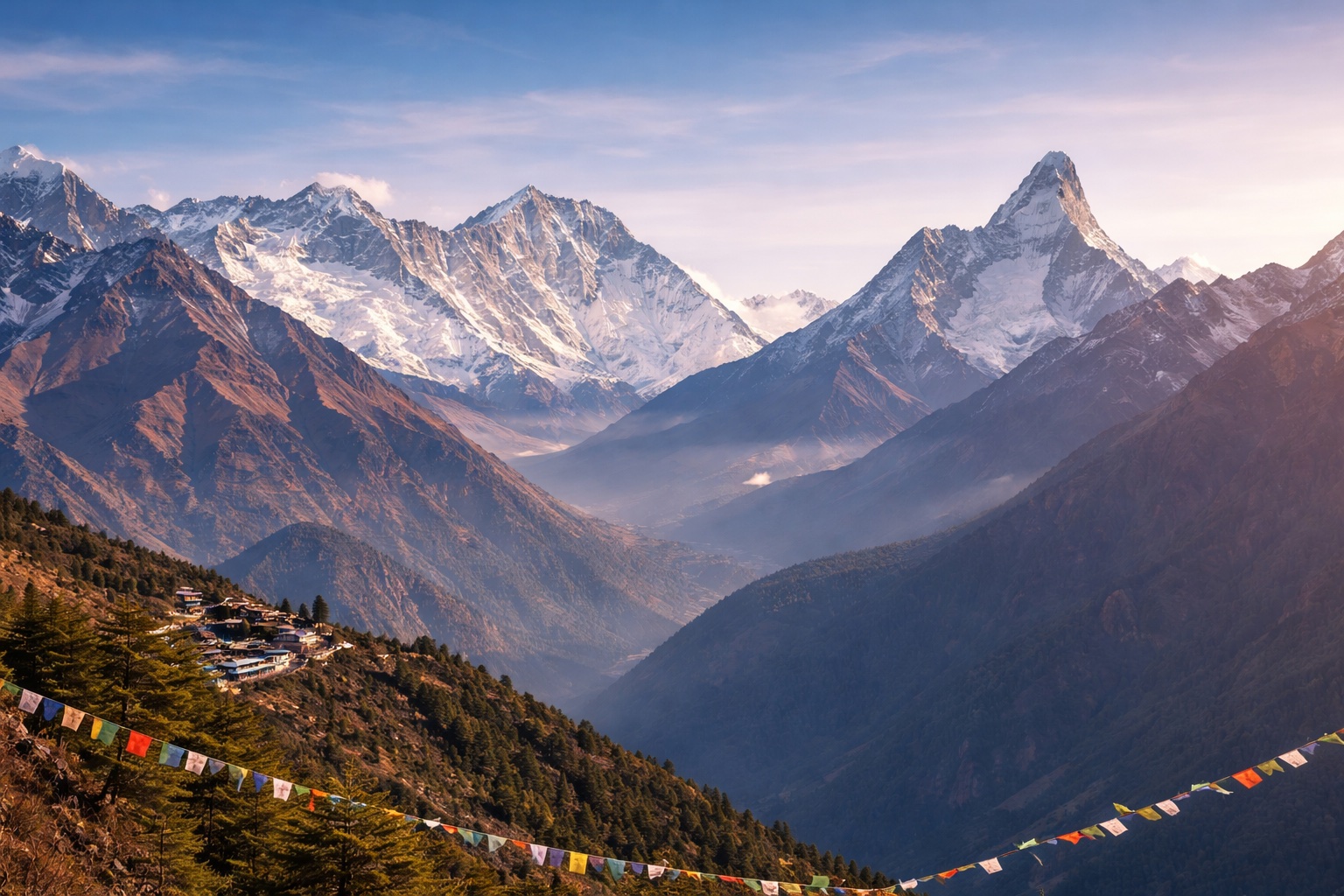
In the hills, you can visit Gurung villages such as Ghandruk, follow the Tamang Heritage Trail near the Tibetan border, or meet Sherpa families in the Khumbu. In Upper Mustang, the walled city of Lo Manthang preserves one of the purest Tibetan Buddhist cultures anywhere. See our village tours and homestays.
Festivals
Timing your trip with a festival is one of the best ways to experience Nepali culture.
- Dashain (September/October): Nepal's biggest Hindu festival, with family gatherings, kites and swings. See our Dashain guide.
- Tihar (October/November): the festival of lights, honouring crows, dogs, cows and siblings. See our Tihar guide.
- Bisket Jatra (April): chariot pulling in Bhaktapur at the Nepali New Year.
- Indra Jatra (September): masked dances and the Kumari's chariot procession in Kathmandu.
- Tiji (May): masked dances in Lo Manthang.
- Buddha Jayanti (April/May): the Buddha's birthday, celebrated at the stupas and in Lumbini.
Read more in our festivals of Nepal guide.
Food as culture
Food is central to every Nepali festival and family gathering. Try dal bhat, the national meal, Tibetan-style momos, Newari feasts of bara, chatamari and choila, Thakali set meals in the Kali Gandaki, and Bhaktapur's juju dhau. Our food tour and cooking class is a delicious introduction. See our Nepali food guide.
Crafts
Watch potters on Pottery Square in Bhaktapur, bronze casters in Patan, woodcarvers in Bungamati and thangka painters in Boudhanath. See traditional crafts of Nepal and our shopping guide.
Etiquette
- Dress modestly, covering shoulders and knees, especially at temples.
- Remove shoes before entering temples and homes, and leather items where requested.
- Walk clockwise around stupas, chortens and mani walls.
- Some Hindu temples, including the main temple at Pashupatinath, are open only to Hindus.
- Ask before photographing people, rituals and cremations.
- Use your right hand to give and receive things.
Best time for a cultural tour
Cultural tours run all year. Autumn (October–November) has clear skies and the big festivals; spring (March–April) is warm with flowers; winter is cool and quiet; and in the monsoon, the Kathmandu Valley is green, with fewer visitors.
Book a cultural tour with Himalayan Hiking
Our guides are local experts who love sharing their culture. Choose a tour from this page, or contact us to plan a trip around a festival, a region or your interests.