
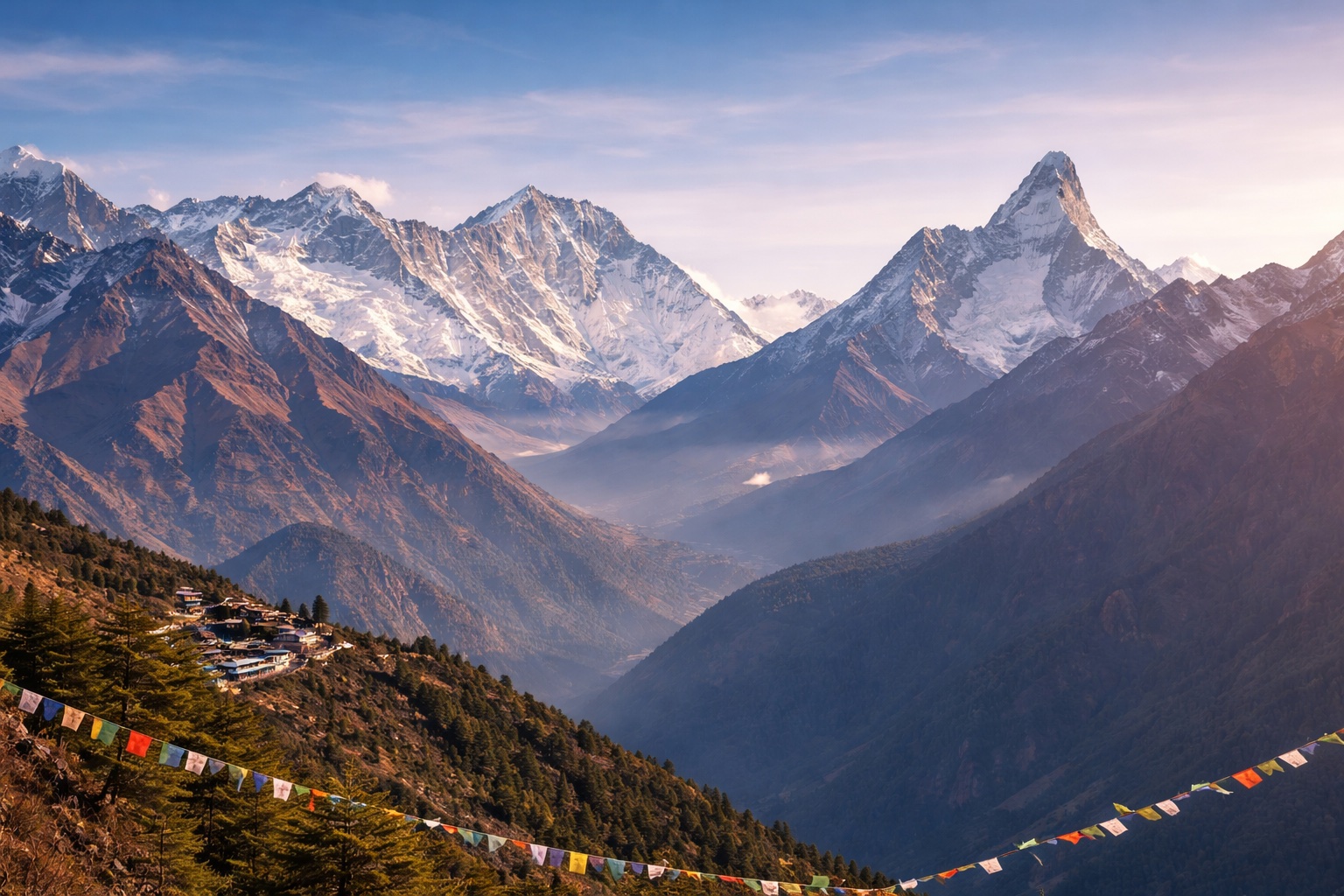
Poon Hill and Annapurna Base Camp Trek
The Poon Hill and Annapurna Base Camp trek combines the two most popular treks in the Annapurna region into one 14-day journey. Climb through rhododendron forest to Ghorepani for the famous sunrise from Poon Hill (3,210 m), cross the ridges to Tadapani and the Gurung village of Chhomrong, then follow the Modi Khola gorge into the Annapurna Sanctuary to Annapurna Base Camp (4,130 m), ringed by Annapurna I, Annapurna South, Hiunchuli and Machhapuchhre.
On the way back, soak tired legs in the natural hot springs at Jhinu Danda. Graded moderate, it suits fit first-time trekkers who want the full Annapurna experience. Permits, a licensed guide, porters, teahouses, meals on the trek and transport are included.
Trip highlights
- Sunrise over Dhaulagiri and the Annapurnas from Poon Hill (3,210 m)
- Annapurna Base Camp (4,130 m) inside the Annapurna Sanctuary
- Rhododendron forests and Gurung villages
- Machhapuchhre Base Camp (3,700 m)
- Natural hot springs at Jhinu Danda
Short itinerary
View detailed itinerary- Day 1 Arrival in Kathmandu (1,400 m) 1,400 m
- Day 2 Drive or fly to Pokhara (820 m) 820 m
- Day 3 Drive to Nayapul, trek to Ulleri (2,020 m) 2,020 m
- Day 4 Trek to Ghorepani (2,860 m) 2,860 m
- Day 5 Poon Hill sunrise (3,210 m), trek to Tadapani (2,630 m) 3,210 m
- Day 6 Trek to Chhomrong (2,170 m) 2,170 m
- Day 7 Trek to Bamboo (2,310 m) 2,310 m
- Day 8 Trek to Deurali (3,230 m) 3,230 m
- Day 9 Trek to Annapurna Base Camp (4,130 m) via MBC 4,130 m
- Day 10 Sunrise at ABC, trek down to Bamboo (2,310 m) 4,130 m
- Day 11 Trek to Jhinu Danda (1,780 m) 2,170 m
- Day 12 Trek to Siwai, drive to Pokhara 1,780 m
- Day 13 Return to Kathmandu 1,400 m
- Day 14 Departure from Kathmandu 1,400 m
Poon Hill and Annapurna Base Camp Trek overview
Quick answer: the Poon Hill and Annapurna Base Camp trek takes 14 days from Kathmandu, with 10 days of walking. It reaches 3,210 m at Poon Hill and 4,130 m at Annapurna Base Camp, and costs from US$1,090 per person. It is graded moderate.
Most trekkers choose either Poon Hill or Annapurna Base Camp. This route does both, joining them along the forested ridge between Ghorepani and Chhomrong. You get the sweeping sunrise panorama from Poon Hill, from Dhaulagiri to Annapurna South and Machhapuchhre, and then the experience of standing inside the Annapurna Sanctuary, a high glacial amphitheatre surrounded by 7,000 and 8,000 m peaks.
Poon Hill and ABC trek at a glance
| Trip fact | Details |
|---|---|
| Duration | 14 days (10 days of trekking) |
| Maximum altitude | Annapurna Base Camp, 4,130 m |
| Grade | Moderate |
| Start and finish | Pokhara (road to Nayapul or Ulleri; return from Jhinu) |
| Permits | Annapurna Conservation Area permit |
| Best time | March–May and October–November |
| Cost | From US$1,090 per person |
Why choose this trek?
- Two classic treks in one: Poon Hill sunrise and Annapurna Base Camp.
- Rhododendron forests, spectacular in spring.
- Gurung villages at Ghorepani, Tadapani and Chhomrong.
- The Annapurna Sanctuary, one of the great mountain amphitheatres of the world.
- Hot springs at Jhinu Danda.
How difficult is it?
Walking days are 5–7 hours, with many stone steps, especially the climb to Ulleri and the ups and downs around Chhomrong. The altitude is moderate, with only one night above 4,000 m. Good fitness and some hill-walking training make it much more enjoyable.
Avalanche safety
The trail between Deurali and Machhapuchhre Base Camp crosses avalanche-prone slopes, especially in late winter and spring after heavy snow. Our guides check conditions each day and will wait or turn around if it isn't safe.
Day-by-day itinerary
What’s included
Included
- Airport pick-up and drop-off in private vehicles
- 2 nights in Kathmandu and 2 nights in Pokhara with breakfast
- Tourist bus Kathmandu – Pokhara – Kathmandu (flights can be added)
- Private transport Pokhara – Nayapul and Siwai – Pokhara
- Annapurna Conservation Area permit
- Teahouse accommodation during the trek (9 nights)
- Breakfast, lunch and dinner during the trek
- Licensed, English-speaking trekking guide trained in first aid
- Porters (1 porter for 2 trekkers) with their wages, food, lodging and insurance
- All government and local taxes
Not included
- International flights to and from Kathmandu
- Nepal visa fee
- Travel insurance covering trekking to 4,500 m and helicopter evacuation (compulsory)
- Lunch and dinner in Kathmandu and Pokhara
- Drinks, snacks, hot showers, battery charging and Wi-Fi on the trek
- Extra nights caused by early return, flight delays, landslides or cancellations
- Helicopter evacuation or charter
- Personal equipment and expenses
- Tips for your guide and porters
Useful info
Fitness and preparation
Expect 5–7 hours on your feet most days, often on steep stone steps. Two or three months of regular hill walking, stairs and cardio will make a big difference, and wear your boots in at home, not on the trail.
Altitude sickness
You will reach 4,130 m at Annapurna Base Camp, with one night at that altitude on this trek. Watch for headache, nausea, dizziness and trouble sleeping, and tell your guide about any of them early. The basics work: walk slowly, drink plenty of water, avoid alcohol, and if things get worse, descend. It is worth asking your doctor about altitude medication before the trip.
Weather and temperatures
Spring brings rhododendron blooms and warm days with afternoon cloud; autumn is clear and cool. Nights at ABC are below freezing, around −5°C to −10°C, and colder in winter.
Permits
The Annapurna Conservation Area permit is included.
Money, charging and Wi-Fi
Bring enough Nepali rupees from Kathmandu or Pokhara for extras on the trek; ATMs are rare and unreliable in the mountains. Battery charging, hot showers and Wi-Fi are usually paid extras in lodges, and a power bank is useful.
Drinking water
Skip the plastic bottles. Lodges sell boiled or filtered water, or you can treat tap water with tablets or a filter and refill your own bottle.
Travel insurance
We can't take you on the trek without insurance. Check that your policy covers trekking to 4,500 m and emergency helicopter evacuation, and send us the details before you travel.
Visa
Most nationalities can get a Nepal tourist visa on arrival at Kathmandu airport or apply online in advance. Bring a passport valid for at least six months and passport photos for permits.
Packing list
Clothing
- Moisture-wicking base layers
- Fleece jacket or mid-layer
- Warm down jacket (can be borrowed from us)
- Waterproof and windproof jacket and trousers
- Trekking trousers and shirts
- Warm hat, sun hat and buff
- Liner gloves and insulated gloves
- Trekking socks
Footwear
- Broken-in waterproof trekking boots
- Camp shoes or sandals for the lodges
Equipment
- Sleeping bag rated to about −10°C (can be borrowed from us)
- Daypack of 25–35 litres with rain cover
- Trekking poles
- Head torch with spare batteries
- Water bottles and purification tablets
- Sunglasses with UV protection
- Power bank and charging cables
- Swimwear for the Jhinu hot springs
Personal items
- High-factor sunscreen and lip balm
- Personal first-aid kit and medication
- Toiletries, quick-dry towel and wet wipes
- Snacks such as energy bars and nuts
- Passport, insurance details and copies
Add-ons & trip options
Choose add-ons and quantities on the booking form.
More trip options, quoted on request:
- Ghandruk instead of Tadapani for a night in the Gurung village.
- Helicopter return from Annapurna Base Camp.
- Mardi Himal extension.
Frequently asked questions
14 days from Kathmandu, including 10 days of trekking.
4,130 m at Annapurna Base Camp, and 3,210 m at Poon Hill.
Moderate. Days are 5–7 hours with many stone steps.
From US$1,090 per person, including permits, guide, porters, teahouses, meals on the trek and transport.
It adds 3–4 days but gives you the Poon Hill sunrise, the rhododendron forest and more varied scenery.
March–May for rhododendrons, October–November for the clearest views.
Yes, at Jhinu Danda on the way back.
No, but good fitness is important.
On the Deurali–MBC section after heavy snow. Our guides check conditions daily.
The ACAP permit, included.
Yes. Starting from Ulleri by jeep or skipping the Pokhara rest day saves time.
Yes, we can route via Ghandruk instead of Tadapani.