
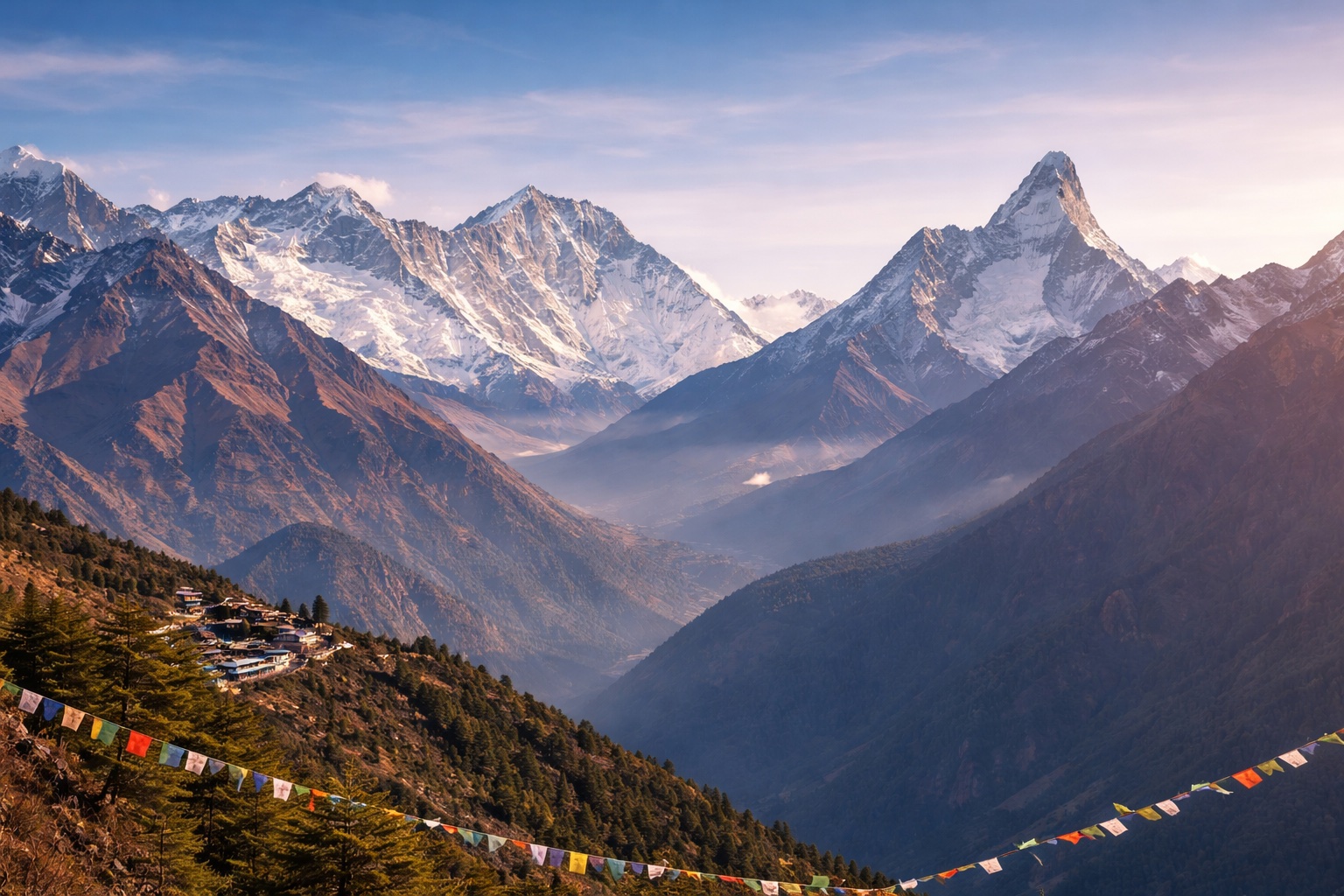
Pisang Peak Climbing
Pisang Peak (6,091 m) rises above the Manang valley on the Annapurna Circuit, a pyramid of rock and snow with superb views of Annapurna II, Gangapurna and the Manang Himal. This 15-day expedition drives to Chame, acclimatises in the traditional village of Upper Pisang, and climbs via base camp and high camp to the summit, before descending to Manang.
Graded challenging, it suits fit trekkers with some experience of crampons and fixed ropes, or a good level of fitness and willingness to learn at base camp. Climbing permit, ACAP, experienced climbing guide, camping crew, group climbing equipment, transport and meals are included.
Trip highlights
- Summit of Pisang Peak (6,091 m)
- Views of Annapurna II, Gangapurna and Tilicho Peak
- Acclimatisation in the traditional village of Upper Pisang
- Glacier travel and fixed-rope climbing
- Manang and the upper Annapurna Circuit
Short itinerary
View detailed itinerary- Day 1 Arrival in Kathmandu (1,400 m) 1,400 m
- Day 2 Preparation day in Kathmandu 1,400 m
- Day 3 Drive to Chame (2,670 m) 2,670 m
- Day 4 Trek to Upper Pisang (3,310 m) 3,310 m
- Day 5 Acclimatisation in Upper Pisang 3,800 m
- Day 6 Trek to Pisang Peak Base Camp (4,380 m) 4,380 m
- Day 7 Rest and training at base camp 4,380 m
- Day 8 Climb to High Camp (5,400 m) 5,400 m
- Day 9 Summit Pisang Peak (6,091 m), descend to base camp 6,091 m
- Day 10 Reserve day 4,380 m
- Day 11 Trek to Manang (3,540 m) 3,540 m
- Day 12 Rest day in Manang 3,540 m
- Day 13 Drive to Besisahar 760 m
- Day 14 Drive to Kathmandu 1,400 m
- Day 15 Departure from Kathmandu 1,400 m
Pisang Peak Climbing overview
Quick answer: Pisang Peak climbing takes 15 days from Kathmandu, reaches 6,091 m and costs from US$1,990 per person. The summit day involves glacier travel and a steep snow slope with fixed ropes. It is graded challenging, and the best seasons are April–May and October–November.
Pisang Peak is one of Nepal's trekking peaks, open to climbers with a peak permit and a licensed climbing guide. Because it starts from the Annapurna Circuit, the approach is comfortable, with teahouses until base camp, and acclimatisation in Upper Pisang, with its old monastery and views of Annapurna II, is excellent. See our trekking peaks guide.
At a glance
| Trip fact | Details |
|---|---|
| Duration | 15 days |
| Summit | Pisang Peak, 6,091 m |
| Grade | Challenging |
| Route | Drive to Chame; Upper Pisang, base camp, high camp |
| Permits | Peak climbing permit and ACAP |
| Best time | April–May, October–November |
| Cost | From US$1,990 per person |
Do I need climbing experience?
Previous experience with crampons, an ice axe and fixed ropes is a big advantage. If you don't have it, our climbing guide runs a training session at base camp. You must be fit, comfortable at altitude and ideally have trekked above 5,000 m.
Day-by-day itinerary
What’s included
Included
- Airport pick-up and drop-off
- 3 nights in a hotel in Kathmandu with breakfast
- Transport Kathmandu – Chame and Manang – Besisahar – Kathmandu
- Pisang Peak climbing permit, ACAP and local fees
- Teahouses on the trek and tented camps at base camp and high camp
- All meals on the trek and climb
- Licensed climbing guide and trekking guide
- Porters and camp crew with wages, food, equipment and insurance
- Group climbing equipment (fixed ropes, anchors); tents and kitchen equipment
- All government and local taxes
Not included
- International flights to and from Kathmandu
- Nepal visa fee
- Travel insurance covering trekking to 6,100 m (including climbing) and helicopter evacuation (compulsory)
- Lunch and dinner in Kathmandu and Pokhara
- Drinks, snacks, hot showers, battery charging and Wi-Fi on the trek
- Extra nights caused by early return, flight delays, landslides or cancellations
- Helicopter evacuation or charter
- Personal equipment and expenses
- Tips for your guide and porters
Useful info
Fitness and preparation
You must be fit and comfortable with long, steep days at altitude. Previous trekking above 5,000 m is strongly recommended, and some experience with crampons and fixed ropes is a big advantage.
Altitude sickness
This trek reaches 6,091 m on the summit, with a night at about 5,400 m at high camp. Symptoms of acute mountain sickness include headache, nausea, dizziness, loss of appetite and poor sleep. Walk slowly, drink 3–4 litres of water a day, avoid alcohol and tell your guide about any symptoms. If symptoms get worse, descending is the most effective treatment. Talk to your doctor before the trip about whether altitude medication is right for you.
Weather and temperatures
Spring and autumn are best. Nights at high camp are very cold, often −15°C or colder. Strong winds and fresh snow can delay the summit; the reserve day helps.
Permits
The peak climbing permit, ACAP and local fees are included.
Money, charging and Wi-Fi
Take out cash in Kathmandu or Pokhara before you set off: there are very few ATMs on the trail, and the ones that exist often don't work. Lodges charge a little for hot showers, charging and Wi-Fi, so a power bank saves money.
Drinking water
Bring a refillable bottle and either purification tablets or a filter. Lodges also sell boiled water, which is cheaper and better for the trail than bottled water.
Travel insurance
Travel insurance is compulsory. It must cover trekking to 6,100 m including climbing, medical treatment and emergency helicopter evacuation. Please send us your policy details before departure.
Visa
Most visitors get a tourist visa on arrival at Kathmandu airport, or apply online before they fly. Your passport needs six months' validity, and bring a few passport photos for trekking permits.
Packing list
Clothing
- Moisture-wicking base layers
- Fleece jacket or mid-layer
- Warm down jacket (can be borrowed from us)
- Waterproof and windproof jacket and trousers
- Trekking trousers and shirts
- Warm hat, sun hat and buff
- Liner gloves and insulated gloves
- Trekking socks
Footwear
- Broken-in waterproof trekking boots
- Camp shoes or sandals for the lodges
Equipment
- Sleeping bag rated to about −20°C (can be borrowed from us)
- Daypack of 25–35 litres with rain cover
- Trekking poles
- Head torch with spare batteries
- Water bottles and purification tablets
- Sunglasses with UV protection
- Power bank and charging cables
- Mountaineering boots (rentable in Kathmandu)
- Crampons, ice axe, harness, helmet, ascender and carabiners (rentable)
- Insulated climbing gloves and mitts
- Category 4 glacier glasses
Personal items
- High-factor sunscreen and lip balm
- Personal first-aid kit and medication
- Toiletries, quick-dry towel and wet wipes
- Snacks such as energy bars and nuts
- Passport, insurance details and copies
Add-ons & trip options
Choose add-ons and quantities on the booking form.
More trip options, quoted on request:
- Thorong La and Muktinath after the climb (Annapurna Circuit).
- Tilicho Lake side trip.
- Private expedition with your own climbing guide.
Frequently asked questions
6,091 m.
15 days from Kathmandu.
It is challenging, with glacier travel and a steep final snow slope on fixed ropes.
It helps a lot; we provide training at base camp.
From US$1,990 per person.
A peak climbing permit and the ACAP, both included.
Yes, in Kathmandu.
April–May and October–November.
Yes, continue over Thorong La after the climb.
Yes, one reserve day for weather.