Gokyo Lakes and Renjo La Pass Trek
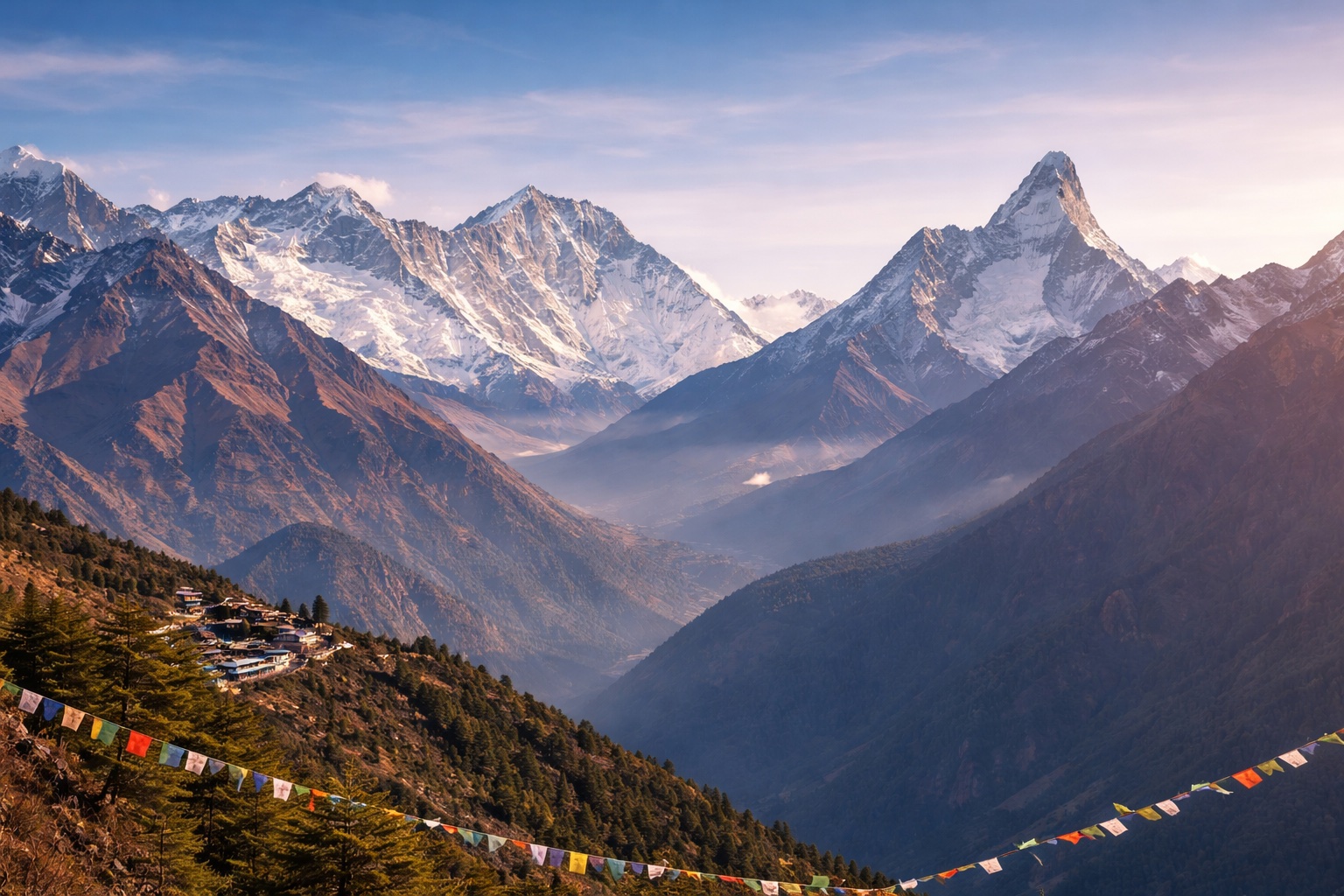
The Gokyo Lakes and Renjo La Pass trek is a 14-day loop in the Everest region for trekkers who want big views without the crowds of the main Everest Base Camp trail. Walk up from Namche Bazaar to the turquoise Gokyo Lakes, climb Gokyo Ri (5,357 m) for one of the best views of Everest in Nepal, then cross the high Renjo La (5,360 m) pass, with Everest, Lhotse, Makalu and Cho Oyu lined up behind you, and descend through the quiet Bhote Koshi valley to the Sherpa village of Thame.
Graded strenuous because of the pass and the altitude, it is ideal for fit trekkers with some experience. Lukla flights, permits, a licensed guide, porters, teahouses and all meals on the trek are included.
Trip highlights
- Turquoise Gokyo Lakes beneath Cho Oyu
- Sunrise view of Everest from Gokyo Ri (5,357 m)
- Crossing Renjo La (5,360 m)
- Ngozumpa Glacier, the longest in Nepal
- Sherpa village of Thame and the Bhote Koshi valley
Short itinerary
View detailed itinerary- Day 1 Arrival in Kathmandu (1,400 m) 1,400 m
- Day 2 Fly to Lukla (2,860 m), trek to Phakding (2,610 m) 2,860 m
- Day 3 Trek to Namche Bazaar (3,440 m) 3,440 m
- Day 4 Acclimatisation day in Namche 3,880 m
- Day 5 Trek to Dole (4,040 m) 4,040 m
- Day 6 Trek to Machhermo (4,470 m) 4,470 m
- Day 7 Trek to Gokyo (4,790 m) 4,790 m
- Day 8 Gokyo Ri (5,357 m) and Gokyo Lakes 5,357 m
- Day 9 Cross Renjo La (5,360 m) to Lungden (4,380 m) 5,360 m
- Day 10 Trek to Thame (3,820 m) 3,820 m
- Day 11 Trek to Namche Bazaar (3,440 m) 3,440 m
- Day 12 Trek to Lukla (2,860 m) 2,860 m
- Day 13 Fly to Kathmandu 1,400 m
- Day 14 Departure from Kathmandu 1,400 m
Gokyo Lakes and Renjo La Pass Trek overview
Quick answer: the Gokyo Lakes and Renjo La Pass trek takes 14 days from Kathmandu, reaches 5,360 m at Renjo La and 5,357 m on Gokyo Ri, and costs from US$1,590 per person. It is graded strenuous.
This loop links two of the most beautiful parts of the Khumbu. The Gokyo valley holds a chain of glacial lakes beside the Ngozumpa Glacier, the longest glacier in Nepal, under the huge south face of Cho Oyu. Renjo La, the westernmost of the Everest region's three high passes, is a quieter alternative to Cho La, with one of the finest views of Everest from any pass. The return through Thame, one of the oldest Sherpa villages in the Khumbu, makes it a true circuit, with no retracing of steps until Namche.
Gokyo Renjo La trek at a glance
| Trip fact | Details |
|---|---|
| Duration | 14 days (11 days of trekking) |
| Maximum altitude | Renjo La, 5,360 m |
| Grade | Strenuous |
| Start and finish | Lukla, by flight from Kathmandu or Ramechhap |
| Permits | Sagarmatha National Park and Khumbu Pasang Lhamu Rural Municipality fee |
| Best time | October–November and March–May |
| Cost | From US$1,590 per person |
Why choose this trek?
- Gokyo Lakes, a chain of turquoise glacial lakes beneath Cho Oyu.
- Gokyo Ri, with views of Everest, Lhotse, Makalu and Cho Oyu.
- Renjo La, a high pass with a classic Everest view.
- Thame and the quiet Bhote Koshi valley.
- Far fewer trekkers than on the main EBC trail.
How difficult is it?
Most days are 5–7 hours, but the pass day is long, 7–9 hours, on rocky, steep ground that can be snowy or icy. You need good fitness and should be comfortable at altitude. The itinerary includes acclimatisation in Namche and a gradual ascent to Gokyo before the pass.
Day-by-day itinerary
What’s included
Included
- Airport pick-up and drop-off in private vehicles
- 2 nights in a hotel in Kathmandu with breakfast
- Return flights Kathmandu (or Ramechhap) – Lukla, with transfers
- Sagarmatha National Park permit and Khumbu Pasang Lhamu Rural Municipality fee
- Teahouse accommodation during the trek (11 nights)
- Breakfast, lunch and dinner during the trek
- Licensed, English-speaking trekking guide trained in first aid
- Porters (1 porter for 2 trekkers) with their wages, food, lodging and insurance
- All government and local taxes
Not included
- International flights to and from Kathmandu
- Nepal visa fee
- Travel insurance covering trekking to 5,500 m and helicopter evacuation (compulsory)
- Lunch and dinner in Kathmandu and Pokhara
- Drinks, snacks, hot showers, battery charging and Wi-Fi on the trek
- Extra nights caused by early return, flight delays, landslides or cancellations
- Helicopter evacuation or charter
- Personal equipment and expenses
- Tips for your guide and porters
Useful info
Fitness and preparation
You should be comfortable walking 5–7 hours a day for several days in a row on hilly, uneven trails. Start training two to three months before the trek with long hill walks, stair climbing and cardiovascular exercise, and break in your boots before you travel.
Altitude sickness
The highest point is 5,360 m at Renjo La and 5,357 m on Gokyo Ri, with nights up to 4,790 m at Gokyo. Most people feel the altitude a little: a mild headache, poor sleep, less appetite. Go slowly, drink 3–4 litres a day, skip the beer until you are back down, and tell your guide straight away if you feel worse. Going down is the cure that always works. Ask your doctor before you travel whether altitude medication makes sense for you.
Weather and temperatures
Autumn is clear and cold, with nights at Gokyo around −10°C to −15°C. Snow can fall on Renjo La at any time and make the descent icy; spring is warmer but cloudier in the afternoons.
Domestic flights and baggage
Lukla flights are weather-dependent and often delayed. In peak season many depart from Ramechhap, about 4–5 hours' drive from Kathmandu. The baggage limit is about 15 kg including hand luggage. We recommend keeping one or two spare days before your international flight.
Permits
The Sagarmatha National Park permit and the Khumbu Pasang Lhamu Rural Municipality fee are included.
Money, charging and Wi-Fi
Carry Nepali rupees for drinks, snacks, showers and charging, and get them in the city; mountain ATMs are rare and unreliable. Wi-Fi is available in many lodges for a small fee. A power bank is worth packing.
Drinking water
Buy boiled or filtered water at lodges or use purification tablets or a filter with a refillable bottle, instead of buying plastic bottles.
Travel insurance
You need travel insurance that covers trekking to 5,500 m, medical care and helicopter rescue. We ask for your policy details before you arrive.
Visa
You can usually get a Nepal visa on arrival at the airport or apply online in advance. Check that your passport is valid for at least six months, and pack a few passport photos for permits.
Packing list
Clothing
- Moisture-wicking base layers
- Fleece jacket or mid-layer
- Warm down jacket (can be borrowed from us)
- Waterproof and windproof jacket and trousers
- Trekking trousers and shirts
- Warm hat, sun hat and buff
- Liner gloves and insulated gloves
- Trekking socks
Footwear
- Broken-in waterproof trekking boots
- Camp shoes or sandals for the lodges
Equipment
- Sleeping bag rated to about −15°C (can be borrowed from us)
- Daypack of 25–35 litres with rain cover
- Trekking poles
- Head torch with spare batteries
- Water bottles and purification tablets
- Sunglasses with UV protection
- Power bank and charging cables
- Microspikes for Renjo La (ask us before departure)
- Category 3–4 sunglasses
Personal items
- High-factor sunscreen and lip balm
- Personal first-aid kit and medication
- Toiletries, quick-dry towel and wet wipes
- Snacks such as energy bars and nuts
- Passport, insurance details and copies
Add-ons & trip options
Choose add-ons and quantities on the booking form.
More trip options, quoted on request:
- Cho La and Everest Base Camp extension (Three Passes route).
- Extra day at Gokyo to visit the fifth lake.
- Helicopter return from Gokyo.
Frequently asked questions
14 days from Kathmandu, with 11 days of trekking.
About 5,360 m.
Strenuous, mainly because of the long pass day and altitude.
From US$1,590 per person, including Lukla flights, permits, guide, porters, teahouses and meals on the trek.
Yes, from Gokyo Ri and Renjo La, two of the best Everest viewpoints in Nepal.
Renjo La is generally less technical, with no glacier crossing, but it is still a long, high pass day.
No, but you can add EBC via Cho La for the Three Passes route.
October–November and March–May.
Often yes in autumn and spring; we'll advise before you travel.
The Sagarmatha National Park permit and the Khumbu Pasang Lhamu Rural Municipality fee, both included.
Much less than the main EBC trail, especially on the Renjo La and Thame sections.
Previous trekking at altitude is helpful but not essential if you are fit and acclimatise well.